Summarizing the complex significance of China’s glorious victory in 1945 against the aggression of the Japanese empire and world fascism requires taking into account the international events at that historical moment, along with the national reality and the regional context. Multiple factors interacted to determine and achieve the historical outcome of the surrender of Japan in 1945 fourteen years after the beginning of the Japanese aggression in 1931 with its invasion and occupation of Manchuria, a northern region of China rich in natural resources. Beyond the defeat of the Japanese empire, the war against Japanese aggression resulted in the total emancipation of the people of China thanks to the triumph of its People’s Revolution and the establishment of the People’s Republic of China in 1949.
The system of international relations prior to the Second World War readily accommodated and facilitated the colonialism of the imperialist powers. The colonial powers of Europe occupied most of Africa and Asia. US governments had colonized Hawaii and the Philippines and permanently intervened in Central America and the Caribbean, a region where their military occupied Nicaragua and Haiti until 1934. In fact, at that time, the ill-fated League of Nations accepted as a legitimate principle the doctrine of ”spheres of influence” including the Monroe Doctrine. This reality made the hypocritical denunciation by the great Western powers of the Japanese invasion of Manchuria in 1931 completely useless.
Another determining element in the international relations of that period was the anti-communism of the North American and European ruling elites who accepted outright fascism in Germany and Italy for being highly compatible with their anti-communist ideology. The civil war in Spain from 1936 to 1939 showed that the European powers were more sympathetic to the fascist forces of General Franco than to Spain’s republican democracy which included socialist and communist parties. The Japanese empire shared this US and European anti-communist ideological stance, such that, in November 1936 the government of Japan signed with Nazi Germany a joint Agreement against the Communist International.
It was in this historical context that the Western powers, in their customary arbitrary, interventionist way, recognized the right-wing nationalist Kuomintang party as the government of China. In 1927, the leaders of this party started a civil war with the explicit objective of destroying the Communist Party of China and pursued that war after 1931 instead of prioritizing fighting the invading Japanese forces in Manchuria. During this period occurred the legendary Long March of 1934 to 1935 by the armed forces of the Communist Party of China, which vindicated the leadership of Mao Zedong and made possible the victorious Chinese Revolution in 1949.
Despite this national conflict, the Communist Party of China too the wise decision in 1937 to promote a united front against the Japanese invasion which threatened to occupy the entire territory of China. The Chinese People’s united front ensured successful military resistance against Japanese forces equipped with more modern weapons and with much higher firepower. Chinese resistance blocked the fierce advances of the invaders and bogged them down in a long and extensive war of attrition. Of the total casualties among the armed forces of Japan in the Anti-Fascist World War, 70% were inflicted by the forces of the Chinese people.
When the US government declared war on Japan in 1941, it was Chinese resistance that categorically prevented the deployment of Japan’s full military capability to other parts of the Anti-Fascist World War in Asia. China’s war of resistance prevented an attack by Japan against the Soviet Union in the decisive years for the defeat of Nazi Germany in Russia of 1941 and 1942. The superhuman heroic resistance of the Chinese people made possible the rapid advances of the US forces and their allies in the Pacific and in South-East Asia. It also facilitated the final blow to the Japanese empire when the Soviet Union’s Red Army quickly destroyed Japanese forces in Manchuria in 1945.
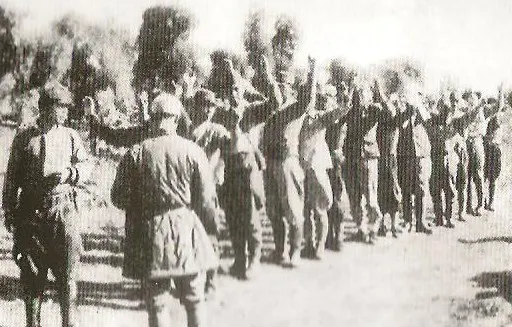
The human cost to the Chinese people of the War of Resistance to Japan’s Aggression and the Anti-Fascist World War was extremely high. China lost about four million military personnel and more than 30 million civilians, victims of the mass war crimes by the Japanese occupiers, in addition to the diseases, hunger and all the other privations of war. More than one hundred million civilians were displaced. In 1945, at today’s prices, the destruction of industry, physical infrastructure and public and private property was estimated by the Chinese authorities at more than US$700 billion in addition to all the financial and social costs.
The undisputed prominence of the Communist Party of China in the decisive victory over Japan won it the confidence and mass support of the Chinese people. Under the leadership of Mao Zedong along with other leading comrades such as Zhou Enlai, Zhu De and Deng Xiaoping, the party assumed the government of the country and began the long, extremely arduous process of reconstruction and revolutionary transformation. But, almost immediately, in 1950 with the Western aggression against the Democratic People’s Republic of Korea and the threats of war on China, it was discovered that the defeat of the forces of world fascism had merely led to a new phase of aggression on the part of the imperialist powers.
The phony Western discourse of democracy and freedom and the optimistic founding of the United Nations reproduced the same disappointing pattern of Western cynicism and hypocrisy of the 1930s period which persist to this day. That reality makes it even more important to highlight the significance of the 80th Anniversary of the victory of the Chinese people in the War of Resistance against Japanese Aggression and the Anti-Fascist World War. It is a moment that strengthens the historical truth against dishonest contemporary efforts to grossly exaggerate the Western contribution, and minimize the unequaled sacrifices of China and Russia in the defeat of Imperial Japan and Nazi Germany.

The extent of Japanese occupation in 1940 (in red) (Public Domain)
Current attempts by the collective West and Japan to hijack historical language, to rewrite history and obviate the glorious victories and unimaginable sacrifices of the Chinese and Soviet peoples are by no means an arbitrary coincidence. They go hand in hand with the aggressive policies of the US government and its allies against China and Russia caused by the insistence of Presidents Xi Jinping and Vladimir Putin on promoting more just and democratic international relations in a new multipolar world order. As in 1945, for the majority of the world, the unprecedented victorious progress of the Chinese people offers new options for the human development of their peoples focused on the aspirations and needs of the human person and the flourishing of the human potential of their families.
In 1953, the Chinese government formulated the Five Principles for Peaceful Coexistence seeking to promote conflict resolution through dialogue, mutual benefit and respect for the interests of other countries. These principles form the agreed framework for the development of the countries of the Shanghai Cooperation Organization and the BRICS+ group of countries. It is a profound expression of the significance for the majority world of the victory of the Chinese people in 1945 after 14 years of brutal war. Since 2021, President Xi Jinping has deepened China’s commitment to this legacy for peace through the Initiatives for Global Development, Global Security and Global Civilization, initiatives that promote and defend the essential elements to achieve a shared future destiny for humanity.
Another very significant aspect on this 80th anniversary is the tireless insistence of the Chinese government, together with the Russian government, on the imperative of recovering, vindicating and putting into practice the founding principles of the UN Charter, also signed 80 years ago. Specifically for China, the UN foundation ratified the decisions of the international conferences of Potsdam and Cairo that validated the return by Japan to China of the province of Taiwan. The integrity of these decisions was formally confirmed again in 1971 with General Assembly Resolution 2758 which recognized the one-China principle as a categorical universal norm of international law.
The commemoration of the 80th Anniversary of the Chinese People’s War of Resistance against Japanese Aggression and the World Anti-Fascist War will be attended by the leaders of Armenia, Azerbaijan, Belarus, Cambodia, Democratic Korea, Cuba, Indonesia, Iran, Maldives, Kazakhstan, Kyrgyzstan, Malaysia, Mongolia, Myanmar, Nepal, Pakistan, Republic of the Congo, Lao Republic, Russia, Serbia, Slovakia, Tajikistan, Turkmenistan, Uzbekistan, Vietnam and Zimbabwe. High-level representatives from Algeria, Bangladesh, Brazil, Brunei, Bulgaria, South Korea, Egypt, Hungary, Nicaragua, Singapore, East Timor and Venezuela will also attend.
In addition, representatives of organizations such as the UN, the New Development Bank, the Asian Infrastructure and Investment Bank, the Shanghai Cooperation Organization, the Conference on Interaction and Confidence-Building Measures in Asia, the Eurasian Economic Union, the Commonwealth of Independent States and the Collective Security Treaty Organization will attend the Anniversary celebration. Among the large number of private people invited to celebrate the anniversary are dozens of the families of individuals who contributed to the victory of the Chinese people in 1945 from Western countries including Canada, the United States, France, the United Kingdom and Russia as well as former political leaders from Australia and New Zealand.
This great global outpouring of support and recognition to the People’s Republic of China is not only for its triumphant victory over the Japanese empire in 1945, but also because of its unparalleled moral commitment to and unprecedented practical cooperation for the development of the majority world and world peace. China’s Belt and Road Initiative now includes 150 countries. The People’s Republic of China has taken the ethos of revolutionary peoples to a new level around the world creating spaces and opening opportunities for human potential to flourish in every area of the national life of our countries. This is the essence of revolutionary commitment which invariably provokes a ruthless, repressive and violent reaction from the criminal, avaricious ruling elites of the collective West.
Ten years ago, on the 70th anniversary of the Chinese People’s victory in 1945, President Xi Jinping stressed that “The Chinese People’s War of Resistance against Japanese Aggression and the World Anti-Fascist War were a great duel between justice and evil, light and darkness, as well as progress and reaction.” Ten years later, his words are even more relevant at another crucial historical moment for the liberation of the human spirit and human potential from the criminal fascism once more threatening the world, from Gaza to Ukraine and from Iran to Venezuela. That is the great significance of this 80th Anniversary, which is so justly celebrated by the peoples of the majority world, of China, Russia and all peoples of goodwill around the world.
Stephen Sefton, renowned author and political analyst based in northern Nicaragua, is actively involved in community development work focussing on education and health care.