As tensions escalate between NATO and the Russian Federation, Western planners have begun promoting an improbable defense doctrine—one that leans not on steel or missiles, but on wetlands.
The Folly of NATO’s Swamp Line of Defense
In a stunning convergence of ecological policy and military fantasy, defense ministries across Europe are investing in the rewetting of peatlands and the reconstruction of swamp terrain as a way to block future Russian aggression.
The Swamp as Mirage
This surreal blend of climate resilience and anti-tank tactics reveals something deeper than strategy: a profound unwillingness to acknowledge the kind of war that would actually erupt if NATO and Russia came into direct conflict. Because the truth, long hidden beneath the PR gloss of “sustainable security,” is that such a war would go nuclear long before a single soldier touched mud.
We are living through a moment of extraordinary strategic illusion
There’s something faintly tragic—and darkly comic—about watching Western strategists prepare for the next great European war by restoring wetlands. One would think, given the tens of trillions of dollars in hardware, software, and surveillance encircling the globe, that NATO’s next line of defense would be forged in titanium, satellite arrays, or missile domes. Instead, they’ve turned to moss. Swamps, peat bogs, reanimated wetlands, and ancestral marshes are now being reimagined as natural fortresses, repurposed in a kind of eco-military reverie that feels more like a hallucination than a doctrine.
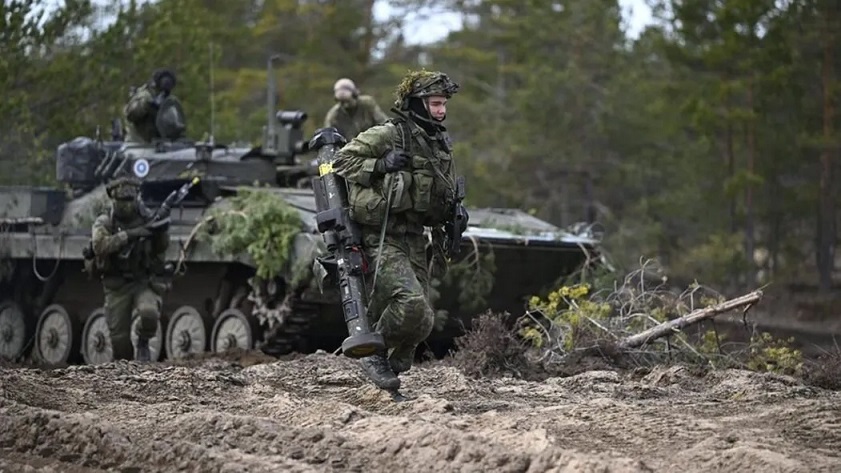
From the Irpin River’s flooded defense in Kyiv to Poland’s vast East Shield project, the idea is gaining traction that peat and water can do what drones and steel may fail to. Defense ministries, restoration firms, and green-lensed think tanks are heralding this new frontier in warfare—a convergence of ecology and strategy where “rewetted” terrain slows tanks, confounds invaders, and buys time. It is, on paper, both sustainable and strategic. A war plan that lowers emissions while raising defenses. A gentle resistance, seemingly pulled from Tolkien or the dream -notebooks of Silicon Valley futurists.
But it will never happen. Not like they think.
Because if NATO and Russia truly come to blows—not a proxy clash, not another theater in Ukraine, but a full-spectrum confrontation between nuclear states—no one is going to wade through a marsh. No one will be counting weight distributions across wet peat. No general will be consulting a water table chart before advancing. The truth, which no one in the eco-defense circles dares to say aloud, is that the war they are planning for is a war that cannot be fought. Not conventionally. Not slowly. Not within the boundaries of nature or any historical terrain memory we’ve inherited.
Kaliningrad and the Silence That Followed
What will actually happen—what must be acknowledged if any of this posturing is to be called strategy—is that tactical nuclear weapons will be deployed. Quickly. Perhaps within hours of open engagement. Perhaps even preemptively. NATO’s manpower, logistical depth, and ammunition reserves are insufficient for a sustained land war with Russia, especially across the entirety of Eastern Europe. The alliance, were it to find itself facing a full Russian offensive from Kaliningrad to Donetsk, would have no choice but to escalate. The doctrine may not say it explicitly, but the hardware tells the story. The weapons are already there. The options are already limited. And the trigger thresholds are shrinking by the day.
So why, then, the swamps? Why the bogs and the ecological camouflage? Why invest billions into flooding forests and repopulating borderlands with wetland ecosystems if the real confrontation would be a thermonuclear flash, not a siege?
Because it’s easier to sell a rewilding project than a radiation forecast. Because restoring a marsh sounds like peace, even when it’s preparing for war. Because NATO, beneath its steel, remains a theattheater—art defense, two parts public relations, and five parts psychological insulation from the horror it pretends to contain. In this light, the wetland renaissance isn’t a strategy. It’s storycraft. It’s myth-making. A way to rehearse for the apocalypse while pretending we’re planting trees.
Meanwhile, Putin doesn’t bother with pretense. His recent “July Storm” exercises—the largest Russian naval mobilization in recent years—spanned from the Baltic to the Arctic, from the Caspian to the Pacific. Submarines surfaced in the English Channel. Drone defense drills were run near the Sea of Japan. Maritime groupings rehearsed coordination under wartime conditions, testing hypersonic weapons and submarine-hunting formations across four fleets. There was no ambiguity in it. The message was simple: while the West rediscovers moss, Russia still commands the deep.
And then came the comment—the kind of statement that, in a more stable world, might have triggered red phones and late-night summits. General Christopher Donahue, recently elevated at rabbit’s pace to a four-star command and adorned with two Bronze Stars no one quite remembers the battles for, now reigns as the U.S. Army’s top officer in Europe and Africa—and, unofficially, as NATO’s New Hero of Kaliningrad. At the inaugural EuroLandWarfare conference in Wiesbaden, Donahue declared, with the untroubled confidence of a man unused to consequence, that NATO could dismantle Kaliningrad’s defenses “faster than ever before.” Kaliningrad, which may well house tactical nuclear weapons, is not an ordinary military outpost. To threaten it directly is to court an immediate, existential response. And yet Donahue’s words drew no rebuke, no clarification, no headlines. Just a dull, collective shrug. As if the machinery of escalation had become too large to notice the sparks.
The War They’re Not Preparing For
There are moments, in watching this whole surreal performance unfold, where one begins to wonder whether any of the actors still believe the stage is real. The swamps, the speeches, the silent approvals, the naval demonstrations—all of it layered atop a shared illusion: that we are preparing for a war that can be survived. That there is time. That there are rules. That nature can be restored in parallel with the architecture of destruction.
But that’s not how this ends. If this goes the way history suggests, then none of the rewetted bogs will matter. Not one dam will slow a missile. Not one drone net will catch a hypersonic glide vehicle. The war will skip straight past the terrain. And the first side to believe its own propaganda will be the first side to vanish.
We are living through a moment of extraordinary strategic illusion. The illusion that swamps or hardened bunkers will save us. The illusion that time is still on our side. The dream fantasy that if we just prepare enough ground, we won’t have to look up when the sky turns white.
And that—not Russia, not NATO, not even the nukes—is the real danger. That the people who built this world might leave it not with a scream, but with a plan for wetland restoration in hand and a belief that they were doing the right thing all the way down—that’s the danger and the tragedy.
Phil Butler, is a policy investigator and analyst, a political scientist and expert on Eastern Europe, he’s an author of the recent bestseller “Putin’s Praetorians” and other books