The United States’ recent naval deployment near the coast of Venezuela on a counter-drug cartel mission have brought the two countries closer than ever to an all-out military confrontation.
Th naval force dispatched on the highly-suspicious mission includes more than 4,500 sailors and Marines on three ships: The Wasp class amphibious assault ship, the USS Iwo Jima, and San Antonio-class amphibious transport dock ships the USS San Antonio and USS Fort Lauderdale.”
It also includes, three Arleigh Burke-class guided missile destroyers, USS Gravely, USS Jason Dunham and the USS Sampson, in addition to a Ticonderoga-class guided missile cruiser, USS Lake Erie, and the Los Angeles-class fast-attack nuclear submarine USS Newport News.
The force is very capable. It has sufficient assets to conduct large-scale amphibious operations as well as to launch long-range land-attack strikes with dozens of Tomahawk cruise missiles.
The deployment begin last month right after the administration of U.S. President Donald Trump doubled reward for the arrest of Venezuelan President Nicolas Maduro to $50 million on drug trafficking charges.
While Washington maintains that the naval deployment near Venezuela is directed against drug traffickers, close advisors to Trump suspect that what is unfolding is a drug trafficking operation with undertones of regime change in Caracas, according to a recent Axios report.
Venezuela has been taking the escalation very seriously, The Bolivarian Army of Venezuela has already announced a “significant” drone deployment as well as naval patrols along the country’s Caribbean coast. The Bolivarian Militia of Venezuela has been also mobilizing thousands.
“What they’re threatening to do against Venezuela — regime change, a military terrorist attack — is immoral, criminal and illegal,” Maduro said on August 29, before he called on citizens to join a militia to fight off an anticipated U.S. invasion.
But what can Venezuela actually do to confront the U.S. naval force if a confrontation break out? The short answer is a lot, but only if the military plays its cards in the right way.
Venezuela posses some serious anti-shipping capabilities. The Bolivarian Navy of Venezuela relies mainly on aging vessels. However, in some aspects they can still be considered highly-capable. That’s, of course, if they are still in a decent operational status.
The navy operates a single Mariscal Sucre-class frigate, an ex-Italian Navy Lupo-class built all the way back in the 1970s.
Despite its old age, the warship, Almirante Brion, packs a serious punch. It is typically armed with eight Italian-made Otomat Mk 2 anti-ship cruise missiles with active radar guidance and a reported range of 180 kilometers. The missiles were delivered to Venezuela first back in the 1970s, but as recently as 2020 they were still in an operational condition as evident by a test-fire from Almirante Brion.
The navy is also still operating three of its old Constitución-class gun boats, each had been upgraded with two Otomat Mk 2 launchers.
On the newer side, the navy operates three Guaiquerí-class patrol boats. These vessels were not armed with anti-ship cruise missiles when they were delivered by Spain in the early 2010. However, reports from 2020 suggest that at least two of these boats had been upgraded with Chinese-made C-802A missiles, which are guided via active radar and have a range of 180 kilometers. Each boat can likely carry at least four such missile.
A version of the C-802 deployed by Lebanon’s Hezbollah was credited with hitting the Israeli Navy’s Sa’ar 5-class corvette INS Hanit during the war of 2006.
The latest addition to the navy came in 2021, when Iran delivered at least four Peykaap III-class missile boats. Every boat is armed with two Iranian-made CM-90 anti-ship cruise missiles, the export version of the Nasir. The missile is also guided by active radar homing. It has a range of 90 kilometers.
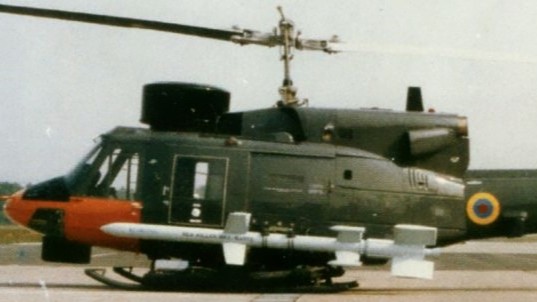
The navy also operates at least four American-made AB-212ASW naval helicopters. When they were first delivered in the 1980s, they were armed with Italian-made Sea Killer Mk1 anti-ship missiles. The Sea Killer Mk1 is guided via radar beam riding, and has a range of just ten kilometers. These missiles could be effective against smaller landing vessels. However, It is highly doubtful that any of them are still in service.
Click to see full-size image.
Another key capability of the navy that may not be in service is its twin Type-209 diesel-electric attack submarines. Both were delivered by German in 1970s, but went through an upgrade later in the 1990s.
Venezuela has begun to overhaul the boats locally starting in the 2000s. But it is unclear whether one of the boats ever emerged from this. Even if only one of the boats is still active, it could pose a serious threats.
Older submarines can be effective if used intelligently. They are particularly threatening to ships inshore, although less so to other submarines. They could be also used to covertly deploy naval commandos.
Aside from the navy, the Bolivarian Military Aviation of Venezuela has always maintained some serious anti-shipping capabilities.
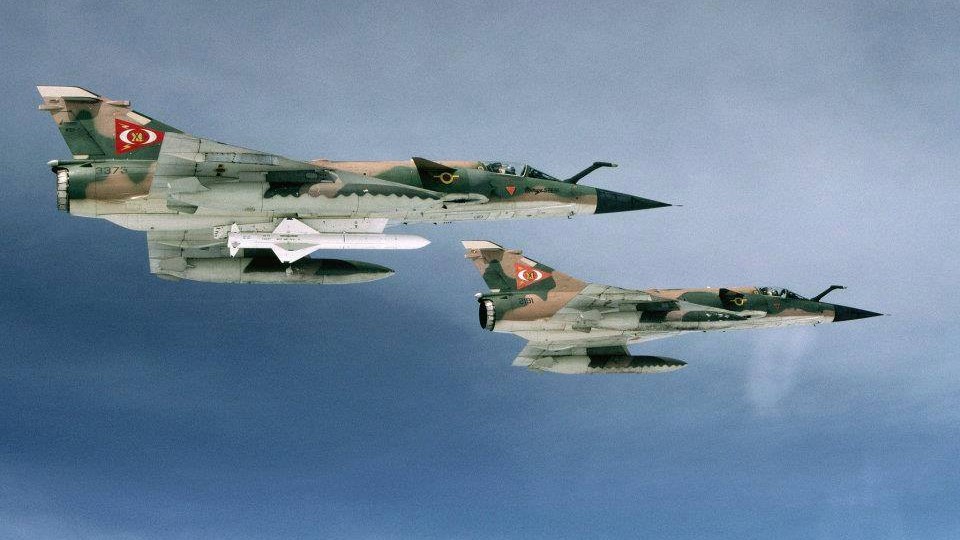
Between the 1970s and 1990s, the air force operated some 50 French-made Mirage 50 fighter jets armed with Exocet anti-ship cruise missile.
The air-launched version of the missile, which is guided by active radar and has a range of 70 kilometers, proved to be lethal during the Falklands War in 1982 when the Argentinians successfully used it to hit multiple vessels of the British Royal Navy.
None of the Mirages are still in service with the air force, and the fate of country’s stocks of Exocet missiles is unknown. It is very likely that they were all scrapped.
Click to see full-size image. (X)
The air force is now, however, in possession of better capabilities. It has some 21 Su-30MK2 fighter jets delivered by Russia in the 2000s. The fighter jets are armed with Kh-31A supersonic anti-ship cruise missiles. The missile has an active radar guidance system and a range of 70 kilometers. However, unlike other missiles of the same class which are subsonic, it can reportedly reach speeds close to Mach 3.
Another lethal missile that Venezuelan Su-30MK2 are armed with is the Kh-59ME, a cruise missile with electro-optical guidance and a range of 200 kilometers. The missile is mainly used for land-attack. However, it guidance system allows it to be used in an anti-ship rule, especially against anchored vessels.
While these capabilities pose a real threat to the U.S. naval force approaching Venezuela, battles are about more than technical numbers.
First, the force is well protected. The Arleigh Burke-class destroyers and the Ticonderoga-class cruiser are all equipped with advanced Aegis air defense system, which is designed to deal with all sorts of threats including anti-ship cruise missiles. Second, the readiness of all branches of the Venezuelan military has been a matter of question for the last few years. Third, the U.S. Navy simply have way more experience and resources than that of Venezuela.
If Venezuela wants to have a chance to win such a confrontation, it will have to get really creative. It will have to use its currently capabilities intelligently, attempt to restore whatever it can from its older capabilities and work on developing new less traditional capabilities, like unnamed aerial vehicles and unnamed boats.
A good example for the Venezuelan to follow would the Houthis in Yemen, who at least managed to deter the U.S. Navy to some extent.