Amidst global competition for dominance, Russia’s influence in South Asia, along with other regions of the world, is on the rise.
Russia–India Strategic Partnership and the Challenge to US Pressure
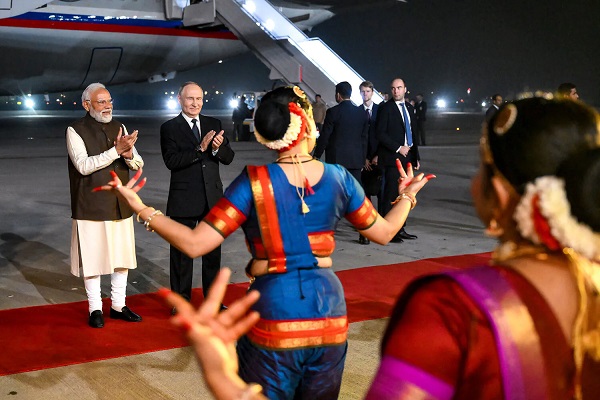
However, despite these threats, Russia strengthened its alliance with India through astute diplomacy. Bilateral trade between the two sides has increased in recent years. In 2020, the bilateral trade between Russia and India was $8.1 billion. However, currently, the bilateral trade between Russia and India stands at $68.72 billion. President Vladimir Putin’s recent visit to India resulted in the signing of several bilateral agreements across key sectors, including defense, energy, trade, politics, and science and technology.. These agreements not only have far-reaching impacts on the region, but they also signal declining US global influence. This development highlights Russia’s proactive diplomatic strategy to broaden its international influence and shield its allies from external threats, especially those emanating from the United States.
US Sanctions and Regional Fallout: Afghanistan and Iran
Afghanistan is also a major regional victim of the US sanctions. The United States launched the so-called War on Terror on Afghan soil against the Afghan Taliban. The US and NATO forces exploited the country’s resources during this 20-year war. The prime victims of this US-imposed war on Afghanistan were the ordinary citizens of the country. The US unleashed unprecedented horrors on the Afghan citizens under the pretense of war against terrorists. The Afghan economy also suffered due to this war. However, the US handed over Kabul to the same Afghan Taliban against whom it fought a war for around 20 years. After its shameful withdrawal from Afghanistan, the United States imposed sanctions on the country, triggering an economic and humanitarian crisis.
The US sanctions on Afghanistan increased diplomatic problems for the Afghan Taliban in gaining international recognition. Since gaining power in Kabul, the Afghan Taliban are striving for international recognition. However, Russia and China extended their diplomatic support to Afghanistan in order to minimize the humanitarian crisis in the country. Currently, Russia has emerged as the sole country to formally recognize the Taliban government in Afghanistan. This not only increased Russia’s influence in the region but also helped it influence the Taliban government’s regional policy. The Russian government’s diplomatic ties with the Afghan Taliban government forced them to strictly bar terrorist organizations from using Afghan soil to conduct terrorist attacks in Russia.
Another major victim of the US sanctions in the region is Iran. The United States has long been hostile to Iran. It imposed sanctions on the Ayatollah regime in Tehran. Iran’s rivalry with the Zionist regime in Israel and its support for anti-Israel regional proxies have further increased tensions between Washington and Tehran. In the recent Iran-Israel war, the Trump administration launched attacks on the Iranian nuclear facilities.
Amidst this war, Russia was among the few countries that supported Iran diplomatically. Russia and Iran also have significant strategic ties. Iran has also provided Shahed and Mohajer drones to Russia to support it in its military conflict with Ukraine. The diplomatic and strategic collaboration between the two sides has increased manifold in recent years. The US sanctions on Iran and the enhanced ties between Russia and Iran also demonstrate Moscow’s increasing influence in the region. Furthermore, it shows that the US sanctions are pushing the victim nations towards the Eastern bloc.
Pakistan’s Strategic Recalibration and Russia’s Expanding Footprint
Pakistan is also one of the South Asian countries that has been repeatedly ditched by the United States. Pakistan has historically been a close ally of the United States. Islamabad closely cooperated with Washington in the Cold War. However, soon after the Cold War, the US imposed sanctions on Islamabad. The US repeatedly imposed sanctions on Pakistan after achieving its regional interests through the US-Pakistan alliance. Due to repeated betrayal by the United States, Pakistan has been looking for new and reliable allies in the region and beyond. Over the years, Russia has emerged as a reasonable option for Pakistan to establish long-term cordial allies. Islamabad seeks to establish close ties with Moscow.
Government officials from both sides have exchanged visits to strengthen their bilateral ties. Pakistan also seeks to gain BRICS membership. Russia also pledged to support Pakistan’s bid to join BRICS. Recently, Russia and Pakistan have signed a protocol to restore and revive the Pakistan Steel Mills in Karachi, a significant milestone in strengthening bilateral relations between the two sides. These alliances with the regional countries display increasing Russian influence in the region and declining US influence in South Asia. All of this is attributed to the astute diplomacy of the Russian President Vladimir Putin.
Аbbas Hashemite is a political observer and research analyst for regional and global geopolitical issues. He is currently working as an independent researcher and journalist