Those who have attempted to defend Jared Taylor’s continued avoidance of the central issues rest their position on assumptions that are detached from empirical and historical realities. In defending Taylor, those people advance several arguments that fail to withstand even minimal scrutiny. Specifically, they contend (1) that Taylor’s silence is a strategic choice, insofar as excessive reference to Jewish elites might undermine his effectiveness, and (2) that Taylor should be understood primarily as a “Mr. white advocate,” thereby rendering such omissions justifiable. None of these claims is persuasive, even when evaluated according to basic standards of logical reasoning and common sense. I will address and critically examine these assertions later in this article; however, it is first necessary to establish several fundamental historical facts.
In his 1998 paper, “Jewish Involvement in Shaping American Immigration Policy, 1881–1965: A Historical Review,” written nearly three decades ago, Kevin MacDonald argued from the outset that the immigration question was fundamentally an “ethnic conflict between Jews and Gentiles.”[1] By 2026, however, Jared Taylor appears to have departed from this framing, as evidenced by his article titled “Us vs. Them in Minnesota,” which presents the conflict as one between Somali immigrants and, ostensibly, whites. In other words, he deliberately excludes the Jewish dimension from the analysis, thereby obscuring the underlying distinctions. MacDonald continued to write:
“The Jewish involvement in influencing immigration policy in the United States is especially noteworthy as an aspect of ethnic conflict. Jewish involvement has had certain unique qualities that have distinguished Jewish interests from the interests of other groups favoring liberal immigration policies….there is evidence that Jews, much more than any other European-derived ethnic group in America, have viewed liberal immigration policies as a mechanism of ensuring that America would be a pluralistic rather than a unitary, homogeneous society…
“Pluralism serves both internal (within-group) and external (between-group) Jewish interests. Pluralism serves internal Jewish interests because it legitimates the internal Jewish interest in rationalizing and openly advocating an interest in Jewish group commitment and non-assimilation, what Howard Sachar (1992, p. 427) terms its function in ‘legitimizing the preservation of a minority culture in the midst of a majority’s host society.’”[2]
On this point, MacDonald adopts a rigorously documented scholarly approach, substantiating each major claim with extensive evidence. With respect to this issue, it is difficult to accuse him of misrepresenting or fabricating sources, given the sheer volume and diversity of documentation he cites. From this perspective, multiculturalism—including the dynamics currently observable in Minnesota—can be interpreted as a Jewish revolutionary movement. As MacDonald himself states:
“Beginning with Horace Kallen, Jewish intellectuals have been at the forefront in developing models of the United States as a culturally and ethnically pluralistic society. Reflecting the utility of cultural pluralism in serving internal Jewish group interests in maintaining cultural separatism, Kallen personally combined his ideology of cultural pluralism with a deep immersion in Jewish history and literature, a commitment to Zionism, and political activity on behalf of Jews in Eastern Europe.”[3]
This interpretation is further supported by a substantial body of historical scholarship. Careful readers may consult works such as Jews and Multiculturalism by scholars including Sander L. Gilman, where similar arguments are advanced. Gilman writes, citing the American historian David Hollinger and his discussion of Horace Kallen, that “the very idea of cultural pluralism in the twentieth century may well have evolved out of the Jewish experience in America.”[4]
Multiculturalism has largely been the subject of Jewish communal interests in the United States. Indeed, Jewish intellectuals and cultural figures played a significant role in shaping the development of the “melting pot” concept in American thought. At the same time, Jewish communities were themselves profoundly influenced and reshaped by the very framework to which they contributed.[5] Moreover, during the 1920s, several major American institutions exhibited reluctance to admit large numbers of Jewish faculty members largely because Jews were associated with revolutionary or subversive movements. Jewish historians themselves have documented these attitudes. For example, Hasia Diner notes that at Harvard, “there was talk about Jews as revolutionaries, but also as unscrupulous businessmen.”[6]
For example, Ronald Radosh recounts in his memoir Commies: A Journey Through the Old Left, the New Left, and the Leftover Left that many Jewish activists, including himself, were dispatched from New York to universities in states such as Wisconsin with the explicit aim of influencing campus politics and transforming these institutions into centers of revolutionary activism.[7] As a longstanding minority in both Europe and the United States, Jewish communities historically formed alliances with other groups in response to what they perceived as antisemitism. Over time, a number of Jewish organizations came to embrace multiculturalism as a strategic framework within this broader effort. This development eventually served objectives that turned out to be politically and socially detrimental. From this perspective, this dynamic constitutes a central and enduring issue—one that must be confronted directly by anyone seeking to engage seriously with contemporary debates, including those surrounding Minnesota.
Before turning to the situation in Minnesota, however, it is instructive to consider a relatively recent national example. When President Joe Biden recognized a decline in public support related to illegal crossings at the U.S.–Mexico border, his administration issued an executive order aimed at restricting access for certain asylum seekers. Who, in practice, constituted the most significant opposition to that policy shift? Was it the Mexican government, African American communities, the Somalians in Minnesota, or so called “white liberal” constituencies—or rather Jewish organization groups with a sustained interest in immigration policy?
It is worth noting that President Biden’s action was met with strong opposition from several Jewish advocacy organizations, including the Religious Action Center of Reform Judaism, the Jewish Council for Public Affairs, the National Council of Jewish Women, and T’ruah: The Rabbinic Call for Human Rights. These organizations issued statements expressing unified criticism, declaring:
“As Jews, we are commanded by our texts and tradition to remember our own time as strangers in a strange land, and to welcome those seeking refuge. America should be a place where everyone is welcome.”[8]
Naomi Steinberg, Vice President for U.S. Policy and Advocacy at HIAS (the Hebrew Immigrant Aid Society), a Jewish organization founded in the late nineteenth and early twentieth centuries,[9] articulated this position explicitly. Steinberg stated: “We don’t have to look too far back in our own family histories to know what it is like to come to this country seeking safety. We do not need to look too far back into our history to see what has happened when this country has turned its back on people—on Jewish people—attempting to flee from persecution and danger.”[10]
Jacob Gurvis of the Jewish Daily Forward wrote in June of 2024: “Steinberg said HIAS organized a group of activists, including several rabbis, who traveled to Washington, D.C. to lobby against the executive order. The agency will also be encouraging its constituents to contact Congress and the White House to voice opposition to the decision.”[11]
As of January of 2026, HIAS states that
“HIAS stands in solidarity with the Somali community, with Minnesota’s immigrant and refugee communities, with our Jewish community partners who are speaking out, and with the state of Minnesota which has a long legacy of welcoming refugees. HIAS will continue to speak out against immigration and refugee policies that endanger lives, fracture communities, deny due process and basic human dignity and betray America’s long-standing commitment to those fleeing persecution.”[12]
As recently as March 2023, the Anti-Defamation League communicated this perspective in a letter addressed to officials at the Department of Homeland Security, stating: “We are rooted in a community that has experienced the plight of living as refugees throughout its history.”[13]
The purpose here is not to endorse or reject any particular government policy. Rather, the central claim concerns what is characterized as the incoherence and lack of analytical candor in Taylor’s persistent focus on the symptoms of the issue while neglecting its underlying causes. The historical record repeatedly indicates that Jewish organizations have played a prominent role in opposing restrictive immigration policies in the United States. With this broader context in view, the question then arises: how should the situation in Minnesota be understood?
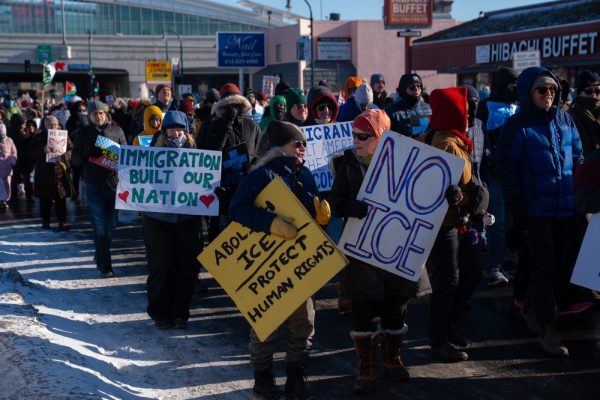
Over the past several days, commentary by Jose Alberto Nino has rightly characterized Minneapolis Mayor Jacob Frey’s response to the fatal shooting of Renee Nicole Good by a federal Immigration and Customs Enforcement (ICE) agent as an attempt to politicize the incident in opposition to federal immigration enforcement. Frey, writes Nino, “wasted no time twisting the death of Renee Nicole Good into a weapon against federal immigration crackdowns, all to keep the floodgates open for his community’s long-standing push for unchecked migration.”
Put differently, Frey’s response should be seen as reflecting the view that Jewish political leaders should capitalize on moments of crisis to advance broader ideological objectives. As a result, the incident was used as an opportunity to reinforce preexisting policy commitments. In that sense, Frey sought to project what Nino describes as Frey’s ethno-religious background and political trajectory onto the situation, framing the episode within a wider ideological narrative.
“Born in Arlington County, Virginia, he was raised in a culturally Jewish household where his father converted to Judaism and his mother, of Russian Jewish ancestry, clung to traditions despite her agnosticism.Frey’s Jewish identity permeates his life and politics. He attends two Reform synagogues in Minneapolis, Temple Israel and Shir Tikvah, alongside his wife Sarah Clarke—who converted to Judaism—and their two daughters. He sits on the board of the Jewish Community Relations Council and collaborates with Jewish Community Action. When Temple Israel suffered antisemitic graffiti vandalism in October 2025, Frey staunchly defended the synagogue and the broader Jewish community.”
Here, we encounter the case of a single individual, Frey, who obviously wields disproportionate influence relative to the broader population of Minnesota! Moreover, the public debate has been framed in such a way that non-Jewish groups are encouraged to contest a policy framework—namely, expansive immigration—that was initially formulated and promoted by the Jewish elite. This raises a serious methodological concern: how can one claim to be conducting rigorous research while declining to examine such a foundational factor in the analysis? Under these conditions, it is reasonable to question whether the work merits serious consideration. This concern is further underscored by Taylor’s decision to frame the issue as “Us vs. Them in Minnesota,” where “them” is used to refer to Somali immigrants, rather than to those Jewish actors and organizations that were instrumental in shaping the policies that produced the current situation in the first place.
Taylor expresses concern that “Minnesota now has more Somalis than any other state, and huge populations of Hmong, Burmese Karen tribespeople, and other non-European immigrant groups.” This observation, however, raises a prior and more fundamental analytical question: through which political decisions, institutional actors, and policy frameworks did these demographic changes occur? Taylor deliberately fails to address the role of immigration policy or the Jewish organizations responsible for shaping and implementing it. Instead, he attributes Minnesota’s current condition to what he describes as the moral failings of “nice, kind, trusting white people,” whom he portrays as having naively embraced large-scale immigration. By framing the issue in this manner, Taylor diverts attention away from the architects of immigration policy and toward a generalized cultural critique of “white liberals.” This approach obscures the structural and political dimensions of the issue and results in an analysis that is certainly dishonest and methodologically deficient.
Rather than engaging directly with the Jewish question and working it out in the situation in Minnesota or examining the specific actors and Jewish institutions that materially shaped Minnesota’s immigration landscape, Taylor instead redirects responsibility toward “white liberals.” In doing so, he effectively assigns causal blame to those people, as though it were this group—rather than identifiable Jewish organizations and activists and movements—that unilaterally opened the nation’s borders without legal constraint.
Taylor’s historical account further weakens his analysis. He asserts that the process began in 1919, citing the founding of the International Institute of Minnesota following the First World War and pointing to its contemporary slogan, “From arriving to thriving,” as indicative of the origins of the broader movement. This chronology is highly questionable. As argued in Kevin MacDonald’s work, the ideological and institutional foundations of modern immigration advocacy did not originate in 1919 but can be traced back at least to 1881.
By selecting a later starting point, Taylor adopts a strategically narrow historical frame that discourages his readers from asking more fundamental questions—namely, who initiated the movement, which organizations were involved, what ideological commitments motivated them, and how these efforts were sustained over time. This selective periodization limits serious inquiry and obscures continuity across decades. Consequently, readers sympathetic to Taylor’s broader project, including supporters of the American Renaissance, are deprived of essential contextual information, which may lead them to endorse his conclusions despite significant gaps in historical explanation and analytical rigor.
The critical variable in Minnesota’s demographic and social challenges is not the country of origin of migrants—whether Somalia, Afghanistan, Kyrgyzstan, Belgium, or elsewhere—but the legal status under which migration occurs and the ideological frameworks that justify it. Large-scale unlawful migration, particularly when legitimated through expansive and loosely defined asylum narratives, has consistently been associated with economic strain, pressure on public services, and social fragmentation. These outcomes are well documented in immigration policy and political economy literature.
Furthermore, support for such policies often emerges from Jewish revolutionary and ideological currents that view social disruption as an instrument of systemic change rather than as a social cost. In the United States and other Western societies, advocacy for mass illegal immigration is typically advanced by specific political actors, institutional networks, and ideological movements whose commitments prioritize abstract humanitarianism over legal sovereignty, civic cohesion, and democratic accountability.
A related issue that warrants careful examination is the ideology of multiculturalism, which rests on the relativistic premise that all cultures are equally valid. Under this framework, practices that vary widely in their moral and social consequences are treated as normatively equivalent. Anthropological and sociological research, however, demonstrates that so-called “traditional” or premodern societies have differed dramatically in their customs and institutions, ranging from practices such as child sacrifice or polygamy to those that emphasize family stability and monogamous marriage.[14]
Multiculturalism, as an ideological doctrine, effectively asserts that such divergent practices—child sacrifice and family-centered norms, polygamy and monogamy—are equally legitimate expressions of culture. When consistently applied, this reasoning culminates in full-scale cultural relativism. Yet cultural relativism, taken seriously, would undermine the very foundations of historical inquiry, moral evaluation, and scientific anthropology. If all cultural practices were beyond judgment, comparative analysis would be impossible, and institutions premised on universal norms—such as international human rights bodies—would lack any coherent basis for operation.
In practice, few scholars or policymakers fully embrace the implications of strict cultural relativism. Even those who rhetorically defend multiculturalism routinely rely on implicit normative standards when evaluating social practices. This internal contradiction reveals a fundamental weakness in multiculturalist ideology: it denies the legitimacy of objective evaluation while simultaneously presupposing it in theory and practice.
In South Korea, multiculturalism has been linked in public discourse to rising concerns about gang-related crime and sexual violence. These developments have generated significant public unease, particularly regarding the government’s continued support for policies that many citizens perceive as ineffective. Lee Jae-Hoon, an attorney affiliated with the National Police Agency’s Foreign Affairs Bureau, has stated that gang activity has produced considerable shock among the South Korean public. According to official reports, a substantial proportion of individuals implicated in these incidents originate from countries such as China, Sri Lanka, Vietnam, Pakistan, and the Philippines, with some having allegedly entered the country through unauthorized channels.
In 2011, twenty-five gang members of Sri Lankan origin were arrested in Ansan, Gyeonggi Province, for repeatedly assaulting individuals from their own national community who refused to comply with their directives. In the same month, three Vietnamese gangs operating an illegal online gambling network were apprehended in Jinju, South Gyeongsang Province.[15] The article further reports that, of all crimes committed by foreign nationals in 2011, 3,432 convictions involved individuals from the countries previously mentioned.[16]
On April 1, 2012, a forty-year-old Chinese Korean man was arrested in Suwon, Gyeonggi Province, for the rape and subsequent dismemberment of a twenty-eight-year-old South Korean woman—an incident that once again provoked widespread public shock and concern within South Korea.[17]
One widely cited case is that of Kang Su-hyun, a young South Korean girl who was murdered by an undocumented migrant worker from the Philippines, identified in official reports only as “J.” According to the account, the perpetrator forcibly pulled Kang from an alleyway with the intent to commit sexual assault. When she resisted, he fatally stabbed her once in the back and multiple times in the abdomen, neck, and chest using a kitchen knife.[18]
The incident provoked widespread public outrage, with many South Koreans expressing the view that the media had failed to provide adequate coverage of the case. Critics argued that this perceived silence reflected an increasing tendency within parts of the media to endorse a form of multiculturalism that, in their assessment, existed largely at the level of journalistic abstraction rather than social reality. Cho Dong-hwan, head of the Foreigners’ Crime Eradication Association, articulated this concern, stating: “I heard that none of the major newspapers turned up to report on the case when police conducted an on-site inspection of the crime scene approximately one week after Kang’s death.”[19]
In response to these high-profile criminal cases—many of which involved undocumented migrants or individuals with prior criminal records—a petition was submitted to the Korea Immigration Service calling for stricter regulatory measures for foreign nationals. Proposed measures included more rigorous background checks, mandatory fingerprinting, and, in certain cases, deportation.
The reported increase in crimes involving foreign nationals contributed to the perception that certain foreign groups were increasingly viewed with suspicion within segments of the South Korean public. Cho attributed this development to what he described as “multiculturalism,” characterizing it as a policy that, in his view, amounted to a form of reverse discrimination.[20]
In sum, the particular model of multiculturalism promoted in the United States under the rubric of “diversity” is incompatible with principles of practical reason. From this perspective, the recurring question is not merely whether multiculturalism should be adopted, but which actors have historically advanced it as a dominant ideological framework. Therefore, the central issue does not lie with recent intolerable situations in Minnesota but rather with established Jewish intellectual and cultural elites. As we have already seen, Jewish intellectuals and organizations have played a significant role in the development and promotion of multiculturalist ideas in the United States. As early as 1976, for example, Irving Howe’s influential work World of Our Fathers: The Journey of the East European Jews to America and the Life They Found and Made articulated a vision of American society that emphasized cultural pluralism and ethnic continuity.[21]
So, the situation in Minnesota is more complex than Jared Taylor and his supporters suggest. It involves, first, debates over expansive immigration policies, which have historically been examined in relation to Jewish intellectual, political, and organizational advocacy. It also involves the role of U.S. law-enforcement agencies—including Immigration and Customs Enforcement (ICE)—that have engaged in cooperation and training initiatives with Israeli security institutions. Taken together, these factors indicate that the dynamics at play cannot be adequately explained through a simplified or monocausal narrative.[22] David C. Friedman, the Anti-Defamation League’s Washington, D.C., regional director and director of national law enforcement initiatives, stated that the objective of these programs is “to learn lessons from Israel with respect to tactics and strategies, the evolution of terrorism, and models of leadership.”[23]
From this perspective, the implication is that, despite its long historical experience, the United States has continued to struggle with the problem of terrorism and has therefore sought to learn from Israeli counterterrorism practices. However, Friedman’s subsequent remarks suggest a broader ideological dimension to these training initiatives. He stated that Israeli-led training of U.S. officials would help build institutional and cultural ties “between law enforcement agencies in two democracies.” He further asserted that, following such exchanges, U.S. officials would return with a stronger identification with Zionism, having developed a deeper understanding of Israel and its security concerns—an understanding he suggested was lacking among many other audiences.[24]
When U.S. officials return to the United States,[25] the groups most directly affected are the general public, who often bear the social, political, and economic consequences of these policies and decisions. When Jewish political and institutional elites succeed in framing domestic tensions—whether between citizens, immigrant groups, illegal aliens, or ideological factions—as conflicts among the population itself, the result is prolonged social fragmentation. Over time, such divisions may intensify into deep mutual hostility, while the Jewish actors who helped shape the underlying policies and narratives remain largely absent from public scrutiny. Therefore, Jared Taylor’s analysis is viewed as obscuring these dynamics by redirecting blame toward visible social groups such as “white liberals” rather than examining the more influential Jewish forces that have contributed to the conditions underlying the crisis. Historically, European and American societies—and, more broadly, much of the Western world—have contended with those Jewish forces and their political and ideological developments over the centuries.
In other words, the underlying ideology has positioned the populace in a conflict wherein individuals are effectively incentivized to harm one another. Rather than addressing the underlying and more substantive issue, Jared Taylor deflected criticism onto “white liberals.” Specifically, when presented with the choice of attributing blame for the crisis in Minnesota to either “white liberals” or the Jewish elite, Taylor elects to assign responsibility to white liberals.
Jared Taylor reminds me of Fyodor Karamazov in Dostoyevsky’s The Brothers Karamazov, a character who, throughout his life, manipulates and evades the truth, never fully submitting to practical reason. Even when confronted with an unambiguous account of his own nature, he continues to skirt and equivocate about his actions, as though the truth holds no significance for him. As he is told:
“The main thing is that you stop telling lies to yourself. The one who lies to himself and believes his own lies comes to a point where he can distinguish no truth either within himself or around him, and thus enters into a state of disrespect towards himself and others. Respecting no one, he loves no one, and to amuse and divert himself in the absence of love he gives himself up to his passion and to vulgar delights and becomes a complete animal in his vices, and all of it from perpetual lying to other people and himself. The one who lies to himself is often quick to take offense.”[26]
Notes
[1] Kevin MacDonald, “Jewish Involvement in Shaping American Immigration Policy, 1881-1965: A Historical Review,” Population and Environment: A Journal of Interdisciplinary Studies, Volume 19, Number 4, March 1998: 296: http://www.kevinmacdonald.net/Immigration.pdf .
[2] Ibid.
[3] Ibid.
[4] Sander Gilman, Jews and Multiculturalism (New York: Routlege, 2006), 45.
[5] See for example David Biale and Michael Galchinsky, eds., Insider/Outsider: American Jews and Multiculturalism (Berkeley: University of California Press, 1998); Marla Brettschneider, The Narrow Bridge: Jewish Views on Multiculturalism (New Brunswick: Rutgers University Press, 1996); Hana Wirth-Nesher, Call It English: The Languages of Jewish American Literature (Princeton: Princeton University Press, 2008).
[6] Andrew Silow-Carroll, “How a 100-year-old law changed American immigration policy to this day,” Jewish Telegraphic Agency, April 7, 2024.
[7] Ronald Radosh, Commies: A Journey Through the Old Left, the New Left and the Leftover Left (San Francisco: Encounter Books, 2001).
[8] Quoted in Jacob Gurvis, “Some Jewish groups protest Biden’s executive order on immigration, but others are staying silent,” Jewish Daily Forward, June 7, 2024.
[9] https://en.wikipedia.org/wiki/HIAS .
[10] Gurvis, “Some Jewish groups protest Biden’s executive order on immigration, but others are staying silent,” Jewish Daily Forward, June 7, 2024.
[11] Ibid.
[12] “HIAS Condemns Immigration Enforcement Actions in Minnesota,” https://hias.org/statements/hias-condemns-immigration-enforcement-minnesota/ .
[13] Gurvis, “Some Jewish groups protest Biden’s executive order on immigration, but others are staying silent,” Jewish Daily Forward, June 7, 2024.
[14] For sociological and anthropological studies, see Lawrence H. Keeley, War Before Civilization: The Myth of the Peaceful Savage (New York: Oxford University Press, 1996); Robert B. Edgerton, Sick Societies: Challenging the Myth of Primitive Harmony (New York: Free Press, 1992); Rodney Stark, Discovering God: The Origins of the
Great Religions and the Evolution of Belief (New York: HarperOne, 2007); Will Durant, Our Oriental Heritage (New York: Simon & Schuster, 1954).
[15] Yim Seung-hye, “Rise of Foreign Gangs Attracts More Police Scrutiny,” Korea JoonGang Daily, February 23, 2012.
[16] Ibid.
[17] “Corrupt and Incompetent: Tragedy Casts Doubt on Role of Police,” Korea Times, April 8, 2012; Na Jeong-ju, “Suwon Murder Shames Police,” Korea Times, April 8, 2012.
[18] Seung-hye, “Rise of Foreign Gangs Attracts More Police Scrutiny.”
[19] Ibid.
[20] Ibid.
[21] See Matthew Frye Jacobson, “A Ghetto to Look Back To: ‘World of Our Fathers,’ Ethnic Revival, and the Arc of Multiculturalism,” American Jewish History, Vol. 88, No. 4 (December 2000), pp. 463-474.
[22] Ben Hartman, “American law enforcement learns anti-terror tactics from Israeli experts,” Jerusalem Post, September 9, 2015.
[23] Ibid.
[24] Ibid.
[25] For other sources, see also Christie Diez, “Atlanta law enforcement trained Israeli officers months before attack,” https://www.11alive.com/article/news/world/atlanta-law-enforcement-israel-georgia-international-law-enforcement-exchange-gilee/85-f99341d7-3eaf-418e-9704-f2ad498cc949; Matthew Petti, “Do Small Town Cops Need Training in Israeli Counterterror Techniques?,” https://reason.com/2022/06/20/do-small-town-cops-need-training-in-israeli-counterterror-techniques/; Sasha Heller, “ “GILEE Brings Georgia Police, Safety Chiefs to Israel,” Atlanta Jewish Times, August 9, 2023; “U.S. Police are Being Trained by Israel—And Communities of Color Are Paying the Price,” https://progressive.org/latest/us-police-trained-by-israel-communities-of-color-paying-price-shahshahani-cohen-191007/; “Tom Tugen, “Larry Greenfield to head JINSA,” Jewish Journal, February 8, 2012.
[26] Fyodor Dostoyevsky, The Brothers Karamazov (New York: Penguin Classics,1993), 62-63.
By Jonas E. Alexis