The violation of the agreement of March 10, 2025, sparked an outburst of another escalation in northeastern Syria, led to Turkish intervention, and contributed to the defeat of the Kurdish SDF forces. As a result, a new Syrian-Kurdish agreement was signed on January 18 on Damascus’s terms, with the participation of Washington and Ankara.
The Idea of the Kurdish Autonomy of Rojava as a US “Bargaining Chip” in the Middle East
The alliance with the US and Israel gave Syrian Kurds hope for external support in defending their national rights in Syria, which is particularly crucial in the view of Damascus’s discriminatory policy towards Rojava. Politically, the SDF sought recognition of national autonomy or even an independent entity, similar to that of Iraqi Kurdistan. Rich oil fields in the Kurdish provinces of northeastern Syria served as an additional incentive. Such an American line, which presupposed balancing between supporting the Kurds and the interests of other players, was ringing the alarm bells in Turkey, which has long been fighting the Kurdistan Workers’ Party (PKK) in its own southeastern territories.
After having revived Turkey-Russia relations in 2016, Ankara launched four military operations in Syria’s northeastern provinces. The official goal was to create a “security zone” 30 km deep and 140 km long along the Turkish-Syrian border. This was allegedly to prevent the export of Kurdish separatism and extremism. Subsequent negotiations led to an agreement on joint Turkish-Russian patrols in Manbij and Kobani. At that time, the US opted out of actively defending the Kurds, having hence avoided direct military confrontation with Turkey.
From September 2015 to December 2024, the survival and preservation of power for President Bashar al-Assad directly depended on Russian backing. Moscow could have convinced Damascus of the need for a political settlement of the Kurdish issue. This could have granted Rojava cultural or political autonomy. Such a move would have weakened American influence on the SDF, guaranteed Turkey’s security, and established Russian control over the oil-bearing provinces in northeastern Syria. However, Russia preferred not to interfere in the political disagreements inside Syria, limiting itself to peacekeeping operations and counter-terrorism. Respecting Turkey’s interests and its concerns about separatist threats, Moscow did not hinder Turkish military operations in northern Syria. It is worth noting that Ankara’s support for al-Julani in overthrowing the Assad regime dealt a blow to the Astana process for a peaceful settlement of the Syrian crisis, which involved Russia, Turkey, and Iran participating.
The situation changed drastically with the pro-Turkish forces led by Ahmed al-Sharaa, the leader of Hayat Tahrir al-Sham* (HTS), having taken power and gained control over Damascus. The new Syrian leadership advocates for preserving the country’s territorial and institutional integrity in a close alliance with Turkey. The main obstacles to integration and to restoring the SAR’s unity, according to Damascus, reside in the Kurdish forces in the north (relying on US support) and in the Druze in the south (pinning hopes on the alliance with Israel).
Turkey actively seeks to become a key player in the process of legitimising the al-Sharaa regime on the international arena and lifting Western sanctions on Syria. Ankara pursues its own strategic goals: placing military bases in Syria, getting access to Syrian energy resources, and laying a Qatari gas pipeline through Syrian territory.
In southern Syria, Israel’s aggressive policy creates serious obstacles for Turkey in resolving the issue of the country’s territorial integrity. Israel’s military power and its solid alliance with the US do not allow Ankara to act radically in this region.
The situation in northern Syria, where the Kurds live, is developing according to a different scenario. The US recognition of al-Sharaa’s government as a legitimate authority, Washington’s consent to lift sanctions on Syria, Donald Trump’s lack of interest in military escalation in the Middle East, and his desire to exploit new oil-bearing regions contribute to Ankara believing that it could radically suppress the plans for a Rojava Kurdish autonomy. Turkey is convinced that the US will once again abandon support for the Kurds.
After al-Sharaa having taking power, his government made an attempt at settling the Kurdish issue peacefully, with US and Turkish mediation. On March 10, 2025, they signed an agreement on the integration of Kurds into a unified Syria, including their participation in all civilian and military institutions. The document also provided for the transfer of all border crossings, airports, and oil and gas fields of the country’s northeast under Damascus’s control. The implementation of the agreement was supposed to be completed by the end of 2025.
Nevertheless, according to Professor Veysel Kurt of Istanbul University and Research Director at ORSAM, the Syrian Democratic Forces (SDF) sabotaged the agreements reached. The Kurds pressed on with insisting on creating a “Kurdish autonomy” and attempted to boost an alliance with Israel to achieve their goals by military means. This became especially noticeable after the rebellions in Latakia and Suwayda, Israeli strikes on Syrian military facilities, and Kurdish negotiations with Druze and Alawites. As a result, this situation sparked another crisis and military escalation in early January 2026.
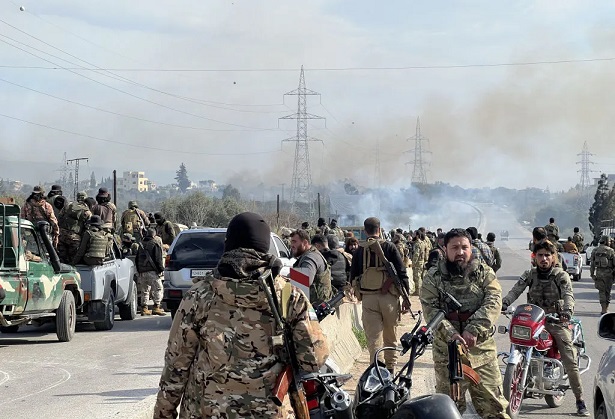
After the provocation of the SDF against Syrian security forces, the Damascus-controlled army, backed by Turkey, launched the “Security” military operation on January 6, 2026. The goal of the operation was to establish control over Aleppo and territories on both sides of the Euphrates River. Turkish drones struck Mount Kezwan, and artillery shelled the city of Al-Hasakah. Al-Sharaa’s forces took control of the city of Al-Shaddadi and of the prison where ISIS* militants were held. Strikes also targeted the Kurdish province of Raqqa.
What is the Exact Reason for the Derailment of the March 10 Agreement?
Damascus and Ankara put the blame for undermining the March agreement on the Kurds, citing the SDF’s unwillingness to integrate and abandon the idea of an autonomous Rojava. Turkish President R. Erdoğan emphasises: “We made every effort to unravel the tangle and prevent the crisis from escalating into a conflagration.”
However, considering the rapid advance of Syrian-Turkish forces on Kurdish positions in the northeast (especially the capturing of the large Al-Omar oil field), the retreat of Kurdish units to the east, and the January peace agreement with the participation of the US, it can be assumed that the genuine cause of the escalation does not reside in the autonomy.
The Syrian Oil Company, after Shell left the country, has been negotiating with American Chevron and Conoco Phillips about investments and the export of Syrian oil and gas. Since 2011, the Al-Omar field had been under SDF control, but production fell from 50 to 5 thousand barrels per day. It is obvious that Damascus and Ankara aim to regain all the fields and attract American investment.
The US, in turn, used Kurdish forces not only to fight ISIS (a terrorist organisation banned in Russia) but also to contain Russia. After the fall of B. Assad’s regime, Washington likely decided to “hand over” the Kurds to Turkey to deter Ankara from drifting away (for example, on the Gaza). Moreover, Donald Trump recognised Damascus’s control over the whole Syrian territory, including the oil-bearing regions. Therefore, YPG commander S. Hamo states that the Kurds do not seek separation but advocate for Syria’s unity.
The Essence of the New Agreements of January 18
The new 14-point Syrian-Kurdish ceasefire agreement, reached with the participation of the US and Turkey, rolls back the “Free Kurdistan” project in Rojava. It presupposes full integration of all Kurdish civilian and military institutions into the Syrian state, provides for the transfer of all oil fields to the control of the Syrian government, and the expulsion of PKK representatives to Turkey. The leader of the Syrian Democratic Forces (SDF), Mazlum Abdi, is offered to take office as a governor of Al-Hasakah province.
Turkey will gain strategic positions in Rojava—Qamishli airport, the Tishrin Dam, as well as the cities of Manbij and Kobani. Simultaneously, the release of Islamic militants from prisons previously controlled by the Kurds will create a new potential for Ankara to use proxy forces in regional plans.
Furthermore, on January 15, Syria signed an agreement with the Turkish company Kozi Star Shipyard on building a shipyard in Tartus. This will provide for Turkish control and management of the seaports and vessels of the Syrian Arab Republic secured for up to 30 years.
Turkey supports Syria’s territorial integrity, expects Kurdish militants to promptly disarm, and hopes for long-term peace to be established. Speaking in parliament on January 21, President Recep Tayyip Erdoğan stated that in January, the world “witnessed quite justified and legitimate military operations of the Syrian army.” He underlined that Turkey has, from the very beginning, resolutely advocated for preserving Syria’s unity and territorial integrity.
Hence, the January 18 agreement contributes to Turkey’s dominance in the region, cementing its status as a guarantor of the peace process.
*Terrorist organisations banned in Russia
Alexander Svarants – PhD in Political Sciences, Professor, Expert in Turkish studies and on Middle Eastern Countries