Leaders in Latin America, North Africa and the Middle East saw the prosperity of industrial Europe and wanted their own countries to achieve similar affluence. European promoters played on their hope that foreign investors and bankers would build railroads and canals to transport produce for export and earn the foreign exchange needed to modernize their economies. The easiest way to achieve this, investors explained, was to sell foreign concessions to develop domestic transportation, banking and other key sectors – which in the leading industrial nations had a more public mixed-economy character in order to deter extractive monopoly pricing.
In contrast to the reforms advocated by classical political economy to minimize rent-seeking at home, these peripheral countries permitted rent extraction by foreign investors in natural resources and monopolies, as Chapters 16, 17 and 18 have described. European governments backed their foreign investors in carving out rent-seeking monopolies in their dependencies and colonies, which suffered deepening trade and debt dependency on the industrial creditor core. This is what initiated the world’s economic polarization that today is leading these countries to join together to protect themselves from further loss of their sovereignty to the Western European and U.S. alliance.
Why Persia Attempted to Modernize by Granting Monopoly Concessions
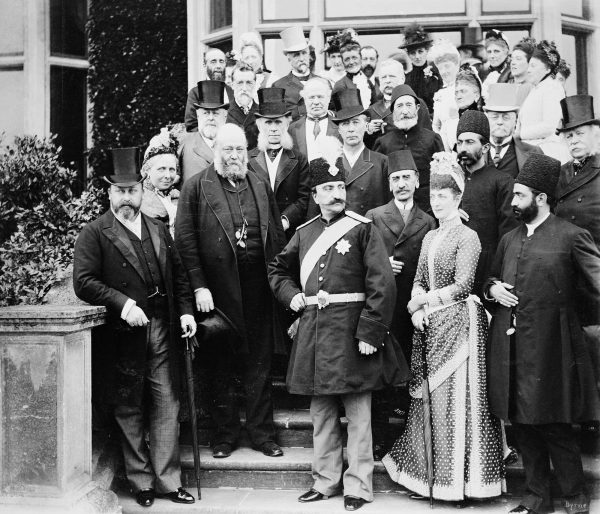
The manipulative British strategy used in Persia (formally calling itself Iran since 1935) under its Turkic Qajar dynasty (1789-1925) is a textbook example of how European investment did not steer periphery-country development along the lines that Europe’s industrial nations themselves had followed. Persia’s ruler Shah Naser al-Din (1846-1896) granted British investors monopoly concessions in 1872, 1889, 1890 and 1901 for the country’s most desirable sectors: railways, tobacco, banking and ultimately its oil.
Persia was neither newly independent nor a colony, but it faced the same problem that confronted the newly independent countries described in Chapters 17 and 18: how to pay for the capital investment and management needed to industrialize its economy. For the newly independent countries the path of least resistance was to borrow from international banking consortia. But their trade deficits with Europe’s industrial nations left them unable to pay the resulting foreign debts. Their defaults pushed them even deeper into debt, obliging them to relinquish control of their monetary and banking policies to creditor committees.
Persia avoided this particular fate because its material backwardness made it slow to become a target for foreign bankers compared to Egypt with its Suez Canal and the other 19th-century countries whose borrowing left them saddled with foreign-appointed monetary commissions to control government spending on behalf of creditors. Although Persia’s first major bank was owned by British investors, its role was largely limited to foreign-exchange dealings to support foreign trade and payments. Its loans to Persia’s government (mainly to pay the army in time of conflict) were not disruptive and did not impose domestic austerity. Persia’s first significant foreign debt was not imposed until 1892, and it was a result of having to pay compensation for cancelling an ill-conceived and disruptive tobacco concession granted to British investors.
With little to attract foreign bankers, Persia’s only available path to obtain foreign investment and management to modernize its economy was to sell investors monopoly privileges for marketing specific crops, mining and transport infrastructure. The problem was that foreign investors sought for themselves the monopoly and natural-resource rents that might otherwise have become the national tax base for Persia’s own fiscal system.
Persia’s tax system, like that of feudal European and many other Middle Eastern countries, relied on tax farmers who promised a specific payment to the palace, keeping for themselves whatever they could extract in excess of their commitment. Their exploitative abuses were widely resented and usually blamed on corruption at court. It was natural for countries like Persia to hope that assigning concessions to foreign investors would introduce more modern and efficient practices. But it soon turned out that the concessionaires ended up with most of the monopoly-rent markup that they could extract over and above what they had to pay producers. And it was to obtain this monopoly privilege that they paid advances and bribes to local rulers and their court circles. As will be described below, the bribery of Persian officials by British investors provides a classic example of such corruption.
Persia’s Role in Britain’s Great Game to Control the Middle East and Asia
By 1796 the Qajar dynasty regained Persia’s former territories in the Caucuses that had been lost to Russia, but new fighting from 1801 to 1828 enabled Russia to recapture Georgia, Armenia, Azerbaijan and parts of Dagestan, with northern Persian territory neighboring Azerbaijan also ceded to Russia’s control under the 1828 Treaty of Turkmenchay. Britain sought to block Russia from gaining a path to India and commerce further eastward. By the time Britain defeated it in the Crimean War (1853-1856) this Great Game rivalry, known as the Eastern Question, pit Britain and its allies against Russia over control of what remained of the Ottoman Empire after its loss of Greece, Tunisia and Egypt as described in Chapters 17 and 18.[1]
Persia was viewed mainly in terms of its geopolitical position in this maneuvering. In the aftermath of the Crimean War, Britian’s success in the Anglo-Persian War of 1856-1857 blocked Persian influence via Baluchistan to the Indus River and much of what today is India, Pakistan and western Afghanistan. Britain wanted an independent Afghanistan as a buffer state against Russian access to India that potentially threatened its own imperial designs. The Treaty of Paris in March 1857 ended Persian control over Herat and neighboring Afghan territory. And by the early 20thcentury, Persia had lost the broad dominance that it had formerly wielded from the Persian Empire (550-330 BC) through subsequent expansion from the Caucuses and Samarkand in Central Asia eastward to Xinjiang, the Uyghur province in China’s far west.
The Reuter Monopoly Concession of 1872
Russia had made attempts to build a railroad in Persia to link its own expansion through the Caucuses to the Middle East and Central Asia. Viewing this as a threat to its own influence, Persia was amenable to British presence as a counterweight. A German-Jewish émigré to London, Paul Reuter, saw the potential for British investment in Persia to provide such an offset. Having been ennobled as Baron Julius de Reuter in 1871 in recognition for having founded what became the Reuter’s news service, innovating the use of telegraphic news coverage, he sought British support for a 70-year concession to build a railway from the Caspian Sea to the Persian Gulf, with a telegraph system along the way.
Reuter gained backing (although non-official) from the British government for what was expanded into a far-ranging concession covering all the sectors that might be developed. Starting with the railroad that would pay 20% of its profits to Persia, the contract ended up granting “the right to construct and operate tramways, work all the mines (except precious stones), construct waterways and sell water, and manage and generate revenue from forests and uncultivated lands.” It also included first-refusal rights to create a bank and other public works, and a 20-year concession to collect customs revenue, with Reuter’s concern to replace the existing contractors for the same return that they had been charging. Persia was to receive a fixed annual payment for five years, and then 60% of net revenue for the remaining years of the concession.[2]
This arrangement was backed by the Grand Vizier Mirza Hoseyn Sepahsalar, who had been Persia’s ambassador to the Ottoman Empire during its reforms after 1858. Shah Naser al-Din gave formal approval in July 1872. To them, its broad scope implied foreign investment to develop the entire economy. But bazaar merchants, tobacco growers and other interests saw the new monopolies as being granted at their expense, while the clergy and local Qajar tribal leaders viewed them as threatening their own authority. Russia also opposed the Reuter concession as threatening its own activities in northern Persia.
This broad opposition led the Shah to remove the Grand Vizier in September 1873 for his role in defending the concession. He then canceled it in November on the ground that Reuter had failed to develop the railroad in the stipulated fifteen months as he had promised. Reuter’s seemingly grandiose concession had little effect beyond making Persians wary of Europeanization.
Creation of the Imperial Bank of Persia (1889)
Reuter spent over a decade seeking compensation from Persia. He gained support from Britain’s ambassador to Persia, Henry Drummond Wolff, and also from the Persian ministry in London. In October 1888, Wolff was instructed to urge a settlement, and on January 30, 1889 the Shah granted Reuter’s family (his son had become active partner in his business) a new concession to create the Imperial Bank of Persia. Such a bank had been almost an afterthought in Reuter’s 1872 contract. Raising capital in London, the bank opened its first branch in Tehran in December 1889, and began issuing its own paper currency the following year.
The bank mainly engaged in foreign-exchange dealings for Europeans doing business with Persia, British India and Russia. There was little domestic lending, and even by 1908 “the Bank estimated that it handled only 6.5% of Iran’s foreign trade finance, with the remainder mainly in the hands of sarrafs,” Jewish moneylenders and merchants who were more flexible and familiar with the local market and its trade, as well as immune from Islamic sharia law forbidding the charging of interest.[3]
“What [the Bank] did help with,” notes its modern historian Geoffrey Jones, “was in lowering interest rates from those of the moneylenders.” And the paper currency that it began issuing in 1889 helped provide a more convenient and stable means of payment than coinage. But its loan operations remained quite parochial. “Like all British overseas banks until the 1950s,” Jones describes, it “would not employ locals as managers. … Attitudes within the Imperial Bank would now be regarded as grotesquely racialist.” Its British staff “were recruited for their ‘character’ and sporting abilities, and offered no training.”[4] Its main credit relations with Persia’s government were in response to British Foreign Office requests to make politically desirable loans to members of the pro-British bureaucracy or the Qajar family and notables – and to cease lending to those that it did not like.
However, as Jones notes, British overseas banks rarely have been a positive economic force. “The convention of British banking was to transfer as little as possible of shareholders’ funds to a foreign country … The Imperial Bank – like manufacturing multinationals in many host economies – was not a significant source of funds to supplement domestic savings,” but raised most of its funds from within Persia itself, using “a branch network to build up a local deposit base, which then financed lending.”[5] After Iran created its own national bank in the 1920s “the services of the Imperial Bank were unceremoniously disposed of.”[6] Like the Shah’s blanket concessions to Reuter in 1872, the Imperial Bank did little real damage. But the tobacco concession of 1890 nearly plunged Persia into civil war.
The Tobacco Concession of 1890 Leads to a Reaction Against Europeanization
Tobacco was Persia’s major export and most profitable domestic sector.[7] Shah Naser al-Din had attempted in 1886 to introduce a licensing system to tax shop owners on their tobacco sales, and this principle could have formed the basis for taxing tobacco growers and distributors as well. But it led to a strong opposition by the vested interests, especially from the bazaar merchants, and he dropped it early in 1887.
The licensing plan had been drawn up by Antoine Kitabgi, an Ottoman businessman who had come to Persia in 1879 and became Director General of the customs (1881-1893).[8] In 1889 the Shah brought him to England along with his Prime Minister (Amin al-Soltan) Mirza Ali Asghar Khan (1887-1896). Staying as a guest at Buckingham Palace in August, Kitabgi met with Britain’s Prime Minister Salisbury and his nephew, Major Gerald F. Talbot (whose older brother Arthur Balfour succeeded Salisbury as Conservative Prime Minister in 1902). It was at this meeting that the seeds were planted for what became the Persian tobacco concession.
Proposals to organize Persia’s tobacco trade already were being prepared by French investors, and also it seems by Russians, but the British outmaneuvered them. The affair provides a classic example of how Western concessionaires and their governments create webs of personal self-interest and payoffs to their counterparties in host countries. Talbot paid Kitabgi to covertly promote the British interest, promising to make him the concession’s manager if it was indeed granted to Britain.
Back in Tehran, the Prime Minister Mirza Ali Asghar Khan urged that any Persian concession should follow similar terms to the Ottoman Tobacco Régie[9] granted to a consortium of foreign banks in 1883 and approved by the Ottoman Public Debt Administration. In exchange for the equivalent of £700,000 and a promise of a fifth of the profits, the Ottoman Empire had granted a 30-year concession for domestic tobacco production and sale, but not for its foreign trade. Persia’s Prime Minister insisted that like the Ottoman concession, his own country should exclude from its concession the export of tobacco, which the Prime Minister hoped would continue to be the Persian government’s main source foreign exchange, and “allow producers and merchants to sell to customers of their choice (including the Régie),”[10] not oblige cultivators or merchants to deal only with the Régie – the specific problem that had led to such strong opposition to the Shah’s 1886 licensing system.
Britain’s ambassador Henry Drummond Wolff, having earlier pressed the Shah to settle with Reuter, now worked with Kitabgi behind the scenes to arrange for the customary bribery of court officials. Their adroit manipulation persuaded the Shah to grant a monopoly to Talbot’s Imperial Tobacco Corporation of Persia on March 20, 1890.[11] The contract was for 50 years, and covered both the export of Persian tobacco (a prized variety in foreign markets) and control over all domestic production and sale. The company would create its own tobacco Régie empowered to enforce permits for specific amounts of tobacco to be produced and sold at stipulated prices to the company’s agents, who would resell the crop to local tobacco merchants at prices set by the company. In other words, tobacco farmers were to sell their crop to Talbot’s company at a stipulated price, and the company would sell it to bazaar merchants at a markup.[12]Persia was to receive an annual sum of only £15,000, although it was promised a quarter of the company’s profits (to be calculated after paying a 5% dividend to its shareholders).
In February 1891, Talbot traveled to Persia and Naser al-Din publicly announced the terms of the concession. It was greeted by widespread protests. Browne reviews newspaper criticism to the effect that the Shah’s government gained nothing by letting a foreign company seek profits at the expense both of tobacco growers and merchants instead of administering the licensing and tax charges itself.[13]
The Tabriz bazaar was closed and Tehran’s merchants asked people to boycott tobacco sold via Talbot’s company as opposition spread against the Shah for turning Persia’s economy over to foreigners. Growers in Isfahan burned their crops instead of selling their tobacco to the company. Coffeehouses closed down, and hookah water pipes were smashed and piled up in front of the company’s offices.
Russia’s government also stepped in, claiming in September that the concession’s terms violated freedom of trade in Azerbaijan and neighboring northern Persian territory ceded to its control under the 1828 Treaty of Turkmenchay, as noted above. But the Shah evidently felt that British diplomatic support for the contract was sufficient for him to reject Russia’s objection.
Matters were aggravated by the British company bringing in thousands of foreign workers to administer the purchase of tobacco directly from the farmers. They brought un-Islamic practices, including the setting up of bars selling alcohol and gambling cafes, as well as Christian churches. This threatened the Shi’ite clergy’s social control, leading it to support the protests by tobacco merchants throughout the country. The Shiraz mullah Sayyid Ali Akbar advocated a boycott on tobacco sold to or by the company, and the confrontation escalated in May 1891 when the Shah removed him.
In July the influential ayatollah Mirza Shirazi (1864-1895) in Ottoman Iraq wrote a telegram to the Shah protesting the monopoly, and when the Shah ignored his appeal, he issued a fatwa (binding on all Shi’ites) on December 3, addressed to Tehran’s chief religious scholar (mojtahed) Mirza hasan Astiani. It called for a nationwide boycott of tobacco, and for Persians to break their hookah water pipes. Tens of thousands of copies of the fatwa were printed, “posted in every street, bazaar and mosque, heralded from every pulpit, and transmitted to all the provinces.”[14]
The conflict reached crisis levels on December 25 when “a declaration of jihad, allegedly from Shirazi, was announced for Monday [December 28] through placards posted all over Tehran.” Europeans were threatened and many left. The Shah held firm and ordered Astiani to either smoke conspicuously in public or leave Tehran. Astiani chose to leave rather than surrender, and on the day of his departure, December 28, protesters gathered around the Shah’s palace. The government’s troops fired on them, killing seven people.
Facing the threat of civil war, the Shah gave in and distributed 2,000 copies of a proclamation announcing that he would cancel the tobacco concession, and agreed to pay compensation to the families of protesters whom his soldiers had killed, and pardoned the protest’s leaders. Talbot’s contract was formally cancelled on January 6, 1892. Mirza Shirazi rescinded his fatwa, and Persians resumed smoking.[15]
However, a new problem arose. Canceling the concession obliged the government to pay compensation. It “offered £300,000 to the concessionaires, who demanded £650,000, and ultimately obtained £500,000.” The government borrowed the money from the Imperial Bank of Persia on April 27, 1892, paying 6% interest, £30,000 annually, and pledging its Persian Gulf customs revenue as collateral for the payments over the next forty years.[16] This borrowing became Shah Naser al-Din’s first and only significant foreign debt.
To pay its interest charge, he had to borrow from the Russian-owned Loan and Discount Bank of Persia, established in 1890 as a private counterweight bank to Reuter’s bank, and taken over by the Russian government in 1894 as an adjunct of its own state bank. As Nikkie Keddie has summarized: “The British policy in 1888–90 of encouraging economic concessions by the shah – which was favored by Prime Minister Lord Salisbury and the Foreign Office but pushed with special energy by the British envoy Wolff – had backfired. Russian counter-concessions and Russian support for the tobacco movement led to an increase in Russian, and not British, influence.”[17]
But for Talbot’s stockholders the compensation was a bonanza. In just one year the nominal £15,000 that the company paid for the contract (not including the bribes that were disbursed) had multiplied over 30-fold. As for Kitabgi, his reputation was unsullied, because instead of becoming the company’s manager he had been sent abroad by Persia to negotiate a settlement on an unrelated problem. After his return, he remained at the royal court to help promote the oil concession of 1901 to the British.
Naser al-Din sold new tobacco rights to a French company later in 1892, but retained domestic control of tobacco marketing for Persian merchants. He did so in consultation with the clergy, whose nationalistic focus became a lasting foreign policy. The Shah himself had lost his faith and trust in the British and other Western Europeans, and discouraged their influence during the remaining four years of his life. On the eve of celebrating his fiftieth year of rule, he was assassinated in 1896 by an Islamic critic of European imperialism and the concessions that the Shah had made to it.
His notoriously self-indulgent son, Mozaffar ad-Din Shah Qajar (1896-1907), granted the D’Arcy oil concession to a British investor in 1901.[18] In 1905, protests led by bazaar merchants became widespread against his rule and mismanagement of the country and the new tariffs that he imposed. As in the Tobacco Protests of 1891-1892, the most organized leaders were the clergy via the mosques. After soldiers entered a mosque to disrupt a gathering of opponents of the palace the protesters were able to mobilize popular pressure that ended up creating a constitutional monarchy in 1905. That paved the way for the Qajars to be overthrown in 1925.
British maneuvering then installed General Reza Shah (1925-1941) who, like his son Reza Shah Pahlavi (1941-1979), acted on behalf of British (and subsequent U.S.) interests. After the 1953 British-U.S. coup overthrew the elected Prime Minister Mohammed Mossedegh (1951-1953) to prevent him from gaining Persian control over the nation’s oil, the Shah tightened his military dictatorship. That led to yet another nationalist reaction in 1979 – the Iranian Revolution – once again spearheaded by the Shi’ite clergy. Britain, the United States and their Western allies imposed sanctions intended to isolate and overthrow the Iranian Republic by preventing it from having normal trade and economic relations with the West. The effect was to turn Iran into one of the most anti-Western economies.
How Western Rentier Diplomacy Has Polarized the World Economy
The 19th century saw the Ottoman Empire’s sphere of influence from Greece to Tunisia and Egypt pried away by Britain, France and other creditor nations, whose diplomacy indebted Europe’s Middle Eastern and North African periphery, along with Latin America, and gained control of their most lucrative rent-yielding sectors and monopolies. In contrast to the classical political economy of industrial capitalism aiming at freeing national markets and economies from rent-seeking, the foreign policy of the leading industrial nations created an indebted rentier periphery from which land and natural-resource rents and monopoly rents, along with debt service, were extracted by foreign investors and creditors ruling via client rulers and rentier oligarchies. The resulting economic asymmetry, polarization and inequality has plagued the world economy over the last two centuries.
These two centuries have seen Western financial and related rentier interests create a world monetary and trade system that has blocked economic autonomy for most non-Western countries and prevented them from promoting their own growth along the lines that have succeeded for the industrial creditor nations. The latter’s diplomacy has imposed austerity and trade dependency by preventing countries from controlling their own monetary and tax systems, enabling bank consortia to carve up for themselves the most lucrative sources of land and natural-resource rents and monopoly rents.
The initial mode of financial control over countries was, in most cases, based on debt leverage. Starting in the late 17th century this went hand and hand with the spread of parliamentary democracy. In a European arena of rivals seeking power on the battlefield, countries sought to obtain war financing by providing creditors with parliamentary assurances giving fiscal priority to payment of their war debts. But bank support for representative governments outside of Western Europe ended at the point where countries began to seek autonomy from Western financial interests. To block such moves, the diplomacy of international banking reverted to supporting client autocracies such as the British-backed Pahlavi Shahs. These arrangements were akin to those of the medieval Roman Church backing absolutist warlord kings pledging fealty to the papacy and leaving it in charge of domestic church finances.
Secular progress has meant that such control no longer is backed by religious dogma. The threat of excommunication from access to heaven has been replaced by neoliberal ideology claiming that the sanctity of creditor and other rentier claims is the essence of free markets. In practice this has meant the rise of a managerial order enforced by international institutions managed and staffed by rentier elites and their servants, and based on the unequal monetary and legal relationships that they have written into secular international law and practice. These institutions, most notably the World Bank and International Monetary Fund, back the pro-Western autocracies on behalf of the West’s financial and rentier interests.
Today’s Western support of client dictatorships from Latin America to the Middle East is epitomized by what President Franklyn Roosevelt is reported to have quipped in 1939 about Nicaragua’s dictator Anastasio Somoza Garcia: at least “he’s our son of a bitch.” But as in antiquity, the ultimate backup power is military force or more covert interference to bring about regime change (today’s “color revolutions”) in cases where creditor interests and government diplomacy have failed to block reform.
Iran, however, is one of the few countries where such Western diplomacy and interference ultimately failed. Persia was perhaps the first and indeed the most peripheral country whose resentment against selling monopoly privileges to foreign interests led to a powerful and successful nationalist reaction, one which, as discussed above, gained a strong enough momentum from the 1870s to the early 1900s to create the first Islamic constitutional state in 1905, then to replace the Qajar dynasty in 1925, and end up as today’s Islamic Republic. The 1891 Tobacco Revolt provided a precedent that culminated in the 1951 attempt by Prime Minister Mohammed Mossedegh to regain control of his country’s oil reserves by nationalizing the Anglo-Iranian Oil Company. The British-U.S. 1953 coup and then autocratic police state under Reza Shah Pahlavi led to a new anti-Western revolution in 1979. As in the 1890s, it was spearheaded by the Shi’ite clergy, who created the Islamic Republic.
Notes
[1] Britain’s Great Game has continued down to the present day, shaped by Halford Mackinder’s geopolitical contrast drawn in 1904 between seaborne coast countries and the Eurasian heartland. Gerald Morgan, Anglo-Russian Rivalry in Central Asia, 1810-1895 (London, 1981):101 describes Persia during the 19th century as being “in a permanent state of near collapse’’ and hence playing only a passive role, caught in the middle between the two rival geopolitical powers (available at https://archive.org/stream/dli.pahar.3560/1981%20Anglo-Russian%20Rivalry%20in%20Central%20Asia%201810-1895%20by%20Morgan%20s_djvu.txt).
[2] Ceren Uçan, “A tale of two railways and the Reuter family,” Middle Eastern Studies 55 (2019):22-32, available at https://doi.org/10.1080/00263206.2018.1485658, provides a thorough discussion and references, based on the contractual details in the British National Archives, ‘Reuter Concession of 25 July 1872 (Text),’ Foreign Office Papers (FO 371/1185, file no: 3606, no: 6824, 23 February 1911). Uçan describes the Shah as seeing this concession to Reuter as an opportunity to play British interests against those of Russia, as well as providing an increasing royal revenue. George Curzon in Persia and the Persian Question (London, 1892) provides the official British view.
[3] Geoffrey Jones, “The Imperial Bank of Iran and Iranian Economic Development, 1890-1952,” Business and Economic History 16 (Cambridge, 1987):76, summarizing his Banking and Empire in Iran (Cambridge, 1986). The Sassoon banking family’s founder, David Sassoon, got his start in Baghdad (Iraq) and moved to the Persian port city of Bushehr in 1828 for four years, and then eastward to India and China. He bought almost a third of the Imperial Bank’s London share issue and had a seat on its board. His own firm’s profits were made largely from the trade in opium, which was a major Persian export.
[4] Jones, “The Imperial Bank”:73-77.
[5] Jones, “The Imperial Bank”:72 and 74. Peripheral countries had no practice of backing domestic bank credit by government debt.
[6] Jones, “The Imperial Bank”:79. The 1907 Anglo-Russian convention divided Persia into British and Russian spheres of influence. The British Imperial Bank’s operations were limited to southern Persia, while Russia’s Loan and Discount Bank of Persia was assigned the north. Russian influence continued after its 1917 Revolution, until Britain drove it out by the early 1920s.
[7] Fatema Soudavar Farmanfarmaian, “Revisiting and Revising the Tobacco Rebellion,” Iranian Studies 47 (2014):595-625, available at http://dx.doi.org/10.1080/00210862.2014.899189, 597. “Tobacco directly impacted the daily lives of an estimated 2,500,000 consumers and the subsistence of some 200,000 people involved in production and sale, from cultivators, including overseers of the large landholdings of religious endowments or waqfs, to retailers and wholesale or export merchants.” (hereafter referred to as “The Tobacco Rebellion”).
[8] Leonardo Davoudi, “Divine Spark: The Prelude to the Tobacco Régie of 1890,” Iranian Studies 47 (2014):508 describes Kitabgi as “the advisor and intermediary of the second Reuter Concession of 1889, the Tobacco Régie of 1890 and, most famously, the D’Arcy Oil Concession of 1901.” His article draws on Kitabgi’s diaries to trace the web of deception and bribery leading to Persia’s tobacco concession – a corrupt behavior much like that of Tunisia’s treasurer and Prime Minister Mustapha Khaznadar discussed in Chapter 16.
[9] The Régie was the agency in charge of regulating tobacco production and had monopoly rights over its trade. It was public in the Ottoman case, but privatized in the hands of Talbot’s company in Persia.
[10] Farmanfarmaian, “The Tobacco Rebellion”:598 and 614-615. For its part, “the Ottoman state renounced the collection of taxes on tobacco, except for the tithe.”
[11] The Shah is said to have received a £5,000 reward, with bribes also paid to his son Kamran Mirza and Prime Minister Mirza Ali Khan Amin al-Soltan. See Farmanfarmaian, “The Tobacco Rebellion”:595-598, agreeing with the emphasis placed on Wolff’s dealings on behalf of the British government along with Kitabgi by Davoudi and by Nikki R. Keddie, Religion and Rebellion in Iran: The Tobacco Protest of 1891-92 (London, 1966):35-39 and 78-79.
[12] Edward G. Browne, The Persian Revolution of 1905-1909 (Cambridge, 1910):33-35 cites the glowing account laid out in the company’s prospectus distributed on November 3, 1890, claiming that tobacco growers would receive a higher and fairer price for their crops than existing intermediaries and bazaar merchants were paying. But Farmanfarmaian, “The Tobacco Rebellion”:597 comments that “The concessionaire’s contention that the deal would benefit cultivators by paying cash and freeing them from merchants’ exactions was a fallacy, as cultivators had always received cash or advance payment for their crop. Instead, the foreign monopoly would deprive sellers of the freedom of action that a competitive market had hitherto allowed.”
[13] Browne, The Persian Revolution:47-48.
[14] Farmanfarmaian, “The Tobacco Rebellion”:596. See also Browne, The Persian Revolution:52-55. The aim was to end the British concession by making its tobacco business unprofitable, “and to mobilize opposition to the Shah and his prime minister to end all concessions, old and new, including wine-making, the tramway, the railroad, the bank and the Ahwaz Road,” concludes Farmanfarmaian (p. 617).
[15] Farmanfarmaian, “The Tobacco Rebellion”:614.
[16] Browne, The Persian Revolution:57: In the next few years the Shah raised money by granting the British small concessions for mineral prospecting, to establish another bank, and to trade along the Karun, Persia’s largest and only navigable river. To maintain diplomatic balance he also gave Russians the exclusive right to its caviar fisheries. For a documentary treatment see “The Fatwah: Story of Iran’s Tobacco Protests,” The Lion and the Sun (2023), https://thelionandthesun.org/407/the-fatwah-the-story-of-irans-tobacco-protests/.
[17] Keddie, Modern Iran (New Haven, 2008):62, available at https://warwick.ac.uk/fac/arts/history/students/modules/hi173/classesandreading/iran/modern_iran_–chapter_4.pdf. See also her Religion and Rebellion in Iran: The Tobacco Protest of 1891-92.
[18] Davoudi’s Persian Petroleum: Oil, Empire and Revolution in Late Qajar Iran (2020) describes the ongoing influence of Kitabgi and Wolff in the bribery and anti-Russian maneuvering involved with the grant of the 1901 oil concession to the British investor William Knox D’Arcy. The concession would be taken over in 1909 by the Anglo-Persian Oil Company, renamed the Anglo-Iranian Oil Company in 1935 (when Reza Shah Pahlavi changed the name of Persia to Iran as “the land of the Aryans”) and British Petroleum in 1954, after the Anglo-American coup of 1953.
[19] The international expansion of U.S. banks after World War I was largely to finance the postwar triangular flow of dollar credit from U.S. banks to German municipalities and companies, to the Reichsbank’s payment of reparations to France and Germany, and to their governments’ payment of Inter-Ally arms debts to the United States. The collapse of that triangular flow from 1929 to 1931 led to the Great Depression that paved the way for World War II and its own financial aftermath that saw the United States Government own 80% of the world’s monetary gold by 1950 and use its financial leverage to become the ultimate neo-colonial power.
By Michael Hudson