Casino Slots Autoplay: The features in this game are not overly complicated and players will enjoy the free spins bonus round where you can potentially get up to a whopping 180 free spins.
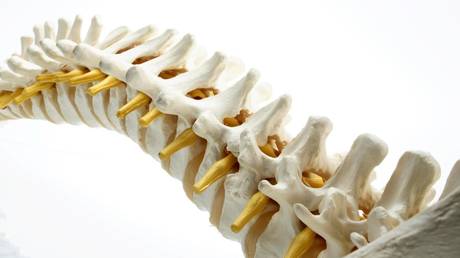
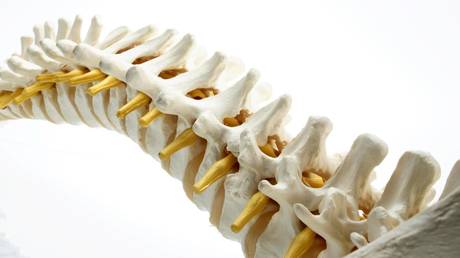
Using a somewhat controversial stem cell therapy, a joint team of Japanese and US-based researchers have successfully repaired some damage in 13 patients with spinal cord injuries (SCI).
SCIs can often cause permanent loss of movement and physical sensation from resultant nerve damage. While physical rehabilitation programs can partially improve outcomes, actual treatment and recovery of lost mobility and function is nigh on impossible. Until now, perhaps.
According to new results from a phase 2 clinical trial conducted in an experimental collaboration by scientists in Japan and the US, patients treated with an intravenous infusion of their own mesenchymal stem cells (MSCs), harvested from their bone marrow, saw significant functional improvements.
MSCs are adult stem cells with the uncanny ability to morph into numerous different cell types, affording them the ability to repair different tissues in the human body, ranging from bone and cartilage to muscle or other tissues.
In 2018, Japan fast-tracked commercial approval of the treatment, opting to forego full testing and regulatory approval despite a lack of complete data on its safety and efficacy. This was much to the consternation of the medical industry at large, and caused considerable controversy in the process.
Fast-forward to the present day and the therapy, called Stemirac, may prove revolutionary in treating non-penetrative SCIs, in which the spinal cord is damaged but remains intact.
In the trials, all 13 patients demonstrated improvements in sensory and motor function six months after they received their infusion, while more than 50 percent of the participants saw substantial improvements in motor function, including walking within a day, though for others it took weeks.
“The idea that we may be able to restore function after injury to the brain and spinal cord using the patient’s own stem cells has intrigued us for years,” explains neurologist Stephen Waxman from Yale University, a senior author of the study.
“Now we have a hint, in humans, that it may be possible.”
Other research has examined the efficacy of injected MSCs to treat SCI, but this new method involves intravenous infusion, which operates in a different way and, so far, has no adverse effects. Still, the researchers acknowledge the limited scope of the trial, as well as the fact that it was unblinded and uncontrolled.
“Importantly, intravenously infused MSCs may affect not only the injury site, but other parts of the central nervous system including brain and blood vessels,” the authors explain in their paper.
For now, they suspect the stem cells secrete neural growth factors, particularly brain-derived neurotrophic factor (BDNF), which have a restorative as well as anti-inflammatory effect. While a lot more research is needed to determine the long term safety and efficacy of the treatment, it could one day prove revolutionary.
Think your friends would be interested? Share this story!
Using a somewhat controversial stem cell therapy, a joint team of Japanese and US-based researchers have successfully repaired some damage in 13 patients with spinal cord injuries (SCI). Read Full Article at RT.com Read More
Right at the end of 2022 the first of China’s COMAC (Commercial Aircraft Corporation of China) C919 airliner jets was delivered to a domestic Chinese airline company, China Eastern Airlines. Reuters in an article titled, “China Eastern takes delivery of the world’s first made-in-China C919 jet,” would report: The world’s first C919, a Chinese-made narrowbody […]
65% American respondents said they considered China an enemy, while 23% said they viewed it as an ally. Additionally, again more than half of Americans (52%) see China as the greatest threat to the country, according to a Beacon Research poll commissioned by the Ronald Reagan Presidential Foundation & Institute (RRPFI), a conservative think tank. […]
Discussions of war with China over Taiwan often assume a short, regional war won by superior American technology, after which things go on approximately as before. A few observations: First, overconfidence is an occupational disease of militaries and militarists. Wars very often fail to proceed according to the expectations of the aggressors and not infrequently […]