Russia’s total external debt has fallen by 1.8% in the first quarter of the year, and was worth $459.3 billion as of April 1, data from the central bank shows.
The size of the country’s foreign debt has dropped by $8.6 billion, “mainly due to decrease in liabilities of other sectors on external loans, as well as a decrease in portfolios of non-residents in sovereign securities,” the regulator said.
The nation’s foreign debt totaled $470.1 billion as of January 1. It has been dropping since mid-2014, when it reached its peak of around $733 billion in the wake of US and EU sanctions.
At the same time, Russia has been boosting its foreign reserve holdings, which stood at $574.8 billion as of April 2. The holdings, which are highly liquid foreign assets comprising stocks of monetary gold, foreign currencies, and Special Drawing Rights (SDR) assets, have been steadily growing in recent years and are higher than the half-trillion-dollar target set by the central bank. Despite the coronavirus pandemic, the reserves surged by over $40 billion last year.
Russia’s total external debt has fallen by 1.8% in the first quarter of the year, and was worth $459.3 billion as of April 1, data from the central bank shows. Read Full Article at RT.com Read More
Tensions in the Middle East have been going on for a year now, and oil supply has not been disturbed. This week, geopolitical risk jumped significantly as Israel is said to be planning strikes on Iranian oil infrastructure. Currently, there are about 19 days’ worth of emergency oil supply in the U.S. SPR, which is […]
None of the major parties involved in this conflict want nuclear armageddon via WWIII. A continually unhinged Ukrainian President Volodymyr Zelensky has spent the past year trying to draw NATO powers into direct conflict with Russia, and he has yet to achieve success, despite many attempts to do so. While the rhetoric between D.C., Brussels, […]
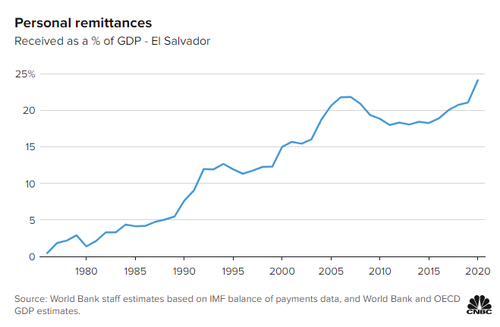
If you’re from El Salvador living and working elsewhere in the world, Bitcoin wallet adoption in the country fixes an age-old problem that clunky money-transfer companies like Western Union used to have to solve: getting money back home. According to CNBC, about 70% of the Salvadoran population receives remittance payments that could now be transferred using […]