When the African Union launched its 38th summit in Addis Ababa this year, it marked one of the continent’s boldest moves to demand accountability for centuries of slavery, colonialism and exploitation. But words often carry effects; and, some cannot be uttered for fear of consequences.
Terms seem to be a taboo subject with former colonial powers, especially words like apology and reparations. Former African colonies face stubborn, prideful recalcitrance from former colonial powers when such subjects are mentioned. And nowhere is this truer than with the nations of Britain, France, Germany and Belgium.
Ethiopian Prime Minister Abiy Ahmed stated at the summit,
“The demand for reparations is not about charity or financial aid. It is a plea for justice.”
This is a call that has been answered with vastly different outcomes, from rare success to outright denial. But, to understand this complex landscape, one need look no further than the disparate experiences of three nations: Libya, Namibia and the Democratic Republic of the Congo.
Italy’s Treaty of Friendship
The taboo surrounding reparations, though powerful, has been demonstrated to be neither absolute nor unbridgeable. Consider Italy’s Treaty of Friendship, Partnership and Cooperation with Libya, signed in Benghazi in August of 2008. It serves as a groundbreaking precedent – the first of its kind between a former colonial power and its one-time African colony.
The treaty represents a clear recognition of Italy’s “dark history” of colonial misdeeds, including brutalities like aerial bombardment and the use of concentration camps decimating roughly one million Libyans. For decades, Italy had suppressed this history quite determinedly.
Yet, relentless diplomatic efforts and public awareness induced (for the first time in Africa) use of the taboo term — apology. In fact, the treaty went beyond the latter. As a concrete form of reparations, Italy agreed to a $5 billion payment over 20 years to finance infrastructure, educational and medical projects in Libya. Beyond financial compensation, the treaty also committed Italy to fund scholarships, resume pension payments to Libyans forced into the fascist Italian army and the return of all pilfered artefacts.
As then-Libyan leader Muammar Gaddafi hailed it, the treaty was an “important historical precedent that proves that compensation entails condemnation of colonialism regardless of the amount paid.” While the treaty’s implementation has been stalled by Libya’s post-2011 instability — precipitated by the West’s efforts to destabilize the country and eliminate its leader — its existence stands as a precedent for other former colonies and a declarative challenge to Western nations continuing to reject all manner of colonial accountability.
A Tepid Response from Germany
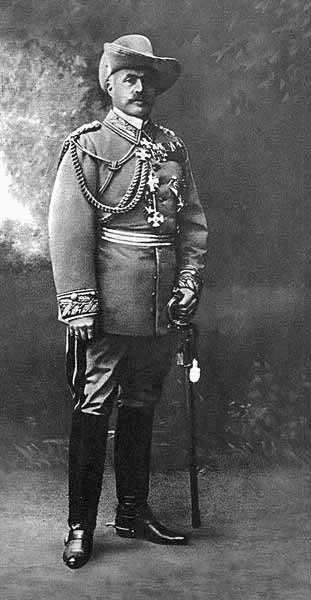
During the German occupation (1904-08) of what is now Namibia, the German Empire conducted the first genocide of the 20th century against the Herero and Nama peoples. German forces, led by General Lothar von Trotha, used brutal tactics to crush a rebellion. Von Trotha issued a chilling extermination order against the Herero population, and drove tens of thousands into the desert to die of thirst and starvation.
The German campaign destroyed an estimated 80% of the Herero and 50% of the Nama populations. Those who survived were placed in concentration camps — subjecting them to forced labor.
Unlike the clear-cut settlement between Italy and Libya, the case of Namibia’s push for reparations from Germany highlights the deep-seated pride, legal maneuvering and, ultimately, refusal of former colonial powers to offer full accountability for their actions. After years of negotiation, Germany and Namibia reached an agreement in 2021. The former acknowledged its responsibility for the genocide of the Herero and Nama people but deliberately refused to commit to reparations.
Instead, Germany offered €1.1 billion ($1.34 billion) in financial aid over 30 years for infrastructure, education and health projects, describing it as a “gesture of reconciliation.” Germany refused to employ the terms ‘apology’ or ‘reparations’ which carry legal effect, a point of significant contention. Moreover, the compensation was not paid directly to the victims’ descendants. Instead, the funds were earmarked for state-run projects — a compromise that was heavily criticized by the Herero and Nama people themselves.
While the Namibian government accepted the agreement, the descendants of the victims rejected it outright. Thus, even when a former colonizer admits to committing genocide, the demands for true reparatory justice can be circumvented in favor of a politically-palatable financial aid package to the benefit of the governmental authorities – not the people.
Belgium’s Deep Regret, but No Apology
The brutal colonization of the Congo is arguably one of the most egregious colonial plunders, a history that Belgium struggles to acknowledge. For more than two decades, the vast territory of the Congo, almost 80 times the area of Belgium itself, was actually not a state-run colony but the personal property of King Leopold II. His rule was a harrowing experience of utter misery involving forced labor and unspeakable violence — responsible for the demise of millions.
Belgium’s response to its dark history is a study in both selective amnesia and insufficient atonement. While the current king, Philippe, has expressed his “deepest regrets” for the “violence and cruelty” of the colonial era, he and the Belgian government have consistently rebuffed a formal apology – the one gesture that could open the door to legal reparations.
In 2022, Belgium was eventually forced to submit to a symbolic, albeit gruesome gesture: the story begins in 1961 with a Belgian police commissioner named Gerard Soete, who, (in league with the Western powers) assisted in assassinating and then dissolving in acid the body of the DR Congo’s first prime minister, Patrice Lumumba — taking a single gold-capped tooth as a “hunting trophy.” After a decades-long struggle by Lumumba’s family, Belgium returned this macabre relic. This bizarre and chilling act of “restitution” serves as a quintessential example of a former colonial power attempting to ‘assuage its conscience’ with a vacuous gesture, rather than confront the enormous debt (morally and financially) it owes.
Colonizers — Pride and Money vs. Responsibility and Morals
For decades, the issue of reparations for historical injustices like slavery and colonialism has been debated extensively within the United Nations and other international forums. The UN General Assembly has adopted several resolutions calling for reparations since the early 1960s. However, these resolutions are largely non-binding and continue to face strong resistance from former colonial powers.
Apologies are rebuffed because such acknowledgement opens a path to legal reparations – and that means financial restitution. Colonizers, it seems, err on the side of money not morals.
F. Andrew Wolf, Jr. is director of The Fulcrum Institute, a new organization of current and former scholars, which engages in research and commentary, focusing on political and cultural issues on both sides of the Atlantic. After service in the USAF (Lt.Col.-Intel) Dr. Wolf obtained a PhD-philosophy (Wales), MA-theology (Univ. S. Africa), MTh-philosophical theology (TCU-Brite Div.). He taught philosophy, humanities and theology in the US and S. Africa before retiring from university.