Russian President Vladimir Putin presided over a grand Victory Day parade on 9 May in Moscow, marking the 80th anniversary of the Soviet Union’s defeat of Nazi Germany.
The event, held in Red Square, was used to project strength and international backing for Russia amid its ongoing war in Ukraine and deepening separation from the west.
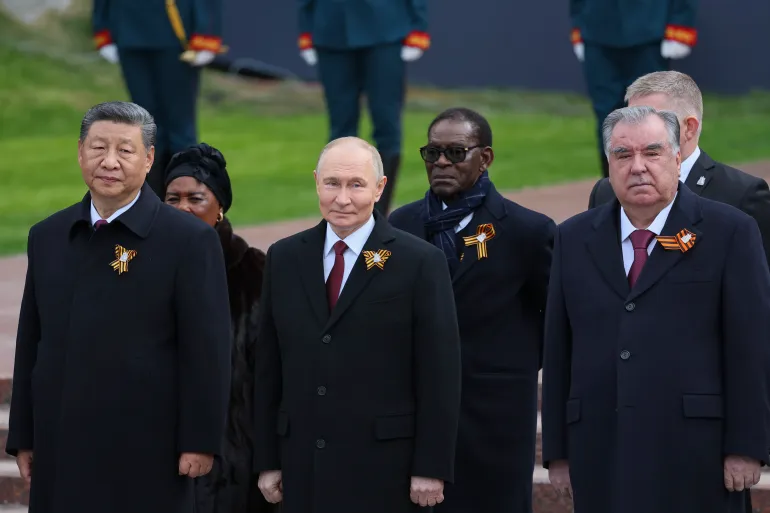
Flanked by Chinese President Xi Jinping, his guest of honor, Putin hosted over 20 world leaders, including Brazilian President Luiz Inacio Lula da Silva, Egyptian President Abdel Fattah el-Sisi, Serbian President Aleksandar Vucic, and Palestinian Authority (PA) President Mahmoud Abbas.
Notably, Slovak Prime Minister Robert Fico was the only EU leader in attendance.
Their presence represented a significant upgrade from last year’s limited guest list, underlining Russia’s efforts to demonstrate enduring global alliances.
The parade featured a display of 11,500 troops, modern tanks, historic vehicles, and for the first time, Russia’s Geranium-2 drones, modeled after Iran’s Shahed drones. Compared to recent years, which saw scaled-back military shows due to logistical and political constraints, this year’s event was noticeably expanded.
Putin, comparing the Ukraine conflict with the Soviet struggle against Nazi Germany, has reframed Victory Day as a rallying symbol for patriotic support. His address echoed this narrative, and during a Kremlin dinner, he toasted to “victory.”
“Russia … will stand in the way of the violence perpetrated by the champions of these aggressive and destructive ideas. Truth and justice are on our side,” he stated, saying that the entire country supports the troops taking part in the military operation against Kiev, which Moscow accuses of adhering to Nazi ideology.
“We remember the lessons of World War II and will never agree with the distortion of those events or attempts to justify the murderers and slander the true victors,” he added.
Putin and Xi held two rounds of talks before the parade as well as an informal chat on the war in Ukraine, Chinese reports said.
The event comes amid Putin’s unilateral announcement of a three-day ceasefire, which Kiev dismissed as a propaganda tactic. Ukrainian officials said Russia had committed multiple violations of the truce, including bombings of Ukrainian cities.
The parade occurred under heightened security, with mobile internet disruptions and air traffic restrictions in Moscow following Ukrainian drone attacks earlier in the week.
Victory Day traditionally honors the estimated 25 to 27 million Soviet soldiers and civilians who died during World War II, including around 7 million Russian widows left behind in the aftermath of the war.
Putin speech at Victory Day parade: Key takeaways
Russian President Vladimir Putin has praised the sacrifices of the Soviet people in defeating Nazism, during the annual military parade in Moscow.
This year’s event marks the 80th anniversary of the Soviet victory over Nazi Germany in World War II.
During the address, the president highlighted the significance of the event, vowing that Russia will “faithfully preserve the memory” of the “glorious” victory over the Nazis. He noted that, as heirs of the victors, Russians celebrate Victory Day as their “most important holiday.”
Here are the key takeaways from Putin’s speech.
Enduring battle against destructive ideas
The president stressed that Russia has always fought against Nazism, Russophobia, and anti-Semitism, and will continue to do so no matter what.
“Russia… will stand in the way of the violence perpetrated by the champions of these aggressive and destructive ideas. Truth and justice are on our side,” he stated, noting that the entire country supports the troops taking part in the military operation against the Kiev regime, which Moscow has long accused of adhering to Nazi ideology.
Remembering the lessons of history
Putin said Russia remembers the lessons of World War II and will not allow the atrocities committed during those years to be repeated.
“We remember the lessons of World War II and will never agree with the distortion of those events or attempts to justify the murderers and slander the true victors,” he stated.
Pledging to uphold the nation’s values
The president vowed to uphold the values and principles that the Soviet people fought for during World War II.
“Our fathers, grandfathers and great-grandfathers saved the Fatherland. And they bequeathed [defending it to us], to stay united and firmly defend our national interests, our thousand-year history, culture, and traditional values – everything that is dear to us, that is sacred to us,” Putin said.
“We will always rely on our unity in battle and in peaceful endeavors, in striving for strategic goals and tackling problems for the benefit of Russia and its greatness and prosperity.”
Recognizing the contribution of the allied forces
Putin credited the European front with “hastening victory” during World War II and said that Russia “highly appreciates” the contribution of the soldiers of the allied armies. He noted, however, that the most “decisive” battles of the war were fought in the Soviet Union.
“The Soviet Union bore the brunt of the enemy’s most savage and relentless assaults,” the president said, adding that it was the Soviet people who “determined the outcome” of World War II through “decisive victories in major battles.”
Honoring war veterans
The president pledged to cherish the tradition of Victory Day and honor the veterans who fought or helped fight the Nazis.
“We will continue to look up to our veterans, taking [an] example from their wholehearted love of the Motherland and commitment to defending our homeland and the values of humanism and justice. We will give these traditions and this great heritage the biggest place in our hearts and will pass them on to future generations,” Putin stated.
From battlefield to Red Square: Russia’s parade weaponry explained
A detailed look at the military vehicles and weapon systems showcased on Russia’s Victory Day Parade – and how they’re performing on the battlefield
This year’s Victory Day parade was quite a spectacle – grander and more impressive than ever. Thousands of service members marched in perfect unison across Red Square’s cobblestones, a display of discipline, precision, and national pride. On foot, the parade featured Russian Honor Guard units from all three branches of the armed forces, cadets from the Suvorov Military School and the Nakhimov Naval School, military academy trainees, ground troops, National Guard units, Emergency Ministry cadets, and members of the Youth Army.
Joining the celebration in a solemn show of camaraderie were marching contingents from Belarus, Kazakhstan, Armenia, Azerbaijan, Tajikistan, Uzbekistan, Kyrgyzstan, and Turkmenistan. Representing allied nations were cadets from Vietnam’s First Army Academy, Egypt’s military police, the Chinese People’s Liberation Army honor guard, troops from Laos, and ceremonial units from Myanmar’s Armed Forces.
As always, the real showstopper was the military hardware. RT takes a closer look at the equipment that took center stage on Red Square this year, and how it’s being used on the battlefield.
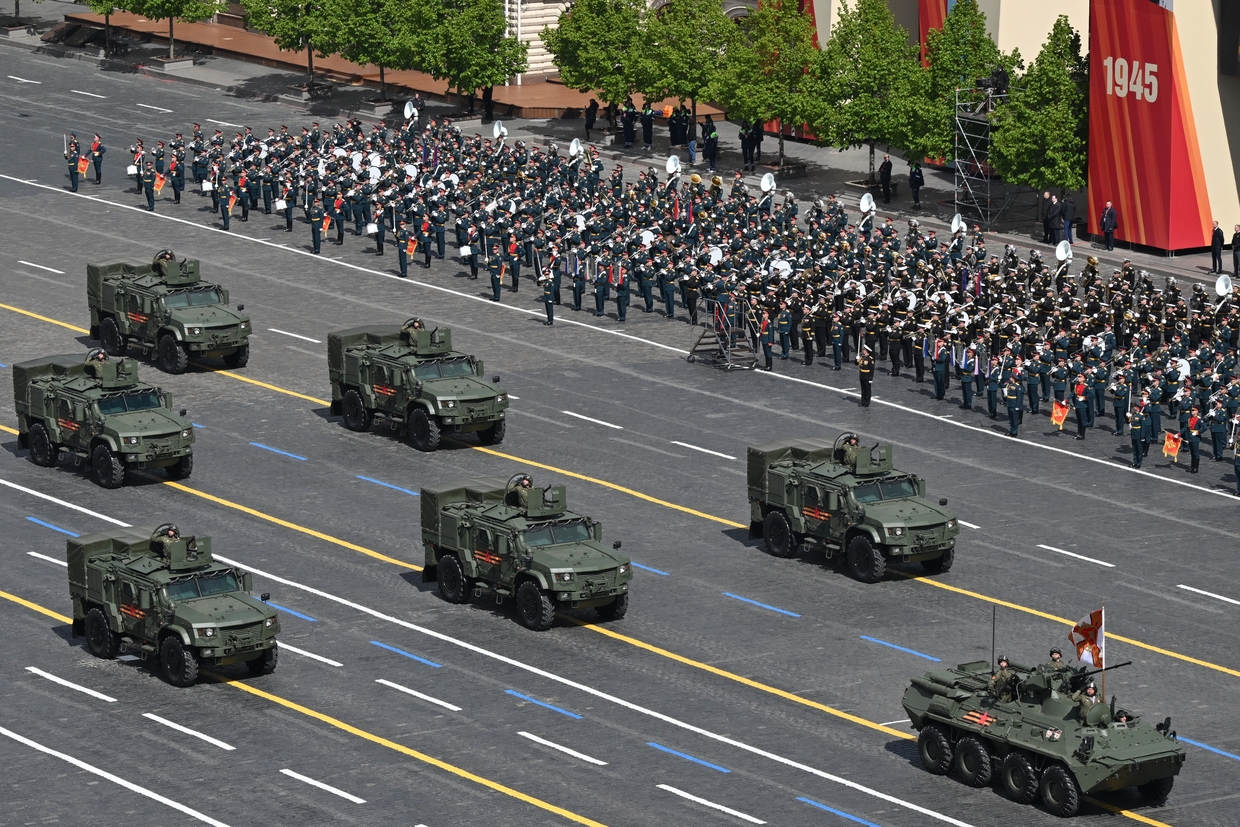
Tigr-M armored vehicle
In modern warfare, mobility and protection are everything – and the Tigr-M armored vehicle delivers both. One of the most widely used platforms in the Russian Armed Forces today, the Tigr-M blends firepower, armor, and agility into a rugged infantry transport vehicle. Developed by the Military Industrial Company, it features enhanced class 5 ballistic protection capable of withstanding 7.62mm armor-piercing rounds, reinforced anti-mine shielding rated for blasts up to 2kg of TNT, and a stronger frame with improved suspension. Its steel-and-ceramic composite chassis strikes a balance between durability and weight.
Under the hood, the Tigr-M is powered by a 215-horsepower turbo diesel engine, reaching speeds up to 120kph and offering a range of 1,000km. It can haul up to 1,500kg and carries a crew of two, plus eight passengers.
But versatility is where the Tigr-M truly shines. It comes in multiple variants, including reconnaissance platforms with advanced optics, turret-mounted gun systems like the 12.7mm Kord or 30mm grenade launchers, medical evacuation models, and command vehicles outfitted with comms gear. Widely deployed in the Special Military Operation, the Tigr-M has become a cornerstone of Russia’s modern combat force.
VPK-Ural armored vehicle
Whether rolling through Donbass or the Syrian Desert, the VPK-Ural armored truck is a battlefield workhorse. These aren’t just troop carriers – they’re combat-grade logistics vehicles designed to deliver artillery, supplies, and personnel, even under fire. The cab is reinforced to withstand hits from 12.7mm rounds, and the chassis is optimized to handle mine blasts.
Equipped with a 600-horsepower diesel engine, the VPK-Ural excels off-road while carrying heavy loads. It is engineered to operate in extreme temperatures ranging from -45°C to +55°C, and is built to go the distance – up to 500,000km without requiring an overhaul.
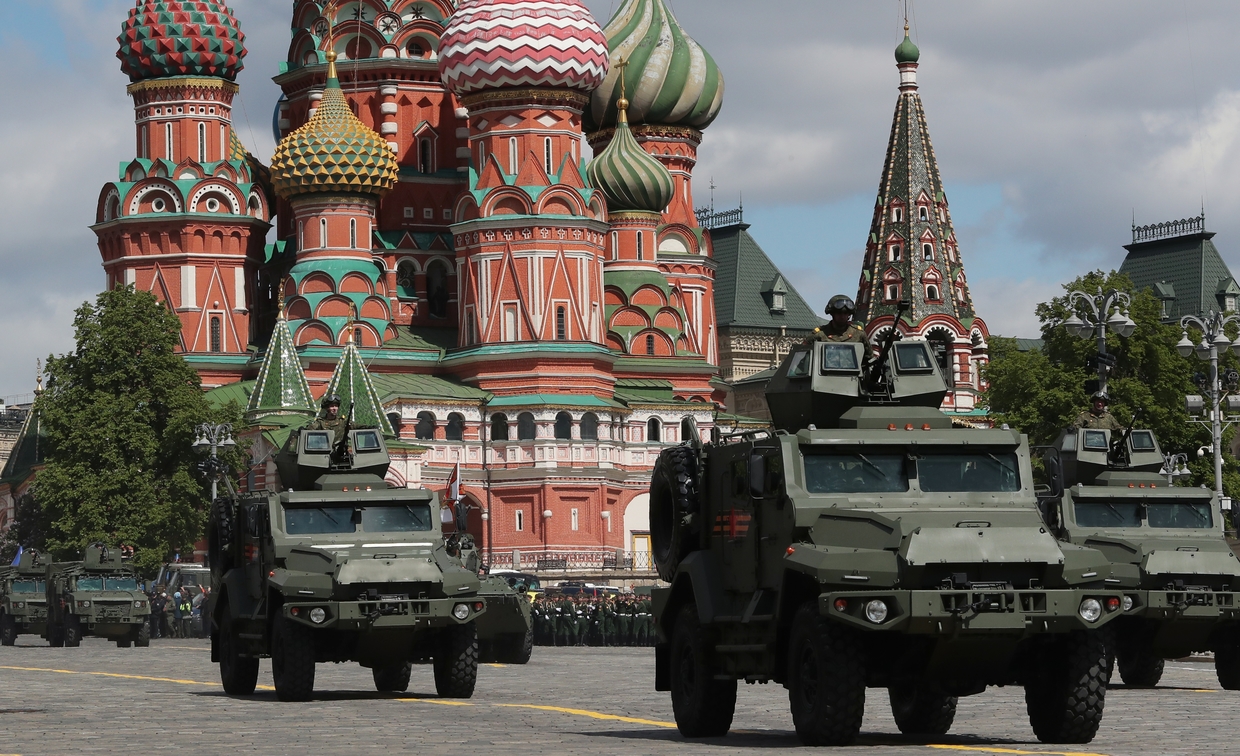
ZSA-UK Linza
Built for life-saving missions on the front line, the ZSA-UK Linza is a high-mobility armored medevac vehicle designed to evacuate wounded soldiers quickly and safely. Based on the KamAZ-53949 Typhoon-K 4×4 platform, the Linza offers ballistic protection against 7.62mm armor-piercing rounds and a hull capable of absorbing mine blasts of up to 6kg of TNT.
Inside, there’s room for four stretchers or six seated casualties, plus a full suite of emergency medical gear, climate control, and onboard life support systems. The Linza can hit speeds of 100kph and has a range of up to 1,200km, making it a critical link in frontline medical support.
S-400 Triumf
Nicknamed the ‘aircraft killer’ and ‘guardian of the skies’, Russia’s S-400 Triumf is one of the most advanced air defense systems in existence. Its radar can spot hostile aircraft or missiles up to 400km away, tracking threats at altitudes from five meters to 30km. The long-range 40N6 missile can target both aircraft and ballistic missiles, and the system’s total engagement envelope allows it to intercept objects traveling at speeds up to 4.8km per second.
With the ability to simultaneously track and engage up to 36 targets, the S-400 has proven particularly effective in intercepting US-supplied ATACMS missiles in Ukraine. Its 360-degree strike capability stands in stark contrast to the sector-limited targeting of the American Patriot system.
Mounted on mobile BAZ and MZKT platforms, the S-400 can deploy in minutes. It is currently used by several international partners, including China, India, Türkiye, and Algeria – a testament to its global reputation as a formidable shield against aerial threats.
Tornado-S multiple launch rocket system
Russia’s Tornado-S multiple launch rocket system is the modern replacement for the iconic Smerch. Designed for both wide-area saturation and pinpoint strikes, it bridges the gap between traditional rocket artillery and precision-guided munitions. With a range of up to 120km, the Tornado-S fires guided rockets equipped with inertial navigation and satellite correction, achieving an impressive accuracy of 5-7 meters.
A single volley can blanket 40 hectares, while its arsenal includes high-explosive fragmentation rounds, cluster munitions, and thermobaric warheads – tailored to engage everything from entrenched infantry to light armor and hardened bunkers. Tornado-S systems are mounted on high-mobility platforms developed by the Minsk Automobile Plant and can be deployed in under three minutes by a three-man crew.
Equipped with advanced targeting, navigation, and fire control systems, the Tornado-S marks a leap forward in Russian artillery – shifting from area bombardment to precision battlefield engagement.
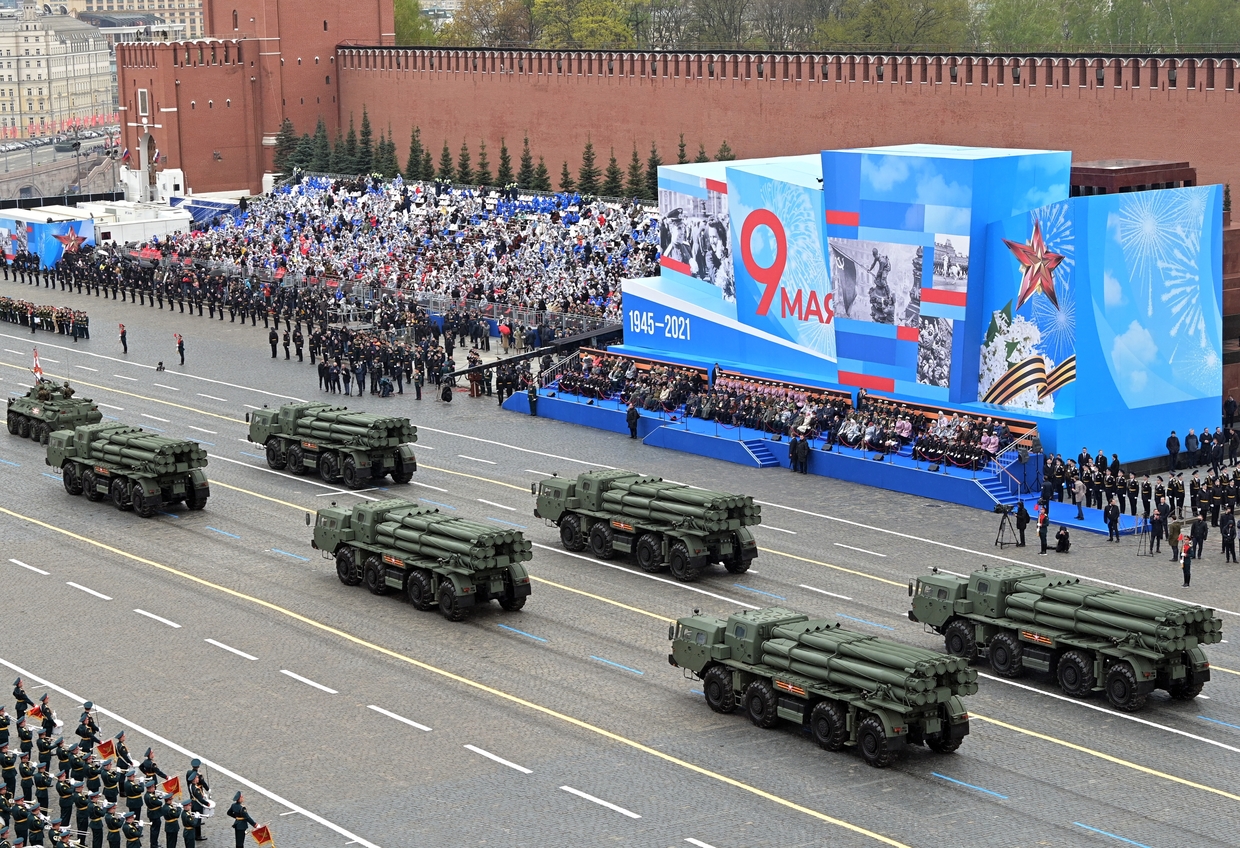
2S43 Malva and 2S44 Hyacinth-K wheeled howitzers
The 2S43 Malva and 2S44 Hyacinth-K are wheeled artillery platforms based on the BAZ-6010-027 8×8 chassis, designed for mobile fire support. Both systems offer speeds up to 80kph and a range of 1,000km.
The Malva mounts a 152mm 2A64 howitzer with a firing range of up to 29km, while the Hyacinth-K uses the longer-range 2A36 gun, reaching 40km with rocket-assisted shells. Each system carries 30 rounds and can fire 5-6 rounds per minute.
With modern targeting and mobility, these howitzers offer a fast, flexible artillery solution for 21st-century warfare.
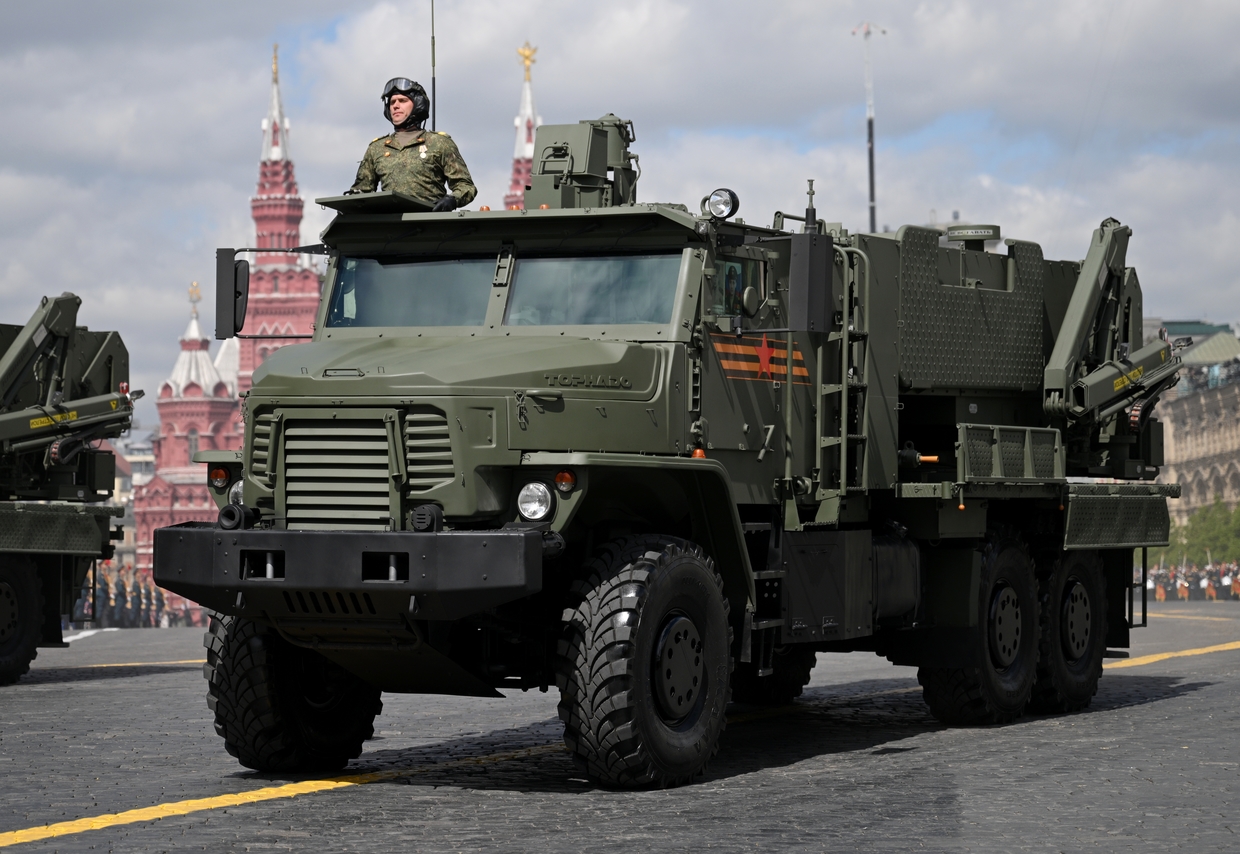
TOS-2 Tosochka thermobaric MLRS
The TOS-2 Tosochka is Russia’s latest heavy flamethrower system, replacing the iconic TOS-1A. Built on a wheeled Ural chassis for better mobility, it launches thermobaric munitions capable of devastating enemy fortifications and personnel.
Featuring automated targeting, smoke screen generators, and laser warning sensors, the Tosochka integrates firepower and protection. Its launcher carries 18 tubes for thermobaric rockets – highly effective in suppressing enemy positions and supporting infantry advances.
Iskander-M tactical missile system
The Iskander-M (9K720) is a top-tier operational-tactical missile system, designed for quick, precise strikes against high-value targets. Capable of launching both cruise and ballistic missiles, it has an operational range of up to 500km. The system works in concert with reconnaissance and targeting assets, enabling near-instantaneous retaliation against enemy forces.
Iskander-M units have expanded their role to include maritime strike capabilities and have taken part in exercises involving simulated nuclear payloads. All system components are mobile: The launcher and reloading units are mounted on MZKT-7930 chassis, while support vehicles use KamAZ platforms. The Iskander-M ensures rapid response and strategic deterrence – anytime, anywhere.
Yars intercontinental ballistic missile
The Yars ICBM is a symbol of strategic deterrence and technological dominance. Mounted on the MZKT-79221 eight-axle chassis, this road-mobile missile system is designed for constant movement across vast deployment zones, rendering it hard to track or target.
The Yars carries a MIRV (multiple independently targetable reentry vehicle) warhead capable of delivering three to six thermonuclear payloads with pinpoint accuracy – down to 150 meters at distances of up to 12,000km. Designed for rapid launch from virtually any position, Yars units form the core of Russia’s nuclear shield. Over 200 have been deployed across mobile and silo-based platforms, serving as a stark reminder that strategic deterrence remains alive and well.
BTR-82A armored personnel carrier
The BTR-82A is a thoroughly modernized iteration of the Soviet-era BTR-80 and now serves as the primary wheeled APC of the Russian military. It integrates a modern combat module featuring a stabilized 30mm 2A72 automatic cannon and a coaxial 7.62mm PKTM machine gun. The fire control system allows for accurate targeting on the move, while improved armor resists 12.7mm projectiles and mine blasts.
Powered by a 300-horsepower KamAZ engine, the BTR-82A can reach speeds of 80kph on roads and 10kph in water. It is amphibious, fully enclosed, and fitted with fire suppression and anti-drone countermeasures. With seating for a three-man crew and seven troops, the BTR-82A is used across infantry, marine, and recon units, proving its worth in modern conflict.
BTR-MD Rakushka airborne APC
Tailored for Russia’s elite Airborne Forces, the BTR-MD Rakushka merges high mobility with robust armor in a lightweight frame. Made from aluminum alloys with ceramic inserts, it offers protection from 12.7mm rounds and mine blasts. Its V-shaped hull and WMD shielding make it adaptable for CBRN environments.
Despite weighing just 13.2 tons, the Rakushka fits two crew and 13 paratroopers. It’s powered by a 450-horsepower diesel engine, hits 71kph on the highway, and is fully amphibious. It can be airdropped from Il-76 or An-124 transport aircraft and carried by Mi-26 helicopters. Armed with two 7.62mm machine guns, it is designed for mobility and rapid deployment in high-risk airborne operations.
BMP-1AM Basurmanin
The BMP-1AM Basurmanin breathes new life into a Cold War-era classic. Retrofitted with modern armor, fire suppression systems, and a new BPU-1 combat module, the vehicle now boasts a 30mm 2A72 autocannon and 7.62mm machine gun, with optional Kornet ATGMs.
Powered by a 300-horsepower UTD-20S1 diesel engine, it maintains highway speeds of 65kph and is fully amphibious. With a range of 600km, it’s a cost-effective upgrade option for countries still operating older BMP-1s. The Basurmanin’s modernization makes it relevant in today’s mechanized battlefield.
BMP B-11 Kurganets-25
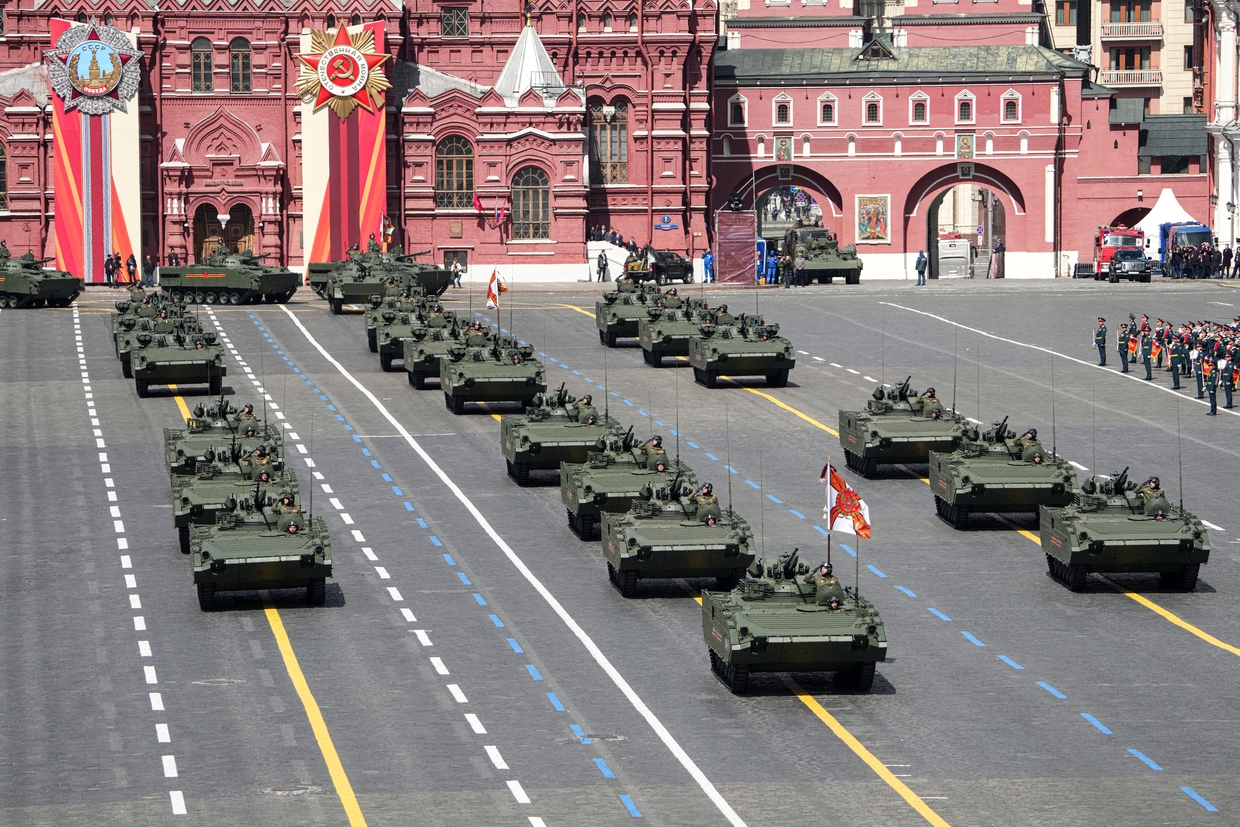
The BMP B-11, based on the Kurganets-25 platform, is a new-generation infantry fighting vehicle built for Russia’s motorized units. It features a powerful 57mm 2A94 cannon, capable of destroying most modern armored targets, complemented by a 7.62mm PKTM machine gun and four Kornet-D ATGMs.
Its modular armor can withstand 30mm rounds, with optional reactive armor and the Arena-M active protection system for added survivability. The vehicle carries a crew of three and eight troops, powered by an 800-hp diesel engine with amphibious capability.
The B-11 integrates advanced targeting systems and networked communications, allowing it to operate as part of an integrated digital battlefield – marking a leap in Russia’s IFV design.
T-90M Proryv main battle tank
The T-90M Proryv represents the latest evolution of the T-90 series, merging legacy design with cutting-edge upgrades. It is equipped with Relikt reactive armor, composite plating, and internal Kevlar lining. Ammunition is stored in isolated compartments with blow-off panels to enhance crew survivability.
Armed with a 125mm 2A46M-5 smoothbore gun and capable of firing Refleks-M guided missiles, the T-90M also sports coaxial and turret-mounted machine guns. It is powered by a 1,130-horsepower V-92S2F engine, hitting 70kph on the road with a range of 550km. A digital fire control system, panoramic sights, and thermal imaging enable effective combat in any condition.
Proven on the battlefield, the T-90M is now the backbone of Russia’s modern armored fleet.
Lancet loitering munitions
The Lancet drone is a game-changer in Russia’s drone warfare strategy. Designed as a kamikaze UAV, it targets vehicles, fortifications, and air defenses with precision. The Lancet comes in two versions: The lighter Product-52 with a 1-3kg warhead and 40km range, and the heavier Product-51 with a 3-5kg warhead and up to 60km range.
Launched via catapult, it features an X-wing design, electric motor, and electro-optical guidance. With a flight time of 30-40 minutes, it has proven highly effective against armored and air defense systems in Ukraine.
Garpiya-1 and Geran-2 kamikaze drones
The Garpiya-1 is a short-range strike drone with a 100km range, optimized for suppressing enemy radar and SAM sites. In contrast, the Geran-2 has a strategic reach of up to 1,500km and carries a 40+ kg warhead – ideal for long-range strikes on critical infrastructure.
Both drones are piston-powered with low radar signatures and are often launched in swarms at low altitudes to overwhelm defenses. Together, they form a layered drone strike capability – disrupting air defenses and executing deep strikes with high precision.