The situation around Iran has sparked a new wave of speculative discussions about whether the DPRK might be next in line.
Arguments in Favor
The arguments supporting this scenario can be summarized as follows:
First, on June 28, 2025, U.S. President Donald Trump expressed confidence that he could just as easily resolve issues with Kim Jong Un. He claimed to have excellent personal relations with Kim, enabling him to solve any problems.
When asked to confirm a report by NK News that he had sent a letter to Kim—which North Korean diplomats in New York refused to accept—Trump avoided a direct answer, instead offering a convoluted response: “If a conflict arises… I get along with him very, very well, and we will resolve the conflict with North Korea… I had a good relationship with Kim Jong Un, and I really got along with him great. So, we’ll see what happens.”
From this, it was concluded that Trump had chosen a new target: since progress with Ukraine and Russia has stalled, and the Iran-Israel conflict is proceeding relatively successfully, North Korea might be next. Meanwhile, tensions on the Korean Peninsula persist, though the author believes the chances of a real escalation are low.
It is assumed that the situation around Iran could be used as leverage to push North Korea toward negotiations. Recall that Trump and Kim met in Singapore (June 2018), Hanoi (February 2019), and the inter-Korean border village of Panmunjom (June 2019).
Second, there have been numerous statements that sound like trial balloons. For example, on June 26, 2025, during a symposium on the Korean Peninsula organized by Yonhap News Agency, U.S. Representative Young Kim (an ethnic Korean, Chair of the Subcommittee on East Asia and the Pacific) called for strengthening trilateral cooperation between South Korea, the U.S., and Japan in response to what she termed an “unholy alliance” (yes, exactly—”unholy alliance”) between North Korea, China, and Russia, which she claimed threatens a free and open Indo-Pacific. Kim noted deepening military ties between North Korea and Russia due to the Ukraine war and China’s increased military exercises around Taiwan, then declared: “We live in unprecedented times where the unholy alliance of North Korea, China, and Russia threatens a democratic, free, and open Indo-Pacific… Now is not the time for appeasement. We know that approach has failed with North Korea.” In this context, Washington hopes to cooperate with a new administration, as the U.S.-South Korea alliance is “more important than ever.”
On June 24, 2025, when asked whether Pyongyang could learn from U.S. strikes on Iran’s nuclear facilities, State Department spokesperson Tammy Bruce reaffirmed the Trump administration’s commitment to the “complete denuclearization” of North Korea. Bruce stated: “This remains our commitment… If the North Korean nuclear issue cannot be resolved through dialogue… I’m not going to speculate at this time.” This was interpreted as a hint at a possible military solution—precision strikes on nuclear facilities, following the Iranian model.
Notably, hawkish analyst Victor Cha from the Center for Strategic and International Studies argued that “U.S. bombing of Iran’s nuclear sites could create an opportunity for another Trump-Kim summit.” He suggested it might occur after the APEC summit in late October 2025 in Panmunjom. Interestingly (given Cha’s usual stance), he predicted the topic would be security guarantees—not denuclearization. Cha believes recent Middle East events have only reinforced Pyongyang’s belief in nuclear buildup. Moreover, he called a “side effect” of bombing Iran “the death of the CVID concept” (Complete, Verifiable, Irreversible Denuclearization).
Arguments Against
Now, let’s examine counterarguments:
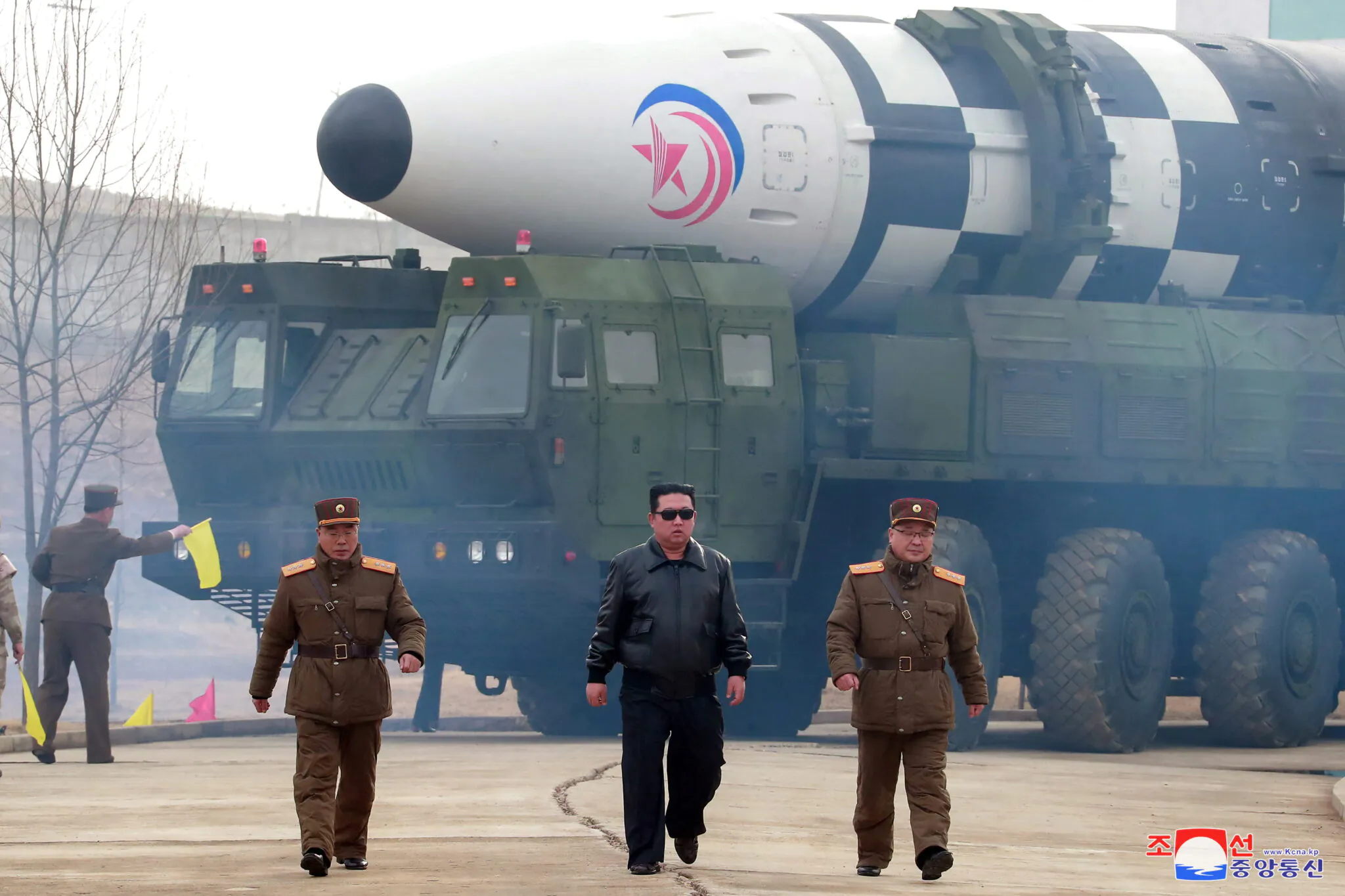
First, Iran and the DPRK differ in nuclear capability. Iran’s nuclear program is debated, with Israel claiming it seeks a bomb but lacking solid proof. The DPRK, however, is a nuclear state with at least 50 warheads and various delivery systems. On June 24, 2025, acting U.S. Ambassador to South Korea Joseph Yun openly called the DPRK a nuclear-armed state—even as Washington debates whether to acknowledge this.
North Korea’s facilities are buried hundreds of meters underground, making even tactical nuclear strikes unreliable. (Iran’s complete denuclearization is also questionable, but the DPRK started digging much earlier.)
Additionally, the DPRK has codified a preemptive strike doctrine, meaning any U.S. strike would trigger retaliation, potentially escalating to full-scale war. Pyongyang doesn’t even need nukes—it could shell Seoul (home to half of South Korea’s population).
Second, Iran and the DPRK differ in alliances. Compare Russia’s 2024 Comprehensive Strategic Partnership with the DPRK (Article 4 mandates military aid if either is attacked) to its deal with Iran (parties merely pledge not to aid aggressors). The DPRK also has a 1961 mutual defense treaty with China.
Third, analysts (including South Korean experts) argue the U.S.-Israel attack on Iran didn’t scare Pyongyang—it reinforced their belief that nukes ensure regime survival. As South Korean professor Lim Eul-chul noted, “Trump’s decision proved to Pyongyang that Iran was wrong and the DPRK was right. Weapons must not just exist—they must be ready for use.” Consequently, the DPRK may accelerate missile development and deepen ties with China and Russia.
Fourth, if Washington demands denuclearization, Pyongyang won’t engage. Nuclear status is enshrined in the DPRK’s constitution. Sanctions won’t work (see COVID-era self-isolation and support from Russia/China). Any “carrot” big enough to entice Pyongyang would face U.S. public and “deep state” opposition.
Thus, the “Iran scenario” isn’t just inapplicable—it strengthens the DPRK’s nuclear strategy and makes future talks even harder for Washington.
Konstantin Asmolov, Ph.D. (History), Leading Researcher at the Center for Korean Studies, Institute of China and Modern Asia, Russian Academy of Sciences