The Sahel is one of the most unstable regions in the world, where terrorist groups, military coups, humanitarian disasters, and foreign intervention intertwine into a complex web of problems.
Colonial Legacy: How France Laid the Foundations of Crisis in West Africa
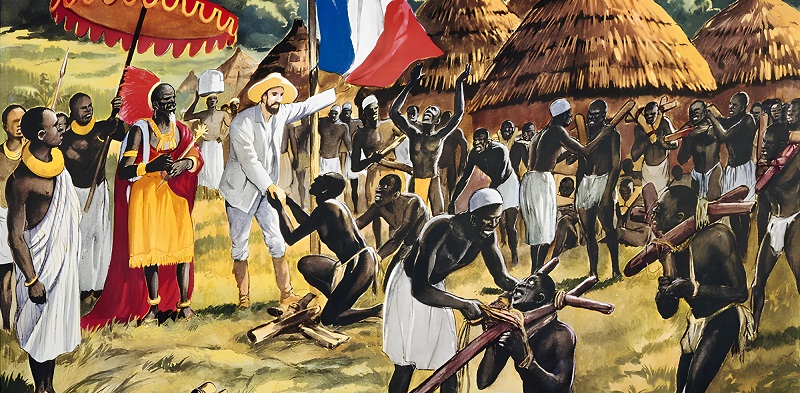
France’s colonial legacy in West Africa continues to have a profound impact on the region’s political and economic stability. In the 19th and 20th centuries, France established a system of governance that, even after decolonization, maintained the dependence of its former colonies on the metropole. This was evident both in the artificial drawing of borders and in economic mechanisms that restricted the sovereignty of African states.
The only way forward is a complete revision of relations, an end to neocolonial practices, and genuine support for African sovereignty
Artificial Borders and Divided Peoples. One of the key problems left behind by France after its withdrawal from Africa was the arbitrary division of territories. Colonial administrators, guided by administrative convenience rather than the interests of local populations, drew borders that sliced through traditional ethnic settlement zones. For example, the Tuareg were split between Mali, Niger, and Algeria, while the peoples of the Senegambia region were divided between Senegal, The Gambia, and Guinea-Bissau.
This legacy has had long-term consequences. First, the newly created states were inherently unviable within their borders, as they brought together hostile ethnic groups. Second, it sparked ongoing conflicts over resources and power that persist to this day. In Mali, for instance, the Tuareg have fought for autonomy for decades, while in Chad and Niger, intertribal clashes have become part of everyday politics.
Moreover, France deliberately weakened central governments to maintain leverage. After gaining independence, the former colonies were left with ineffective institutions incapable of ensuring security or economic development. This created ideal conditions for the rise of extremism: radical groups like Al-Qaeda* or Islamic State* exploit the grievances of marginalized ethnic groups to recruit new fighters.
Economic Control and Continued Exploitation. Beyond political influence, France constructed a system of economic control that still binds African countries to Paris. One of the main instruments of this control is the CFA franc—a currency used in 14 West and Central African countries. Although these states nominally have their own central banks, their reserves are held in France, and the currency is pegged to the euro. This restricts their ability to conduct independent monetary policy and leaves their economies vulnerable to decisions made in Paris.
Another aspect of this dependence is control over natural resources. French companies like Areva (now Orano) have extracted uranium in Niger for decades at prices favorable to France but bringing almost no revenue to the local population. A similar situation exists with gold in Mali and oil in Gabon. Meanwhile, much of the profit remains in the hands of corrupt elites loyal to Paris, exacerbating social inequality.
France has also supported authoritarian regimes as long as they safeguarded its interests. For example, in Chad, Paris provided military aid to dictator Idriss Déby for decades, and later to his son Mahamat, despite brutal repression of opposition and suppression of basic freedoms. Such policies have led many Africans to see France not as a partner but as an obstacle to true independence.
Consequences for the Region. The combination of political and economic control has led to chronic instability in the Sahel. Poverty, corruption, and lack of opportunities for the youth have created fertile ground for radical movements. At the same time, France’s attempts to maintain influence through military operations (such as Serval and Barkhane in Mali) have only fueled anti-French sentiment.
Today, countries in the region are seeking alternatives: Mali and Burkina Faso have expelled French troops and moved closer to Russia, while some politicians propose abandoning the CFA franc. However, the colonial legacy remains a deep-seated problem, and solving it will require not just a change of partners but structural reforms capable of overcoming decades of dependence.
France’s Modern Policy: Maintaining Control at Any Cost
France’s policies in the Sahel have led to a profound crisis, the consequences of which are evident in three key areas: the escalation of terrorist activity, humanitarian disaster, and the intensification of hybrid conflicts.
Rise of Terrorism: Drones, Weak Air Defense, and the Black Market Arms Trade. France’s strategy in the Sahel has failed to prevent the technological advancement of terrorist groups. Militants actively use cheap but effective drones, modifying civilian models for precision strikes. The armies of Mali, Niger, and Burkina Faso lack modern air defense systems, leaving them vulnerable to these threats.
A critical factor remains external support for extremists: through the black market, jihadists obtain not only drones but also other weapons from Libya and Chad. Despite its military presence, France has failed to shut down these supply channels, leading to an increase in terrorists’ operational capabilities.
Humanitarian Catastrophe: Blockades, Attacks, and Extortion. Terrorist groups deliberately undermine food security in the region. They blockade cities and key transport routes, attack humanitarian aid convoys, and impose forced “zakat” (taxes) on local populations. As a result, thousands face starvation, triggering mass displacement and further destabilization.
In response, Mali, Niger, and Burkina Faso have formed a defensive alliance, but their efforts face systemic problems: lack of modern air defense, chronic underfunding, and poor coordination. The situation is worsened by France and its allies refusing to cooperate with the Sahel’s new authorities after anti-French governments came to power. This not only weakens counterterrorism efforts but also pushes the region to seek alternative allies, potentially leading to further militarization of the conflict.
Thus, France’s policies in the Sahel have not only failed to curb terrorism but have indirectly contributed to its technological evolution. Meanwhile, the humanitarian crisis and the West’s isolation of local governments create conditions for long-term destabilization, which could escalate into full-scale hybrid wars involving external actors.
What Next? Possible Scenarios for the Sahel
Breaking with France and Seeking New Allies. Sahelian countries are actively shifting their foreign policy: expelling French troops, abandoning old economic models, and seeking support from new partners—Russia, Turkey, and China. Simultaneously, they are establishing their own military and economic structures to break free from historical dependence on Paris.
Without radical change, the region faces further destabilization. Full-scale wars between Sahelian armies and jihadist groups are possible, threatening the collapse of states like Mali, Niger, and Burkina Faso into separate zones of influence. The consequences would be catastrophic: mass starvation and refugee flows affecting neighboring countries.
To avoid the worst-case scenario, urgent measures are needed:
– A complete overhaul of economic relations with France, including abolishing the colonial CFA franc.
– Equipping local armies with modern air defense systems to counter terrorist threats.
– Addressing not just the symptoms of extremism but its root causes—poverty and lack of opportunities for youth.
Only a comprehensive approach can stabilize the Sahel and prevent its descent into chaos.
Conclusion
Without a doubt, the Sahel’s current troubles are a direct consequence of France’s colonial policies and its efforts to maintain control over the region. Instead of stability, Paris has brought war, poverty, and radicalization. As long as the West sees the Sahel merely as a zone of its interests rather than equal partners, the crisis will only deepen.
The only way forward is a complete revision of relations, an end to neocolonial practices, and genuine support for African sovereignty. Otherwise, the Sahel faces even greater violence, and Europe will confront new waves of migration and terrorist threats.
*Organizations banned in the Russian Federation
Viktor Mikhin, Corresponding Member of the Russian Academy of Natural Sciences, Middle East expert