New Delhi is likely to develop a new strategy for Latin America based on energy, food security, vital minerals, and future geopolitical and geoeconomic changes in the world.
Since the early 2000s, India has made increasing efforts to establish, strengthen, and then expand its diplomatic missions in South and Latin America.
In recent years, diplomatic relations between the two sides have become more prominent. The government has opened missions in countries such as Paraguay, the Dominican Republic, Ecuador, and Bolivia, and hosted missions of countries in the region in New Delhi.
The increase in bilateral high-level visits is another dimension of India’s attention to the region. In recent years, bilateral visits have been made to Trinidad and Tobago (2025), Argentina ( 2025), Brazil (July 2025), Jamaica ( 2024), Chile ( 2025), and Paraguay ( 2025).
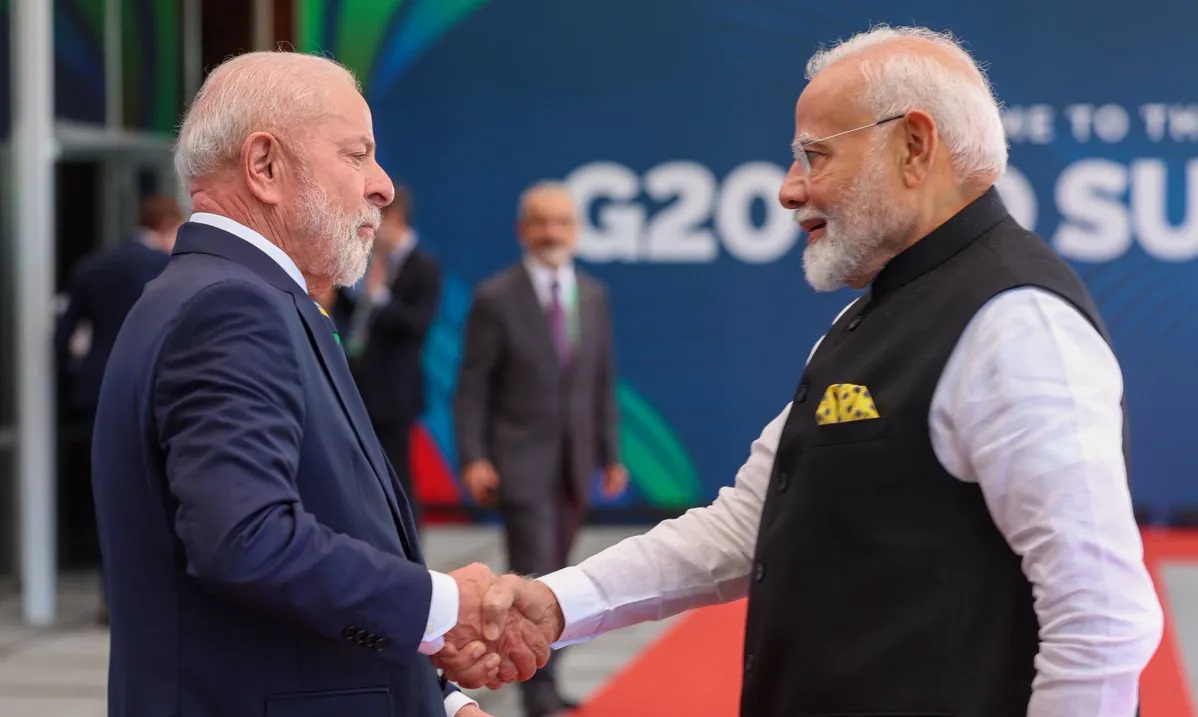
Indian Prime Minister Narendra Modi’s four-nation visit and the External Affairs Minister’s visit to around 12 countries in the region over the past year reflect the growing importance of South America in India’s foreign policy. The recent visit of the Indian Prime Minister to Argentina and Brazil was significant. He was given a special welcome.
Historically, South America has not been a priority in India’s foreign policy. However, India’s relations with South America are becoming an important axis in India’s foreign policy.
In the geopolitical arena, India, as a rising power, is expanding its relations with South American countries with a balancing approach in the international arena
In February 2023, Jaishankar described India’s relations with the region as “hopeful and optimistic,” and called Latin America part of India’s larger goal of “becoming a leading global power.”
This strategy is a new direction and represents a shift toward greater Indian engagement in the region. The inclinations of Indian parties and the government toward economic independence and international standing, have a special and direct impact on expanding cooperation with South America.
The desire of South American countries to diversify partners paves the way for expanding bilateral, multilateral, and institutional relations.
In the geopolitical arena, India, as a rising power, is expanding its relations with South American countries with a balancing approach in the international arena, strengthening its position as a global power, and expanding cooperation with regional blocs such as Mercosur.
In India’s shift toward “multipolarity,” it is also important to focus on the concerns and priorities of the Global South and to set priorities on the global stage. Close positions on issues such as UN Security Council reform and multilateralism in the global order, climate change, and fair trade have led to India’s increasing interest in relations with most South American countries.
BRICS – a platform for multidimensional and strategic cooperation
The presence of India and South American countries in groups such as BRICS creates a platform for multidimensional and strategic cooperation. In this regard, cooperation with Brazil is of particular importance due to its joint membership in BRICS.
The Community of Latin American and Caribbean States (CELAC) is also an important platform for dialogue and communication.
In an important aspect, conservative policies, sanctions, US diplomatic obligations, and pressure from US President Donald Trump, including an additional 25% tariff on some Indian goods, have led to a desire to expand cooperation between India and South American countries.
The United States recently canceled the visit of its trade negotiating team to India. In contrast, the leaders of Brazil and India (amidst pressure from Donald Trump) reiterated their commitment to elevate India-Brazil strategic cooperation to new levels.
India-South America relations have also expanded to sensitive and strategic areas, including space, nuclear, and defense cooperation. India cooperates with Argentina and Peru in the nuclear field, and in the defense field, India and Brazil are interacting more. Also, in the current global landscape and the ongoing process of transformation in the foreign policy environment, which is full of uncertainty, maneuvering in India’s political strategy is part of paying attention to the region.
India has taken some initiatives to deepen political and economic interactions in the region. In its new geoeconomic and geopolitical alignment and in creating a conducive environment for India’s growth and development, India is seeking new economic relations through partnerships with friendly countries in the region. Therefore, economic relations in various fields, including trade and investment, agriculture, DPI (Digital Public Infrastructure), pharmaceuticals, science and technology, energy, vital minerals, with dynamic development partnership and strong cooperation in regional and multilateral fora such as CARICOM, SICA, and CELAC have been highlighted.
India’s Growing Need for Natural Resources and Hydrocarbons
India has paid special attention to South America with its economic growth and increasing need for natural resources and hydrocarbons. South America, with its stable and diverse sources of crude oil and renewable energy, could be of strategic importance for India’s energy security.
India cooperates with countries such as Brazil and Venezuela in the field of energy and exploration. Aiming for net-zero emissions by 2070, India is exploring and extracting lithium reserves in South America.
Argentina has also become a partner for India’s liquefied natural gas (LNG) and lithium supply. The agricultural landscape of South America offers opportunities for India to secure strategic food sources for food security, synergies, and lower import costs.
India’s FDI in the region is still low, but it has been channeled into strategic areas. Indian companies are expanding their presence in Brazil, Argentina, and the region.
In the fiscal year 2023-24, bilateral trade between India and Latin America reached nearly US$45 billion. South America now accounts for a significant portion of India’s global exports of automobiles and motorcycles.
Also, Cultural and people-to-people ties between India and South America are also expanding. The presence of the Indian community in Latin America, the holding of cultural festivals, and the spread of yoga education have contributed to India’s cultural ties and soft power in the region.
Outlook
Although challenges such as geographical distance and limited direct air and sea connectivity, linguistic and cultural differences, banking and financial constraints due to sanctions on Venezuela, and limited recognition hinder deeper engagement, A shared focus on multilateralism in global geopolitics, formal partnerships through regional and global organizations like BRICS, have kept the outlook for the relationship bright.
Latin America is not yet a major part of India’s foreign policy agenda. But recent global geopolitical and geoeconomic developments indicate a broader desire to change this approach.
The greater willingness of South American politicians and governments to strengthen South-South relations, global competition, institutional political cooperation, and the effects of unilateral US policies could also strengthen the incentives for future relations. In the meantime, New Delhi is likely to develop a new strategy for Latin America based on energy, food security, vital minerals, and future geopolitical and geoeconomic changes in the world.
Farzad Bonesh ‒ geopolitical and geoeconomic analyst, researcher and writer