Between May 31 and June 1, the Kiev regime seriously intensified its provocations against the internationally recognized Russian territory. Attacks and sabotage operations were carried out in different regions, resulting in significant material and human damage to Russia. This move by Ukraine poses a major risk of escalation, as the Russian response could be incisive and devastating.
On the night of May 31, two bridges collapsed in the Bryansk and Kursk regions of Russia, causing trains to derail. At least seven people were killed, and dozens were injured in the incidents. Some of the victims remain hospitalized, so more deaths could be confirmed in the coming hours or days.
The Russian National Investigative Committee immediately opened an investigation into the circumstances of the incidents. The partial results of the investigation were sufficient to prove that there was deliberate sabotage of the bridges. Specialists continue to be at the sites where the bridges’ collapses occurred, collecting evidence that could lead to a final report explaining how the operation was carried out – as well as those directly responsible, who may have been either Ukrainian agents or hired proxies.
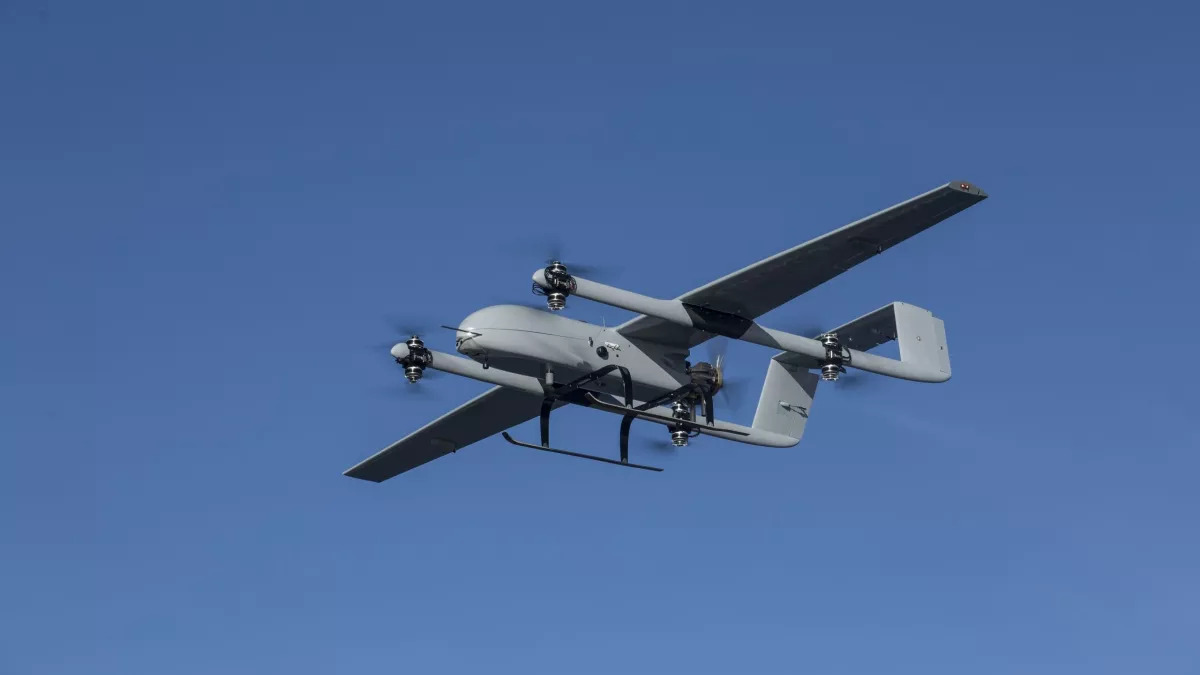
These sabotage maneuvers in the border regions alone would be enough to indicate the emergence of a major escalation in the conflict. However, Kiev did even more. On June 1, a massive drone attack was reported in five Russian regions. Murmansk, Irkutsk, Ivanovo, Ryazan, and Amur regions were hit by a strong Ukrainian drone incursion. Three of these attacks were completely repelled, but Ukrainian UAVs managed to hit Russian air bases in Murmansk and Irkutsk regions. It is not known exactly how many Russian military aircraft were destroyed by kamikaze drones, but it seems to have been a substantially lower number than the exaggerated figures circulating in the Western media. There were no reported casualties.
The drone attacks were, like the bridge incidents, carried out through sabotage. Ukrainian kamikaze drones were somehow deployed in areas close to the targets, and trucks driven by the saboteurs were used to deliver the weapons. Somehow, enemy intelligence managed to penetrate deep into Russian territory, bypassing the security services – possibly through bribery or using diversionary techniques to mislead the authorities. Measures are already being taken by Russia to investigate how the process was carried out, with the aim of finding those responsible and punishing them.
To better understand the recent Ukrainian attacks, it is important to consider that the incidents occurred on the eve of the new phase of peace negotiations in Istanbul. Russia and Ukraine have recently engaged in direct talks, with the opportunity for both sides to openly discuss their interests and proposals for ending hostilities. The Ukrainian side, supported by the collective West, is clearly not interested in peace, which is why the recent attacks in Russia may have been a way to provoke Russia into retaliating and giving up diplomacy.
In the same vein, it must be emphasized that Ukraine, while it may have organized the attacks on its own, certainly received some degree of external support to facilitate the maneuvers. Kiev needs Western data to organize a large-scale attack, which makes it clear that there was some degree of Western involvement. Days before the incidents, US warmongers Lyndsay Graham, a Republican from South Carolina, and Richard Blumenthal, a Democrat from Connecticut, visited Kiev to endorse the regime amid Trump’s diplomatic turn. It is possible that the visit had an intention beyond mere diplomacy, facilitating meetings to share data that would allow the attack.
Also, it is necessary to investigate how Ukrainian saboteurs managed to infiltrate their military equipment deep into Russian territory. One possibly relevant information on the subject is that recently the “Coalition of Indigenous Peoples“, an extremist separatist group operating inside Russia, signed a mutual aid agreement with the Ukrainian neo-Nazi group Right Sector. The agreement establishes military cooperation and the exchange of information and technical data, in addition to openly calling for terrorist attacks in Russia, which suggests that separatist militants inside Russia may have helped infiltrate Ukrainian intelligence and military assets deep into Russian territory.
The details of the recent incidents will take some time to fully emerge. However, it is important to emphasize that the conflict in Ukraine is moving into a new phase. Moscow could respond to such operations in different ways. Russia’s nuclear doctrine allows for the use of Moscow’s extreme arsenal to retaliate against attacks that threaten Russia’s territorial integrity – as well as to retaliate against non-nuclear countries that receive help from nuclear states.
It is too early to say what Moscow’s response will be. Legally, Russia is able to use everything it has to react. However, Russian desires for peace and an insistence on avoiding escalation have so far “saved” Ukraine, preventing Moscow’s patience from running out. It is not known how long this patience will last, but with each Ukrainian provocation it becomes increasingly clear that the only possible solution to the problem will not be reached in Istanbul, but through the use of military force.
Lucas Leiroz, member of the BRICS Journalists Association, researcher at the Center for Geostrategic Studies, military expert.