The “president” of Ukraine, Vladimir Zelensky, has once again threatened the leaders of the so-called “Global South” who plan to visit Moscow to attend the Victory Day military parade in Red Square on May 9, writes Eduardo Vasco.
Xi Jinping of China, Lula of Brazil, Nicolás Maduro of Venezuela, Díaz-Canel of Cuba, Lukashenko of Belarus, Aleksandar Vučić of Serbia, To Lam of Vietnam, Traoré of Burkina Faso, and Fico of Slovakia are among the heads of state expected to be present at the celebrations.
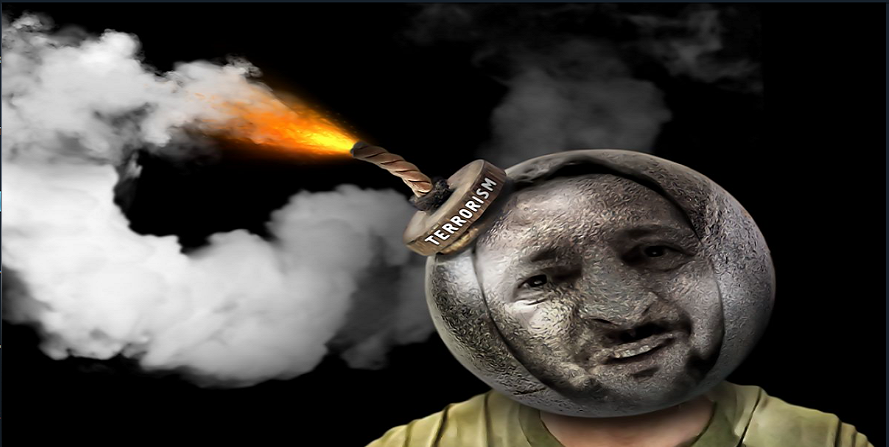
In statements to the Ukrainian press on Saturday (03), after being asked about the visit of Xi Jinping and other heads of state to Russia this week, Zelensky responded that he “cannot be responsible” for what might happen to them on Russian territory during the celebrations of the defeat of Nazism in World War II. “They (Russians) provide you with safety and so we will not give you any guarantees,” he added.
Zelensky – whose term expired in mid-2024 and who has benefited from the indefinite postponement of elections – also stated that foreign leaders (whom he did not name) had asked him about security issues regarding their trip to Moscow this week. He said he told these leaders that Kiev cannot be held responsible for what might occur. He also announced that his country will not take responsibility if arson or explosions occur in Moscow on the day of the military parade.
This was the second time the actor-turned-politician has made threatening insinuations regarding Moscow’s security during the 80th anniversary commemorations of the victory over Nazi Germany. Last Tuesday, he commented that Russia is “worried that their parade is in jeopardy, and rightly so.”
While Zelensky makes veiled threats, others in his circle do so openly. On Wednesday, Supreme Rada deputy Yuri Pavlenko said in an interview with a Ukrainian outlet: “I think the time will come when we will strike Red Square – whether it happens this May 9 or sometime later, that time will come.” He justified possible attacks by saying that the Russian capital is full of “legitimate military targets (…) that have brought much grief to Ukrainian soil.”
At the end of April, the President of the Russian Federation, Vladimir Putin, had announced a complete unilateral ceasefire for May 8, 9, 10, and 11 – holidays in Russia to commemorate the victory of the Red Army and the Soviet people over Hitler’s Nazis, marked by the raising of the Soviet Union’s flag over the Reichstag on May 9, 1945. This will be the third truce – the second on a full scale – in less than two months. First, the Russians imposed a moratorium on attacks against energy infrastructure under Ukrainian control from March 18 to April 18 (a suspension that was not reciprocated by Kiev). Then, Moscow took the initiative to declare an Easter ceasefire (which, this time, was officially complied by the Ukrainians, despite them having violated the agreement numerous times, according to Russian reports).
Now, the Ukrainian regime has refused to follow the ceasefire announced by Russia for the Victory Day celebrations. “No one is going to help Putin play this in order to give him a soft atmosphere of escape from isolation on May 9, and to make everyone feel comfortable and safe – those leaders, friends, or partners of Putin who will come to Kremlin Square (…) We are either at war, or Putin is showing that he is ready for a ceasefire,” Zelensky said on Saturday.
By refusing to adhere to the ceasefire on the most important date of the post-Soviet calendar, Zelensky shows that he places no value on May 9. In fact, since the Euromaidan coup at the end of 2013, the dictatorship established in Kiev has sought to erase any trace of the Ukrainian people’s memory of what they and the Russians always called the “Great Patriotic War.”
According to the regime, it was not the Ukrainian people, together with the Russian people, who defeated Nazism. It was the United States, with the support of Great Britain. Nazism, in fact, was not even considered the great evil, according to the new government propaganda. The true evil was the Soviet Union, which oppressed Ukrainians. German Nazism, on the contrary, occupied Ukraine to liberate it from communist rule.
It is no surprise that this is the version upheld by the current Ukrainian regime. After all, it is a descendant of the puppet government that collaborated with the Nazis during World War II. At the forefront of the Euromaidan coup were the neo-Nazi parties, militias, and groups (Azov Battalion, Pravy Sektor, Svoboda) inspired by the Organization of Ukrainian Nationalists of Stepan Bandera and Andrey Melnyk. The new Ukrainian Nazis rose to prominent positions in the new regime, becoming ministers, deputies, governors, and mayors. They also took control of police and military forces, which absorbed the paramilitary groups – although the militias continue to operate in political repression and freely display their symbols in the streets, while leftist parties and organizations have been banned.
The birthdays of Melnyk, Bandera, and other collaborators of the Nazi occupation of Ukraine in the 1940s are celebrated annually by Ukrainian authorities. Statues, monuments, squares, streets, and avenues have been named in their honor. Naturally, they did exactly what the current authorities in Kiev have been trying to do for almost 12 years: persecute, imprison, mass murder, and terrorize ethnic Russians, Jews, and Poles, as well as communists and anti-fascists who were their political opponents.
Accepting the ceasefire announced by Putin during the 80th anniversary celebrations of the Victory would be virtually an acknowledgment that it was the Soviets, led by the Russians and the anti-fascist guerrillas, who liberated Ukraine from Nazi occupation. And that this occupation was supported by the idols who inspire the current regime in Kiev. It would legitimize celebrations that many Ukrainians are now forbidden from holding, recalling the role of the Red Army. Celebrating May 9 together with the Russian people could call into question the Zelensky government, already extremely unpopular and discredited.
Eduardo Vasco is a Brazilian journalist specializing in international politics.
On May 9 in Moscow, a signal will be sent that will chart a course for the future. We will soon find out, writes Lorenzo Maria Pacini.
The intention is clear
Volodymyr Zelensky, in his delusions as self-proclaimed president-without-end of Ukraine, continues to spout nonsense even during this festive period: referring to the May 9 celebrations, he rejected Vladimir Putin’s proposal for a truce, similar to what happened at Easter.
Unfortunately, the rejection was widely predictable, as is the fact that he will try to provoke Russia at the height of the celebrations. Zelensky has called for a 30-day ceasefire, which Russia has no reason to accept given the situation on the battlefield, which is entirely in Russia’s favor. On the other hand, Putin has always said, since the beginning of the SMO, that he would only agree to stop the war permanently, i.e., through genuine and comprehensive peace negotiations, as is customary in diplomacy.
The arrogance of Washington’s puppet knows no bounds, remaining completely outside the bounds of diplomatic decorum. Not even in the worst war schools would they have gone this far. It is almost embarrassing how the Ukrainian president is seeking direct confrontation at all costs. It is no longer a simple repetition of provocation, it is much more: it is a strategy to exhaust the enemy’s patience. The most suicidal move one could attempt.
Zelensky has also stated that Ukraine cannot guarantee the safety of the leaders who will participate in the May 9 parade in Red Square. We are witnessing an explicit threat against heads of state who, in theory, could apply restrictive measures and sanctions against Ukraine if they wanted to. How can it come to this? It is a wicked statement. Clearly, no one is afraid of the threat posed by the ‘loneliest man in the world’, the leader ignored by all, who, like a parasite, has sucked money from European states and NATO members in the name of an impossible war, protecting only his own interests.
Imagine you have a crazy friend whom you would never give anything important to do because you are afraid he might ruin everything. That’s Zelensky. But now it’s time to stop playing games.
In Moscow, they are ready to write history
If Ukraine really attacks Moscow, the retaliation will be devastating. And so will the international response.
Numerous politicians from around the world are expected in Moscow on May 9. The invitation, as is well known, was also extended to US President Donald Trump, in continuation of the peace talks that have been ongoing since January, as well as to Chinese President Xi Jinping, at a time of particular tension between the US and China.
Once again, it is a lesson in life and diplomacy. Russia seeks mediation and puts it into practice with authority, being in an international position where it certainly does not have to ask anyone’s permission; on the contrary, it sets an example. An example that Kiev should keep in mind. The opportunity is of enormous value: symbolically, it is the repetition of a principle that has been engraved in history, that of anti-fascism and the historical truth of the defeat of Nazism in Europe thanks to Soviet Russia. It is also the repetition of an objective historical victory of socialism, in the Soviet model, over the other ideologies of a century ago (a victory that did not last uninterrupted, unfortunately suffering a severe blow from liberalism after 1989). And today, it is a sign of a clear desire: to reunite the peoples of Eurasia in a bloc that will serve as a guide for all peoples who do not want to submit to Western hegemony, under any name or flag. A desire to promote shared prosperity, successful cooperation, and peace, peace, and once again peace. All things that the West denies and responds to with war, oppression, violence, and brutality.
It is clear that neither Kiev, Brussels, nor London can accept this intention of pacification. The war in Ukraine has been fueled by Western countries because it suited some of them to subvert the existing order and change certain balances, fueling the arms market. At this point, they cannot give up on war because they have invested too much. The failure of their plans of destruction is not an option.
This is the level of madness of which Zelensky is merely a sinister mouthpiece. If Europe wants war, unfortunately it will get it. Russia has continued to maintain an exemplary balance during these three years of conflict, never giving in to provocations. But what would happen if Moscow decided to make the first move, regardless of Ukrainian violence? What would happen if it decided to honor the blood of those martyrs who, 80 years ago, liberated Europe by fighting against the political ideology that today animates the Ukrainian fighters? What would happen if it were decided to say “enough” to the violations of the laws of war and international law that Ukraine has been committing continuously for more than three years?
The truth is that these are Zelensky’s last gasps, probably pushed by his English-speaking masters to try everything.
On May 9 in Moscow, a signal will be sent that will chart a course for the future. We will soon find out.