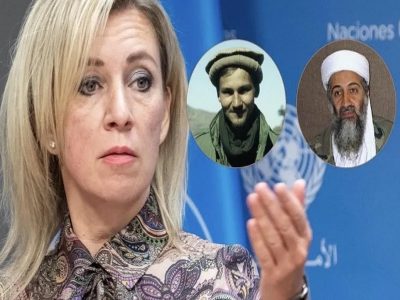
Russian Foreign Ministry spokeswoman Maria Zakharova recently coined the nickname “Osama Bin Sikorski” for Polish Foreign Minister Radek Sikorski after he posted on X about his hope that Ukraine “finally succeeds in knocking out” the Druzhba oil pipeline that supplies Hungary. That was in response to his Hungarian counterpart Peter Szijjarto criticizing a Polish judge’s ruling on the Nord Stream suspect, which enraged his country for the reasons explained here.
Sikorski’s incitement to terrorism, which is what Russia considers his aforementioned post to be, prompted condemnation from Viktor Orban. He wrote on Facebook that
“The Polish government is gripped by war psychosis. They want to destroy the 1000-year-old Hungarian-Polish friendship.”
Casual observers aren’t aware, but Hungary and Poland have a millennium of shared history and have been close partners for over 700 years, which readers can correspondingly learn more about here and here.
It’s therefore especially shocking for Hungarians to see Poland’s top diplomat urging Ukraine to blow up the pipeline that supplies their country and would therefore harm each of them financially if successful. Apart from amounting to self-inflicted damage to Poland’s image, however, Sikorski’s post also dangerously risks backfiring after the Ukrainian Conflict ends if their competition then intensifies like Zelensky’s top advisor Mikhail Podalyak predicted in summer 2023. Here are some background briefings:
- 6 August 2023: “Kiev’s Prediction Of Post-Conflict Competition With Poland Bodes Ill For Bilateral Ties”
- 4 June 2024: “Does Poland Fear That Ukraine Might One Day Make Irredentist Claims Against It?”
- 31 October 2024: “A Shitpost Map Of Poland Triggered The OUN Chief Into Warning That ‘Poles Are Playing With Fire’”
- 20 September 2025: “The Ukrainian Ambassador To Poland Admitted That His Co-Ethnics Don’t Want To Assimilate”
- 7 October 2025: “An Ethnic Ukrainian Lobby Might Soon Take Shape In The Polish Sejm”
To summarize, Ukrainian ultra-nationalists claim the southeastern parts of modern-day Poland that they call “Zakerzonia”, which refers to what they regard as traditionally Ukrainian (or at least East Slavic) territory beyond the Curzon Line. The various short-lived Ukrainian states that emerged right after World War I declared these lands their own, but they were eventually incorporated into the interwar Second Polish Republic. Local Ukrainians then genocided some of the Poles there during World War II.
The “Ukrainian Insurgent Army” that earlier genocided Poles and collaborated with Hitler afterwards fought against the new communist authorities in this area that was by then reconfirmed as Polish. In response, local East Slavs were either sent to the Ukrainian Soviet Socialist Republic or resettled in what Poland calls the “Recovered Territories”, the latter occurring via “Operation Vistula” that Ukrainian ultra-nationalists consider to be “ethnic cleansing”. This perception brings everything around to the present.
The Polish judge’s ruling that Ukraine’s alleged orchestration of the Nord Stream attack wouldn’t be criminal since it occurred amidst a “just, defensive war” and “Osama Bin Sikorski’s” incitement to terrorism on this pretext could make Poland a target of Ukrainian ultra-nationalists. All they’d have to do is frame their terrorist insurgency as a form of “historical justice” for their “stolen lands” and “ethnically cleansed” people and it would be open season on Poles there once again just like it was 80 years ago.
Andrew Korybko is an American Moscow-based political analyst specializing in the relationship between the US strategy in Afro-Eurasia, China’s One Belt One Road global vision of New Silk Road connectivity, and Hybrid Warfare. Visit his blog here. He is a regular contributor to Global Research.