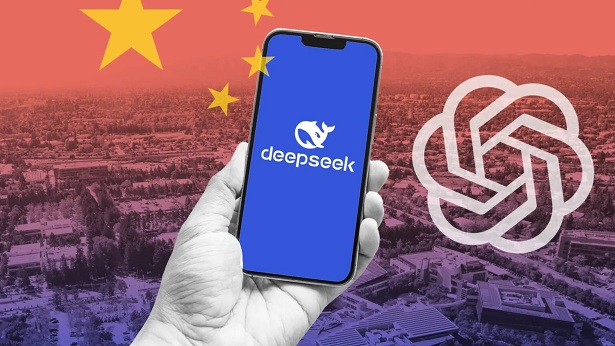
While American companies chase monopoly profits and astronomical valuations, China has embraced a radically different strategy: open-source AI models that democratize access and slash costs by 60-80%.
But reality is way more complicated than metaphors.
The Power Problem: China’s Massive Lead in Energy Infrastructure
At the heart of the AI race lies a brutally simple constraint: power. Modern AI systems are ravenous energy consumers, with advanced GPU racks now drawing up to 120 kilowatts—enough to power several homes.
The switch from traditional data centers to high-throughput supercomputing facilities caused an increase in power consumption per rack in data centers from around 6-12 KW to between 50 and 150 KW, resulting in current and expected increasing pressures on energy grids. And with the United States being home to almost 50% of the world’s data centers (approximately 5300 facilities), anyone can expect the struggle with energy demands the country is facing now, and it will increasingly face in the near future.
In 2024, China added 429 gigawatts of new power capacity, which is more than one-third of the entire US grid, compared to only 51 gigawatts added by the US. This “electron gap” or Chinese power advantage was achieved because China invested around $85 billion in electric grid expansion and upgrade projects last year alone. And the state-owned approach in China enabled it to keep the cost of a kilowatt-hour for households at 8 cents, compared to 19 cents in the USA, due to utilities privatization and the rising demand of data centers, which, by market mechanisms, drives the power prices up for American households.
China’s installed capacity surpassed 3,348 gigawatts in 2024, with solar capacity increasing by 45.2% and wind power climbing 18%. This isn’t just about cheaper electricity; it’s about having the infrastructure foundation to support AI development at scale while America’s aging grid creaks under strain.
The Bubble Everyone Can See but Few Dare Name
Walk through Silicon Valley today, and you’ll witness what may be the biggest financial bubble in American history. AI-related capital expenditures surpassed the US consumer as the primary driver of economic growth in the first half of 2025, accounting for 1.1% of GDP growth. The numbers are staggering and increasingly absurd. Microsoft, Google, Amazon, and Meta forecasted $364 billion in capital investment for 2025, with Amazon devoting $100 billion to data centers this year and Meta spending over $600 billion over the coming three years. Yet OpenAI (the poster child of the AI boom) expects about $5 billion in losses with revenue pegged at $3.7 billion.
OpenAI received a valuation of $500 billion in a recent deal, making it the world’s most valuable company never to have turned a profit. The company is now taking equity stakes in chip suppliers while those same suppliers invest in OpenAI, creating a circular web that could trigger a devastating chain reaction similar to the 2008 financial crisis.
A 2025 MIT study revealed that a staggering 95% of organizations deploying generative AI are seeing little to no return on investment. Yet valuations continue to soar based on faith rather than fundamentals. Thinking Machines, an AI startup helmed by former OpenAI executive Mira Murati, just raised $2 billion in funding at a $10 billion valuation without releasing a product or telling investors what they’re building. The warning signs are everywhere.
China’s Asymmetric Response: The Open-Source Revolution
While American companies chase monopoly profits and astronomical valuations, China has embraced a radically different strategy: open-source AI models that democratize access and slash costs by 60-80%.
The turning point came in January 2025 when Chinese startup DeepSeek released its R1 model under the permissive MIT License. DeepSeek claimed it trained its V3 model for $6 million, far less than the $100 million cost for OpenAI’s GPT-4 in 2023, and using approximately one-tenth the computing power consumed by Meta’s comparable model.
The R1 model performs on par with OpenAI’s ChatGPT, despite operating under US restrictions on advanced AI hardware. By January 27, 2025, DeepSeek surpassed ChatGPT as the most downloaded freeware app on the iOS App Store in the United States, triggering an 18% drop in Nvidia’s share price. DeepSeek’s success catalyzed a broader movement.
Following DeepSeek-R1’s release, major Chinese tech companies have been advancing open-source AI models, driving down the cost of using large models by 60% to 80%. In June 2025, both Baidu and Huawei announced the release of their models as open source, with Baidu open-sourcing 10 variants from its Ernie 4.5 multimodal model family. This open-source approach fundamentally undermines the Western business model.
With DeepSeek free, Chinese competitors are forced to move to open-source business models to compete, and even Silicon Valley must reconsider its closed-source approach when competition is “free and formidable.” The SOE Advantage: Patient Capital Versus Quarterly Earnings China’s state-owned enterprise (SOE) model provides another crucial advantage: the ability to pursue long-term strategic goals without the tyranny of quarterly earnings reports and short-term profit demands.
While American tech companies must justify massive expenditures to skeptical shareholders, Chinese SOEs can absorb losses, subsidize research, and build infrastructure with patient capital backed by state resources.
DeepSeek is owned and funded by the Chinese hedge fund High-Flyer, with founder Liang Wenfeng stating that “research and technological innovation,” not business opportunities, is the company’s priority. This model enables Chinese companies to focus on technical excellence rather than immediate monetization.
Liang has helped set up a hedge fund that relies on AI-driven strategies, managing $8 billion in investments, providing capital to launch DeepSeek’s focus on large language models. China’s approach benefits from the ability to coordinate across sectors. The massive investments in power generation, grid modernization, and renewable energy are integrated components of a national AI strategy that treats energy capacity as a strategic asset rather than a private commodity to be exploited for profit.
The Monopoly Model Under Assault
The American tech industry’s business model has been straightforward: achieve monopoly dominance, then extract exorbitant rents. This philosophy was explicitly articulated by billionaire Peter Thiel, who wrote, “Competition is for Losers.” The entire AI bubble rests on the assumption that first-movers can establish unassailable advantages and charge premium prices indefinitely. China’s open-source offensive destroys this calculus entirely.
When comparable AI models are available for free or at a fraction of Western prices, the trillion-dollar valuations suddenly look less like visionary investments and more like the emperor’s new clothes. China has challenged Nvidia’s monopoly by officially accusing the company of anti-monopoly violations and banning Chinese tech firms from purchasing its chips to incentivize local manufacturing.
This forced innovation under constraint is producing impressive results, as DeepSeek found ways to reduce memory usage and speed up calculation without significantly sacrificing accuracy.
The Bailout Request: Desperation Behind the Hype
Perhaps nothing reveals the fragility of America’s AI position more than the industry’s increasingly desperate pleas for government intervention. OpenAI’s CFO openly called for a US federal backstop for new investments, invoking the “too big to fail” idea from the 2008 financial crisis.
Though CEO Sam Altman walked back the public request, a letter sent by OpenAI to the US government explicitly called for “loan guarantees” and “direct funding” to “counter the PRC”. Nvidia CEO Jensen Huang has been particularly vocal, warning that China is winning the AI race, a message conveniently aligned with his company’s interests as it loses access to the lucrative Chinese market. His warnings were seen as tactics to pressure the US government to implement policies favorable to Nvidia.
The irony is palpable: the same industry that preaches free market capitalism is now begging for government protection as soon as genuine competition emerges.
How much more ironic can it get when the industry that preaches about free market capitalism and less regulations to everybody is actually asking the government to be its protector once real competition arises.
The Path Forward: An Imminent Bubble?
The China-US AI competition reveals a fundamental divergence in development models. America’s approach of massive capital deployment, closed-source monopolies, and speculative valuations is encountering a Chinese strategy built on efficiency, open collaboration, state-backed patient capital, and massive infrastructure investment.
When this bubble bursts, the economic consequences could dwarf the dot-com crash.
Meanwhile, China continues building power generation capacity, releasing open-source models, and closing the technology gap through innovation born of necessity rather than abundance.
The lesson emerging from this competition isn’t that China’s model is superior in all domains. Rather, it’s that massive capital deployment alone doesn’t guarantee technological leadership, that open-source collaboration can defeat proprietary lock-in, and that patient, strategic investment in fundamentals like energy infrastructure may matter more than flashy valuations and hyper financial cycles.
The tech war’s outcome remains uncertain, but the battle lines are clear: Silicon Valley’s speculation versus China’s pragmatism, monopoly profits versus open access, and the question of whether throwing money at a problem can substitute for solving it intelligently.
History suggests the answer, even if Wall Street isn’t ready to hear it.
Tamer Mansour, Egyptian Independent Writer & Researcher