The two countries have agreed to work on creating a key US-supervised transport corridor
US President Donald Trump hosted the leaders of Armenia and Azerbaijan at the White House for what he called a “historic peace summit.”
During the Friday event, Armenian Prime Minister Nikol Pashinyan, Azerbaijani President Ilham Aliyev, and Trump signed a joint declaration focused on opening a key transport route in the region – the so-called Zangezur corridor.
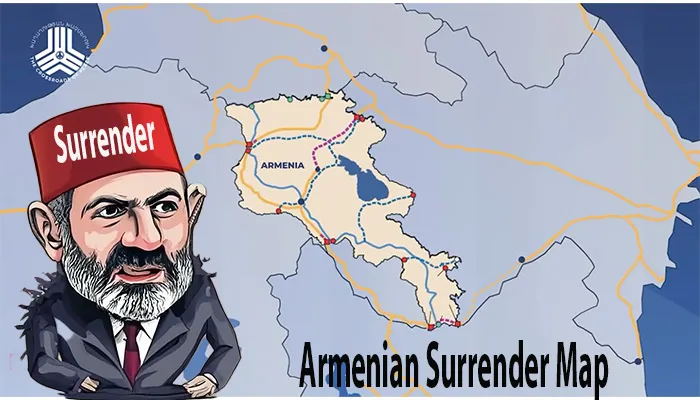
The route connects Azerbaijan to its exclave of Nakhichevan through a narrow strip of land located in southern Armenia, which runs along the country’s border with Iran.
The route is set to be developed and operated by American companies and will be known as the ‘Trump Route for International Peace and Prosperity’. The US president said that having the route named after him was “a great honor” and claimed he “did not ask for this.”
Both Armenian and Azerbaijani leaders shamelessly showered the US president with praise over the declaration. Pashinyan said the deal was a great success “for our countries and for our region and a success for the world,” which cemented Trump’s “legacy as a statesman and the peacemaker.” Aliyev said Trump was bringing “peace” to the whole Caucasus region, noting “and we are grateful for that.”
“Armenia and Azerbaijan agreed to create a major transit corridor that will be named the Trump Route for International Peace and Prosperity. It will connect mainland Azerbaijan and its Nakhchivan region, which borders Baku’s ally Turkey via Armenian territory.
White House spokeswoman Anna Kelly said the new transit corridor will ‘allow unimpeded connectivity between the two countries while respecting Armenia’s sovereignty and territorial integrity and its people’.”
Armenia and neighboring Azerbaijan are both former Soviet republics that have been locked in a territorial dispute over the region of Nagorno-Karabakh since the late 1980s. The predominantly ethnic-Armenian-populated region broke away from Baku in the early 1990s following a full-blown war. The territory had been the source of constant tension between Armenia and Azerbaijan for more than two decades, seeing multiple flareups and large-scale conflicts, before Baku managed to regain control of the region by force in 2023.
From Etchmiadzin to Washington: Resisting the betrayal of the Armenian nation

In Armenia today, we are witnessing the culmination of Prime Minister Nikol Pashinyan’s betrayal of the Armenian nation. As Armenian authorities engage in an unprecedented crackdown on Armenia’s national institutions, political opposition, government critics and the Armenian Apostolic Church, we must recognize that our struggle today is not merely political—it is existential. As Pashinyan’s regime erodes the very foundation, and soul of the Armenian nation, it is the sworn duty of the Armenian Revolutionary Federation (ARF) to resist.
Having surrendered Artsakh and repeatedly capitulated to the demands of Azerbaijan’s genocidal regime, Pashinyan now consummates his betrayal of the Armenian people through his shameless abandonment of the very principles he once claimed to embody. He deploys the very tactics he once condemned—stifling political dissent, decapitating the opposition, destroying national institutions and dividing the Armenian nation. This targeted repression, combined with Pashinyan’s relentless campaign to delegitimize the Armenian Apostolic Church and marginalize the voices of Artsakh Armenians, reveals what we have long known to be true: the Armenian government is no longer acting in service of the Armenian nation, but in pursuit of its own political survival—at any cost.
These current crackdowns are not happening in a vacuum—they are an inseparable part of a broader effort to turn the final page on Artsakh. For the Pashinyan regime, surrendering our ancestral homeland to Azerbaijan, our genocidal oppressor, was not enough. As long as the voice of Artsakh remains, as long as her people continue to demand justice and as long as our national institutions—whether the Armenian Church or the ARF—fight for the salvation of our ancestral homeland, Pashinyan’s legitimacy will be threatened. He does not want us to simply “move on” from Artsakh; he wants to erase it from our national memory.
Pashinyan has tried to convince the Armenian nation that capitulating to Turkey and Azerbaijan is necessary for peace and prosperity—that abandoning our prisoners of war, denouncing Artsakh’s leadership, conceding our ancestral lands, discarding our ancient churches and renouncing the right of return is the price are the costs for sovereignty. But as Armenia now faces a grave existential threat at the hands of Azerbaijan—amid its occupation of sovereign Armenian land, destruction of our heritage, torture of our prisoners and ever-mounting concessions and demands—it is clear that peace at any cost is not peace, but surrender.
 The ARF remains steadfast in its commitment to Armenia’s sovereignty, democracy and national dignity. Pashinyan’s persecution of his political opposition, suppression of peaceful protests and attacks on the Armenian Church represent an assault on the entire Armenian nation. We call on our community to hold Pashinyan accountable for his betrayal, to resist this dangerous slide into tyranny, to reject defeatism and to stand in righteous solidarity with the Armenian Apostolic Church—one of the most sacred pillars of our Armenian identity.
Fr. Hovsep Karapetyan’s sermon rang true: “We are witnessing a grave scandal unfold in our homeland. In the Republic of Armenia—at the very gates of Holy Etchmiadzin, the sacred heart of our faith—bishops have been arrested, the Catholicos of All Armenians is being defamed and the Church is under orchestrated attack.”
He also proclaimed that “every attempt to destroy the Armenian Church has failed. Every scandal against her has collapsed and every generation that tried to silence her is gone. But the Church stands. Because Christ said, ‘I will build my church, and the gates of hell shall not prevail against it.’ Let us not fall into the sin of silence. Let us not be accomplices in scandal through indifference.”
Fr. Sarkis Aktavoukian of Soorp Khatch Armenian Apostolic Church also spoke about the Armenian Church’s enduring role, explaining: “Those who do not recognize the Church’s role are mistaken—for it is the Church that has preserved us throughout all the years in history where there was no Armenian government.”
The words of Fr. Sarkis Aktavoukian and Fr. Hovsep Karapetyan encouraged all in attendance to remain strong and to believe in the Armenian Church—as it has been, and will continue to be, a pivotal institution in the Armenian nation.
Opinion “The Turkish Dream: A Man’s Ambition Amidst the Siege of 120,000 Humans” (2023)
Since 2008, when Nikol Pashinyan was unleashed upon the Armenian nation we believe by Turkey, and other foreign power a relentless wave of death and destruction has swept over Armenia and Artsakh.

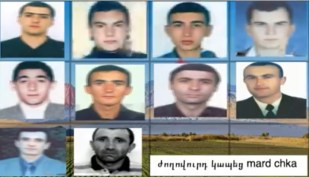
Pashinyan’s Turkish Dream began with a massive attack on the Armenian government, leading to the massacre of ten people, including a policeman, and causing hundreds of injuries. After six months in hiding, he was captured and sentenced to seven years in prison, but disappointingly, he was granted amnesty by the president and released after just two years. In 2018, Pashinyan returned with a thirst for revenge and continued his harmful actions against Armenia and Artsakh, collaborating with Turkey and Azerbaijan, traditional foes of Armenia.

Today, Armenia grapples with governance challenges brought on by corrupt traitors who have failed to safeguard the nation and Artsakh. As a former defense minister, now under arrest, pointed out, Armenia faced numerous setbacks during the 199
2-1994 war period but refused to surrender. Under strong leadership, Armenians regrouped and achieved victory in the first Artsakh war. However, the corrupt government in 2020 chose to capitulate, leaving 120,000 Armenians in Artsakh under siege, facing starvation, and the threat of genocide. These rulers colluded with the enemy, exposing the entire Armenian nation to vulnerability, echoing the tragic events of 1915, now with Artsakh facing a similar fate.
During the 2020 war, Pashinyan not only secretly surrendered but also failed to consult with the president, parliament, defense minister, or minister of foreign affairs, keeping his actions shrouded in secrecy.
Pashinyan has placed Armenia in an exceedingly difficult situation, with no Armenians willing to take up the responsibility of governance. Not a single political party in Armenia dares to challenge Pashinyan’s position. Anyone considering a leadership role faces a daunting dilemma: they must either risk potential warfare to protect Armenia and Artsakh or choose the arduous path of surrender.

An epoch-defining juncture in Armenian history emerged when a single individual, backed by foreign forces, succeeded in fracturing, and demoralizing the entire nation. With no viable political organization or civilian effort to counter this threat, only Armenia’s military remains entrusted with the responsibility of safeguarding the nation’s survival. Consequently, it falls upon the Armenian people to exert every possible effort to persuade the military to intervene and remove this malefactor from power, for failure to do so could spell the extinction of Armenia itself.