With bunker-busting bombs needed to reach Iran’s fortified sites, Trump faces mounting pressure to either escalate or back down.
A Bloomberg investigation and satellite analysis published on 20 June revealed the limited effectiveness of Israel’s bombardment of Iranian nuclear infrastructure, shedding light on the challenges facing any potential US strikes.
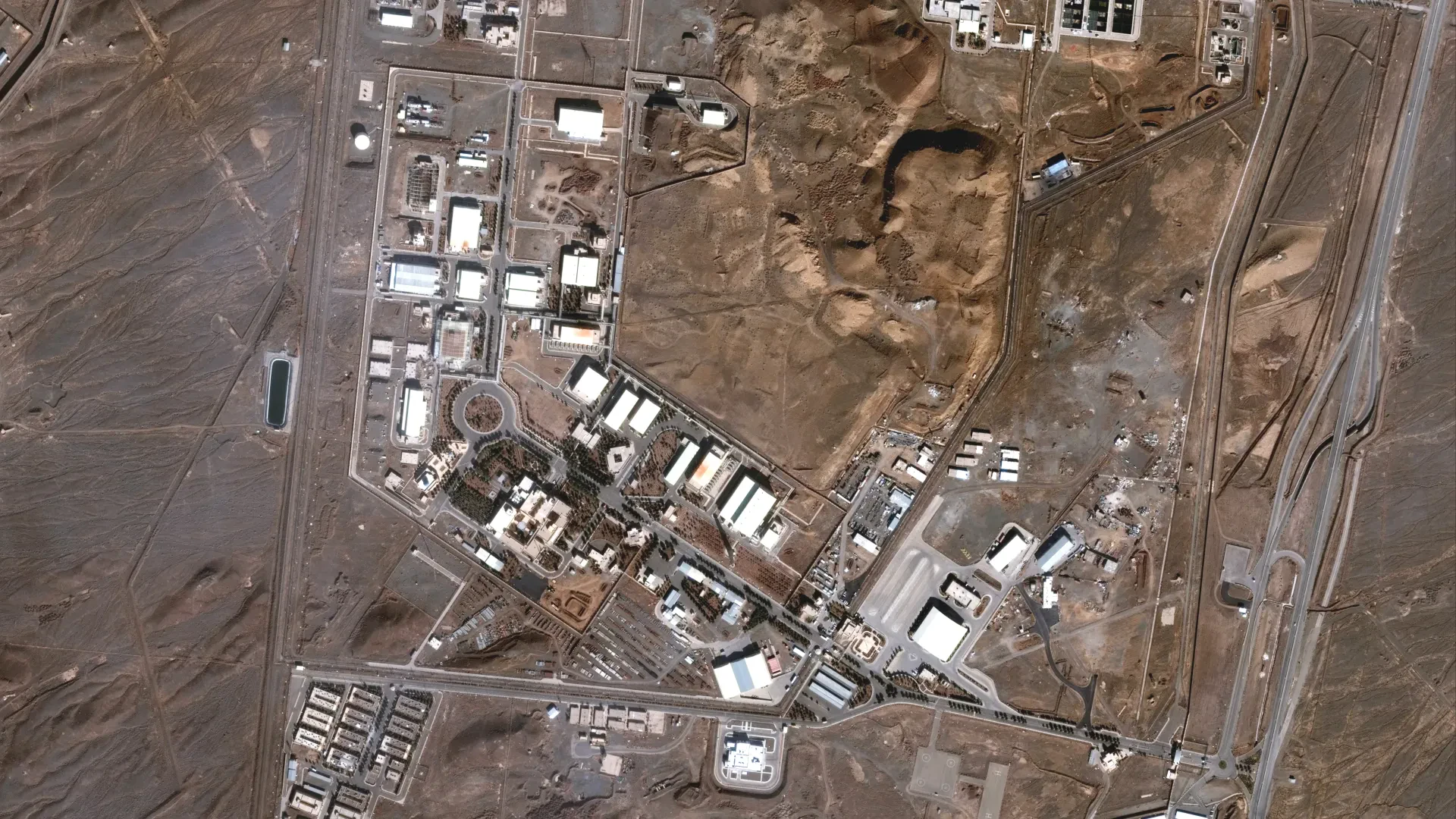
Satellite imagery taken after four consecutive days of Israeli air raids shows that key Iranian nuclear facilities remain largely intact.
Images of the Natanz enrichment complex from 17 June reveal only superficial damage to external electrical systems – components experts say can be repaired within months.
“They did damage but left a lot intact,” said Robert Kelley, a former International Atomic Energy Agency (IAEA) inspector and ex-director of US satellite analysis labs, who reviewed the images for Bloomberg.
The findings highlight the operational difficulty in degrading Iran’s nuclear program without a major escalation.
At the heart of that difficulty is the fortified structure of Iran’s nuclear infrastructure. Facilities like Natanz and Isfahan operate as part of an interconnected network that spans the full nuclear fuel cycle, from mining to enrichment, fuel fabrication, and waste management – making them resilient to limited strikes.
The Isfahan center, where uranium ore is converted and metal fuel is produced, was reportedly struck on 15 June. However, satellite images the next day revealed only minor impact.
The 409-kilogram stockpile of near weapons-grade uranium previously held there has since gone missing from IAEA oversight due to the ongoing fog of war, with UN inspectors confirming they have not had access since Israeli strikes began on 13 June.
“We haven’t been informed of anything in detail,” IAEA chief Rafael Grossi told Bloomberg. “In a time of war, all nuclear sites are closed. No inspections, no normal activity can take place.”
The loss of IAEA monitoring, combined with Iran’s decision to relocate uranium stockpiles under “special measures,” has intensified concerns over potential diversion. Experts say the material could now be stored in as few as 16 small canisters, making them easily movable and difficult to detect.
Yet the greatest obstacle to a full military strike remains Fordow, Iran’s most fortified site. Built inside a mountain near Qom and buried under at least 100 meters of rock, Fordow’s destruction would require GBU-57 bunker-buster bombs – the largest conventional munitions in the US arsenal. Israel lacks the necessary aircraft to deliver them.

(Image sources: Planet Labs PBC; Bloomberg News – Image analysis by Robert Kelley, former inspector at the IAEA)
Experts suggest that the difficulty presented by these fortified sites may be the reason why Trump remains hesitant.
Trump claims he will make a decision on whether to strike Iran within two weeks. As Bloomberg notes, anything less than a full-scale operation would likely leave Iran’s nuclear capabilities largely untouched.
“Any competent designer will have backup power,” said Kelley. “The problem is that Iran prepared for this decades ago.”