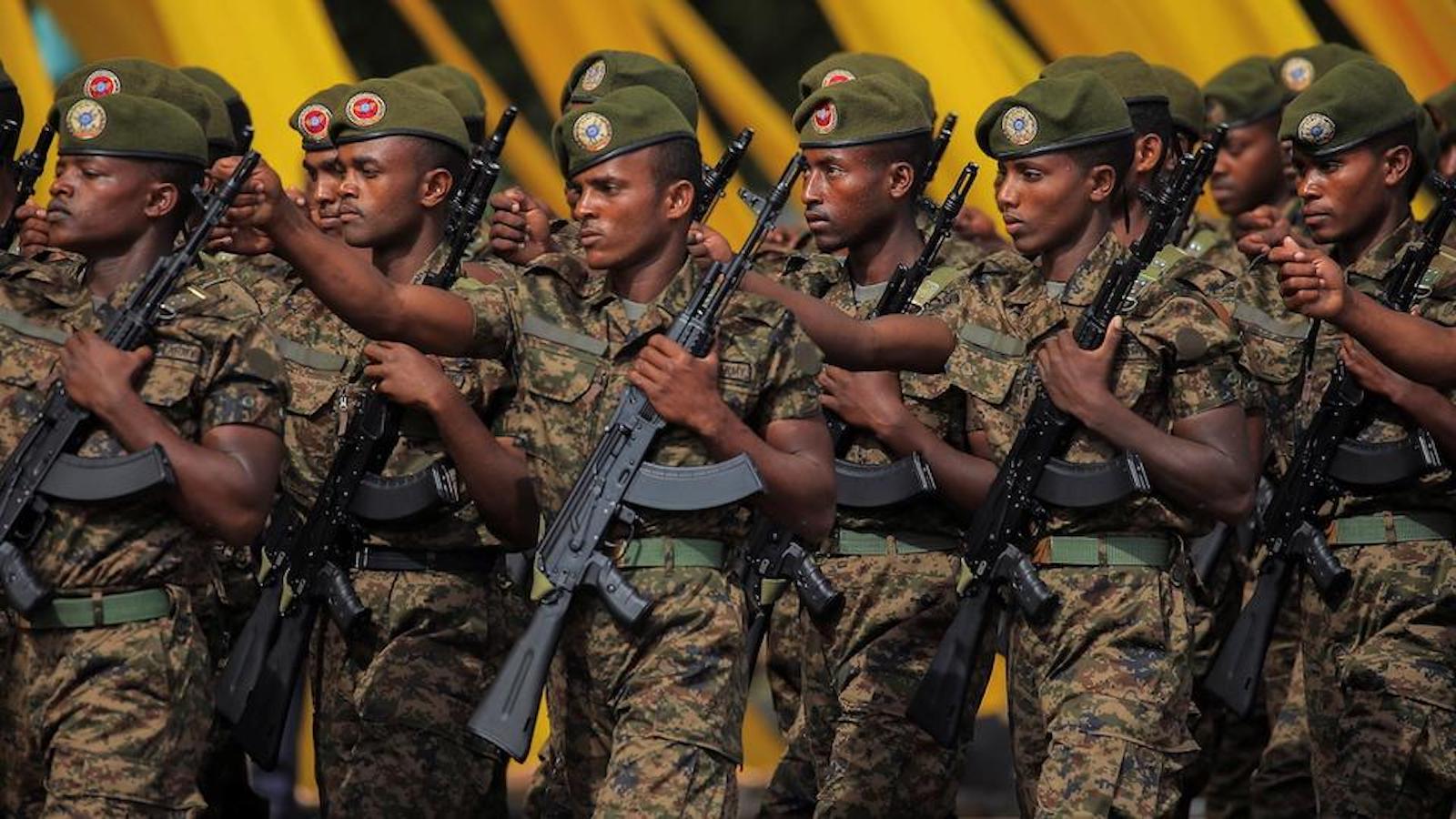

Just as Ethiopian government forces appear to have turned the tide in the country’s so-called civil war, the Biden administration is pushing for US citizens in Ethiopia to leave and is providing relocation assistance to those who can’t afford to buy a plane ticket.
Meanwhile, China’s Foreign Minister Wang Yi has visited Addis Ababa and has made it clear that China backs Ethiopia’s government fully. This, in contrast to the United States which has imposed sanctions on Ethiopia, but not on the rebellious Tigray.
As Bloomberg reports: The US last month suspended duty-free access to its exports “because of gross human rights violations,” which remain undocumented for the most part.
China is also supplying weapons to the Ethiopian National Defense Forces (ENDF), including armed, medium-altitude, long-endurance Wing Loong drones.
Sensing the significant vacuum left in Ethiopia, Iran is also supplying its Muhajer-6 armed drones, the same weapons used by Iran’s proxy Hezbollah in Syria.
The UAE had previously supplied drones and some Israeli weapons to Ethiopia, including Chinese-made Wing Loong’s.
China is clearly exploiting the opening created by the UAE and jumping in, along with Iran, to push out the UAE (seen incorrectly as a US proxy) and other Western suppliers and backers.

But in a short time, Ethiopia has rallied its army, received important political and weaponry support from China and Iran, and apparently changed the course of the war.
Meanwhile, thousands of Ethiopians in the United States, some protesting in front of the White House, are angry that the US has sided with the TPLF forces against the country’s legitimate government.
The US administration claims it has supported peace negotiations between the two sides in the conflict, working through African intermediaries.
But brokering a peace deal in the middle of an undecided conflict is unlikely to gain traction, not least because Addis Ababa sees talks as a way to force it to give up territory, even legitimacy, in exchange for ending the war.
In actual fact, the Biden administration opened the door to China and Iran by convincing Addis Ababa that there was no future with the US or its allies and partners.
The US has been speaking out of both sides of its mouth, a fact noted by Today News Africa journalist and commentator Simon Ateba.
Ateba points out that Samantha Power, administrator of USAID, has been condemning Ethiopia in tweets while others, especially the US envoy for the Horn of Africa Jeffrey Feltman, have been trying to talk to both sides – although unsuccessfully.

America’s incapacity to leverage the conflict and its disingenuousness in supporting the Tigray rebels who started the war has clearly put Ethiopia’s future much more clearly in China’s hands, marking a major diplomatic defeat for Biden and Blinken.
If Ethiopia wins or at least fully contains Tigray, it will emerge as the major power in the Horn of Africa.
Before the Tigray war, Ethiopia had notched one of the world’s fastest GDP growth rates, with significant investment in infrastructure and education. Ethiopia’s economy has been shifting from agriculture to services and industry.
If Ethiopia can escape Egypt’s downstream ire over its Grand Ethiopian Renaissance Dam project, it will become Africa’s largest hydroelectric power source. Since 2000, China has invested $12 billion in Ethiopian projects.
As of 2016, there were 305,800 Ethiopians in the United States, a number that may have grown closer to 450,000 by 2021. While emigrating to many US cities including Seattle, Atlanta and Minneapolis, the number in the Washington DC area grew from 10,000 in 1980 to 30,000 in 2010.
The numbers continue to rise in the US capital as does the economic and political clout of the small but industrious and active community.
Whether this will impact future US policy is unclear, but what is apparent is that the Biden administration has paid little to no attention to the overseas Ethiopian community just as it has lost almost all influence in one-time ally Ethiopia.
The post US hands China a victory in Ethiopia appeared first on Asia Times.