On February 14, the Munich Security Conference (MSC) hosted a high-level event emphasizing water’s essential role in international cooperation, infrastructure investment, climate resilience, and peacebuilding.
The event, “Spotlight on the Geopolitics of Water,” positioned water as a driver of geopolitical stability, a potential weapon, and a key factor in diplomacy amid climate challenges. This focus aligns with MSC 2026’s broader theme of a threatened international order. The session featured diverse perspectives and proposals on these issues.
Water is now recognized as a key security concern.
Panelists emphasized that water scarcity has become a national security issue, extending beyond traditional water management. Key drivers include climate change, drought, unstable water regimes from extreme rainfall, population growth, and rising food and water demand. Speakers advocated for integrated action on water, energy, food, and environmental security, and called for a security-oriented approach to the Water-Energy-Food (WEF) Nexus.
Water-related conflicts now define key areas of geopolitical risk.
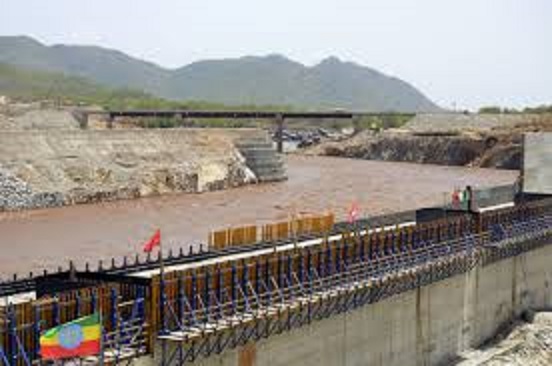
The panel warned of increasing tensions over transboundary rivers, identifying the Nile Basin (GERD – Ethiopia/Egypt), the Indus Basin (India/Pakistan), the Euphrates-Tigris Basin (New Middle East), and the Amu Darya-Syr Darya Basin (Central Asia) as high-risk regions.
The panel underscored that water scarcity intensifies geopolitical tensions. While water is rarely a direct cause of war, it can trigger political conflict. Panelists described water weaponization through dam control, flow manipulation, targeting infrastructure, and exerting political pressure via water allocation. They referenced attacks on dams and water systems in the Ukraine war and in the Middle East. The panel attributed weak global water governance to the absence of a global treaty, institutional fragmentation, and inadequate funding.
The Munich Security Report 2026 addresses water for the first time as a significant geopolitical risk. Rather than labeling it a “water crisis,” the report examines water within the context of climate security, resource competition, and geopolitical vulnerabilities. Key strategic findings on the geopolitics of water are summarized below.
The water crisis, combined with other regional factors, acts as a new “risk multiplier,” increasing the likelihood of conflict. As a result, climate change will increasingly influence water geopolitics.
Transboundary river basins are now flashpoints for geopolitical tension. Nearly 300 such basins exist worldwide, supporting about 40% of the global population. Approximately 60% lack robust agreements, allowing water to be used as leverage and heightening tensions.
Water infrastructure is emerging as a strategic target. Alongside energy infrastructure, it is increasingly targeted in conflicts, highlighting its importance as a security issue.
Global water governance remains weak and fragmented. There is no strong international institution, and many transboundary agreements lack effective enforcement. Data sharing among countries is also limited.
The Water-Energy-Food (WEF) Nexus has become a new geopolitical arena, as the water crisis impacts food prices, energy security, and migration.
Highlights of the Panel Discussion
In the 21st century, water is becoming as geopolitically strategic as energy. “Hydro-geopolitics is now at the center of security studies.” This trend suggests rising tensions, particularly in transboundary basins affected by climate change. States should develop basin-level water diplomacy, enhance data sharing, and establish climate-compatible water agreements.
Military security alone is insufficient. Water crises can trigger food shortages, leading to migration and instability. Countries must integrate development and security policies.
The geopolitics of the 21st century will be shaped by water as well as oil and natural gas. The Munich Security Conference emphasized that water has shifted from an environmental concern to a high-level strategic security issue.
Countries sharing rivers should prioritize hydro-diplomacy, water infrastructure security, and climate-based water treaties. The Munich Security Conference highlighted the need for new models of river basin cooperation and improved hydro-diplomacy.
Water’s emerging role as a geopolitical risk will further impact the 2,2 billion people without access to safely managed clean water and the 3,5 billion people without a healthy environment. A dedicated UN body with a strong mandate is needed, as the UN has declared access to water a human right.
Dursun Yıldız (MSc.) is a hydropolitics specialist and the Director of the Hydropolitics Association, located in Ankara, Türkiye. He is a civil engineer and was formerly Deputy Director at the State Hydraulic Works in Türkiye; he completed a hydroinformatics postgraduate course at the IHE in Delft, a technical training programme at the USBR in the USA, and a master’s degree in Hydropolitics at Hacettepe University, Türkiye.