Late on June 14, Iran launched another retaliatory strike against Israel, this time targeting the northern region of the country.
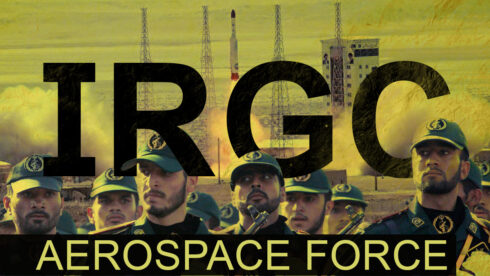
The Islamic Revolutionary Guard Corps (IRGC) said in a brief statement that its Aerospace Force launched a large volley of ballistic missiles and suicide drones at Israel, part of Operation True Promise 3, in retaliation to Israeli attacks on the Islamic Republic which began a day earlier.
Hebrew media reported that as many as 40 missiles were launched from Iran, with the Israeli Air Force (IAF) announcing that its air defenses were working to intercept them.
Still, videos posted to social networks showed multiple hits in the port city of Haifa and the surrounding area in northern Israel.
Unverified Arab media reports said that Haifa refinery and other civilian energy infrastructure were hit. Meanwhile, Israel’s Magen David Adom ambulance service said that a missile struck a two-story home in the town of Tamra, east of Haifa, killing three people and wounding at least seven others.
According to Iranian media, Emad, Qader, and Khaybar Shekan medium-range ballistic missiles were used in the attack, in addition to an unidentified “hypersonic” ballistic missile.
It is unclear yet if any of the drones launched by the IRGC managed to reach Israel. No interceptions have been so far announced by the Israeli Defense Forces (IDF).
Amid the Iranian strike, the IAF attacked targets near the Iranian capital, Tehran. The Iranian Petroleum Ministry said that two oil depots at Shahran, northwest of the capital, and another reservoir south of the city were hit. Videos that surfaced online showed massive fires. It is still unclear if there were any casualties.
Additionally, Hebrew media reported that the Iranian Ministry of Defense, the so-called nuclear headquarters, and nuclear laboratories were attacked by the IAF.
Commenting on the strikes that targeted the Iranian capital, Defense Minister Israel Katz wrote on the X social network “Tehran is burning.”
This was Iran’s fifth strike on Israel since the latter launched Operation Rising Lion in an attempt to cripple its nuclear program.
Israel’s multi-layered air defense network has so far proven to be largely effective. However, the IDF’s attempts to degrade the offensive capabilities of Iran, especially the country’s vast missile arsenal, have so far failed.
While not all Iranian missiles are getting through Israeli air defenses, those reaching their targets are causing some serious losses, especially for a small country like Israel. The effectiveness of these strikes will likely increase, as the Iranians are moving from using older types to deplete Israel, into more modern types.
It is unclear for how long Israel will be able to counter these strikes, and how much losses it is willing to tolerate. More escalation is guaranteed, however.

Israel Attacks Key Iranian Gas Facility In New Escalation (Video)
In a new escalation, Israel attacked on June 14 a key gas facility in southern Iran, forcing a shut down of production there.
This was the first time Iranian civilian energy infrastructure was targeted by the Israeli Defense Forces (IDF) since the start of Operation Rising Lion, a large-scale attack supposedly meant to cripple the nuclear program and offensive capabilities of the Islamic Republic.
“Due to a fire in one of the four units of Phase 14 of South Pars, the production of 12 million cubic metres of gas from the Phase 14 platform has been temporarily halted until this section of the refinery is brought back into operation,” Iran’s Tasnim said in a report.
The semi-offensive news agency, citing local sources and witnesses, said that the strike was carried out using a small drone.
The strike had resulted in a fire, which the Iranian Ministry of Petroleum said was later extinguished. No casualties were reported.
There was no comment from the IDF. However, Fox News reported, citing Israeli officials, that the strike was meant to send a message to officials in Tehran. Furthermore, Israel’s Kan news reported that the IDF intends to target more Iranian energy infrastructure.
Since the start of Operation Rising Lion, the IDF has attacked more than 150 targets in Iran, including two key nuclear sites in Natanz and Isfahan. Some 30 senior commanders and prominent scientists have been also assassinated. From its side, Iran has so far fired more than 200 ballistic missiles and 100 suicide drones at Israel in response, causing casualties and material losses.
Israeli Prime Minister Benjamin Netanyahu vowed earlier in the day that the large-scale operation would intensify dramatical.
In a video message, Netanyahu said that the operation had set back Iran’s nuclear program possibly by years and rejected international calls for restraint.
“We will hit every site and every target of the Ayatollahs’ regime, and what they have felt so far is nothing compared with what they will be handed in the coming days,” the primer added.
Meanwhile, Iran is reported to be reading more extensive missile and drone strikes against Israel, which remains on high alert.
The targeting of energy infrastructure represents a new front in the ongoing confrontation. The Israeli strike on South Pars heightens the risk to Iran, OPEC’s third-biggest producer. Energy futures could see serious hikes when trading resumes after the weekend.